Introduction
The Seram Bandicoot, scientifically known as Rhynchomeles prattorum, is a fascinating mammal species endemic to the Seram Island in Indonesia. This elusive creature is part of the Peramelemorphia order, which includes bandicoots and bilbies. Despite its fascinating attributes, the Seram Bandicoot remains understudied, primarily due to its restricted geographic range and the challenges associated with studying wildlife in dense tropical habitats. This article provides a comprehensive overview of the Seram Bandicoot, covering aspects from its physical characteristics to its conservation status.
Physical Description
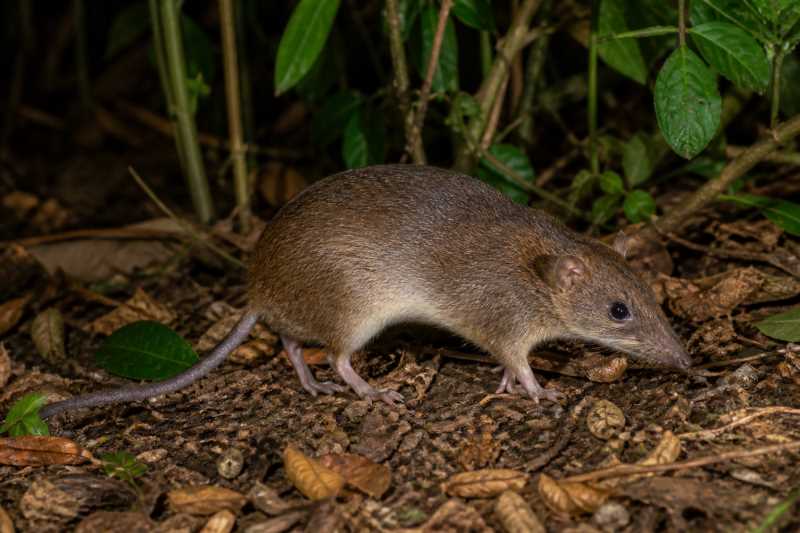
The Seram Bandicoot is a small to medium-sized mammal, with a body length typically ranging from 20 to 30 centimeters, and a tail that extends an additional 10 to 15 centimeters. It has a compact build, characterized by strong hind limbs that are slightly longer than its forelimbs, an adaptation that facilitates its jumping ability.
The fur of the Seram Bandicoot is predominantly a grayish-brown color, providing effective camouflage against the forest floor. This coloration is complemented by a lighter underbelly, which can range from off-white to a pale tan. One of its most distinctive features is its elongated snout, which is not only a sensory organ but also aids in foraging for food.
Its ears are relatively short but are keenly adapted for detecting sounds, a crucial trait for avoiding predators. The Seram Bandicoot’s eyes are moderately sized, suited for its nocturnal lifestyle, allowing it to navigate and forage efficiently during the night.
Range and Habitat
The Seram Bandicoot is endemic to Seram Island, part of the Maluku province in Indonesia. This island’s diverse ecosystem ranges from lowland forests to mountainous regions, but the Seram Bandicoot predominantly inhabits the primary and secondary forests at elevations ranging from sea level to 1,500 meters.
These forests provide a rich array of resources, including ample food supply and shelter. The dense underbrush and leaf litter of the forest floor offer the bandicoot optimal conditions for foraging and nesting. However, its range is limited due to the island’s geography and ongoing habitat destruction.
Behavior and Diet
The Seram Bandicoot is primarily nocturnal, spending its nights foraging and its days resting in nests constructed from leaves and grass. It is a solitary creature, with individuals typically only coming together for mating purposes.
Its diet is omnivorous, consisting of a variety of insects, small vertebrates, fruits, seeds, and fungi. The elongated snout of the bandicoot is a crucial tool in its foraging activities, as it uses it to dig into the soil and leaf litter to uncover food.
This bandicoot plays a vital ecological role in its habitat, aiding in seed dispersal and soil aeration through its foraging activities.
Identification Tips
Field recognition of the Seram Bandicoot can be challenging due to its elusive nature and nocturnal habits. However, there are several cues to aid identification:
- Snout: Look for the distinctive elongated snout, which is a primary foraging tool.
- Size and Build: Note its compact body with strong hind limbs, suited for jumping.
- Coloration: Its grayish-brown fur with a lighter underbelly offers camouflage against the forest floor.
- Tracks: The tracks may show a pattern of small, clawed footprints with a noticeable distance between the fore and hind prints.
- Behavior: Observing nocturnal activity and foraging behavior can be indicative of the species.
Conservation Status
The Seram Bandicoot is currently listed as Data Deficient by the International Union for Conservation of Nature (IUCN), primarily due to the lack of comprehensive studies on its population. However, it faces several threats that could impact its survival.
Threats
- Habitat Loss: Deforestation for agriculture and logging continues to reduce the available habitat for the Seram Bandicoot.
- Predation: Introduced predators, such as feral cats and dogs, pose a significant threat.
- Climate Change: Altered weather patterns could affect the availability of food resources and suitable habitat.
Protections
While specific conservation measures for the Seram Bandicoot are limited, broader environmental protections on Seram Island, such as the establishment of protected areas and initiatives to curb deforestation, indirectly benefit the species.
Conservationists emphasize the need for further research to better understand the population dynamics and ecological needs of the Seram Bandicoot, which is essential for implementing effective conservation strategies.
Frequently Asked Questions
What does the Seram Bandicoot eat?
The Seram Bandicoot is omnivorous, eating insects, small vertebrates, fruits, seeds, and fungi. Its elongated snout helps it forage efficiently.
Where can the Seram Bandicoot be found?
This species is found exclusively on Seram Island, Indonesia, inhabiting primary and secondary forests from sea level to 1,500 meters.
Why is the Seram Bandicoot listed as Data Deficient?
The IUCN lists it as Data Deficient due to insufficient data on its population size and trends, necessitating more research for accurate conservation assessment.
How does the Seram Bandicoot contribute to its ecosystem?
It aids in seed dispersal and soil aeration, playing a crucial role in maintaining ecological balance in its forest habitat.
What are the main threats to the Seram Bandicoot?
Habitat loss, introduced predators, and climate change are primary threats affecting the survival of this species.
Related posts