Introduction
The Single-striped Opossum, scientifically known as Monodelphis unistriata, is a lesser-known marsupial species that has intrigued researchers and wildlife enthusiasts alike. Found primarily in South America, this elusive creature is part of the Didelphidae family. Its unique physical and behavioral characteristics make it a fascinating subject for study and conservation efforts. Despite its relatively obscure status in the animal kingdom, understanding the Single-striped Opossum is crucial for biodiversity preservation and ecological studies.
Physical Description
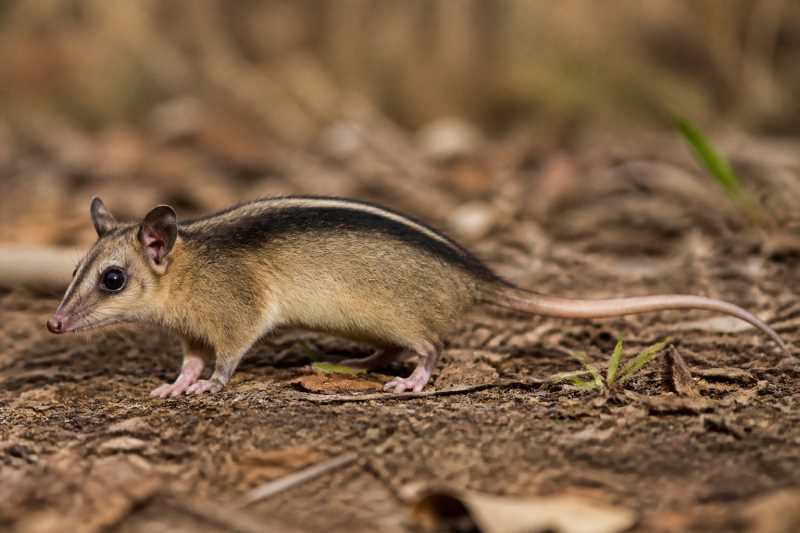
The Single-striped Opossum is a small, terrestrial marsupial with distinctive features. It derives its name from the single, prominent stripe that runs along its back, which is a key identifying feature. Typically, this opossum exhibits a grayish-brown fur coloration with the dorsal stripe being darker. Adults usually measure about 11 to 14 centimeters in body length, with a tail that is notably shorter than the body, usually around 7 to 10 centimeters long. Unlike other opossums with prehensile tails, the Single-striped Opossum’s tail is less adapted for gripping.
Their pointed snout and small, rounded ears are adaptations for their terrestrial lifestyle. The opossum’s limbs are short yet sturdy, aiding in its ground-dwelling habits. Additionally, this species lacks a pouch, a characteristic feature of some marsupials, and instead, the young cling to the mother’s teats post-birth.
Range and Habitat
The Single-striped Opossum is native to South America, with its range primarily covering parts of Brazil. There have been occasional sightings and reports in adjacent regions, but these are rare and often unverified. The opossum favors tropical and subtropical forests, including both primary and secondary growth areas. It thrives in environments that provide ample ground cover, such as leaf litter and dense underbrush, which offer protection from predators and a rich supply of food sources.
Their habitat selection is influenced by the availability of food and shelter, often residing in areas with rich biodiversity that supports a wide array of insects and small vertebrates, which constitute the bulk of their diet.
Behavior and Diet
The Single-striped Opossum is predominantly nocturnal and solitary, emerging at night to forage for food. Its diet is primarily insectivorous, consisting of a variety of insects, arthropods, and occasionally small vertebrates and fruits. This dietary flexibility allows the opossum to adapt to varying environmental conditions and food availability.
Behaviorally, the opossum is known for its stealth and caution. It uses its acute sense of smell and hearing to detect prey and avoid predators. During the day, it seeks refuge in burrows or dense vegetation, minimizing exposure to potential threats.
Reproductive behavior in the Single-striped Opossum is not well-documented; however, like other members of its genus, it is presumed to have a brief gestation period followed by postnatal development on the mother’s teats. Litter sizes are generally small, reflecting the species’ solitary nature and investment in offspring survival.
Identification Tips (Field Recognition Cues)
Identifying the Single-striped Opossum in the field can be challenging due to its elusive nature and nocturnal habits. However, there are several cues and characteristics that can aid in recognition:
- Dorsal Stripe: Look for the distinctive single stripe running along the back, which is its most prominent feature.
- Size and Tail: Note the small body size, typically between 11 to 14 cm, and a short, non-prehensile tail.
- Coloration: Observe the grayish-brown fur, which may blend with the forest floor.
- Habitat: Search in tropical and subtropical forests, focusing on areas with dense underbrush and leaf litter.
- Behavior: Primarily active at night, sightings are more likely during nocturnal hours.
Conservation Status (With Threats and Protections)
The conservation status of the Single-striped Opossum is currently listed as "Data Deficient" by the International Union for Conservation of Nature (IUCN). This classification highlights the lack of comprehensive data on the species’ population trends and threats. However, habitat destruction and deforestation pose significant risks to its survival, as these activities lead to the loss of critical habitat and food resources.
Protection efforts are essential to preserve the species and its habitat. These include initiatives to curb deforestation and promote sustainable land use practices. Additionally, further research and field studies are crucial to gain a better understanding of its ecology and inform conservation strategies.
Frequently Asked Questions
What is the primary diet of the Single-striped Opossum?
The Single-striped Opossum primarily feeds on insects and arthropods, although it may occasionally consume small vertebrates and fruits. Its diet is largely determined by the availability of prey in its forest habitat.
Where can the Single-striped Opossum be found?
This opossum species is primarily found in Brazil, inhabiting tropical and subtropical forests. It prefers areas with dense ground cover and rich biodiversity.
How can you identify a Single-striped Opossum in the wild?
Identifying a Single-striped Opossum involves looking for a small marsupial with a distinctive single dorsal stripe, grayish-brown fur, and a short tail. It is mainly active at night and found in forested habitats.
What threats does the Single-striped Opossum face?
The major threats to the Single-striped Opossum include habitat destruction due to deforestation and human encroachment. These activities reduce the availability of suitable habitat and food sources.
Is the Single-striped Opossum endangered?
Currently, the Single-striped Opossum is listed as "Data Deficient," meaning there is insufficient information to assess its risk of extinction accurately. Conservation efforts are needed to protect its habitat and gather more data on its population.
Related posts