Introduction
The Big Lutrine Opossum, scientifically known as Lutreolina crassicaudata, is a fascinating marsupial native to South America. Often overshadowed by its more famous relatives, the opossum has unique ecological and behavioral traits that merit attention. This article delves into the various aspects of the Big Lutrine Opossum, from its physical characteristics and habitat to its conservation status and the threats it faces.
Physical Description
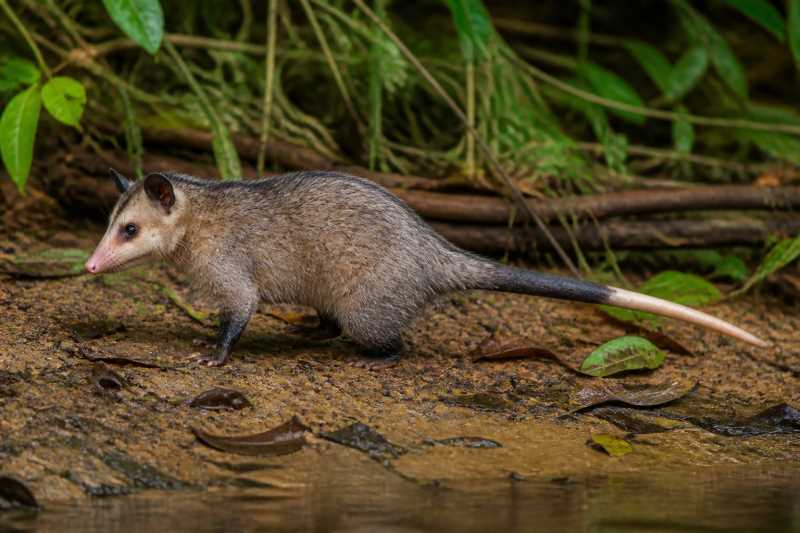
The Big Lutrine Opossum is aptly named for its large size compared to other opossum species. It typically measures between 30 to 40 centimeters in body length, with a tail that adds another 25 to 40 centimeters. The opossum’s weight ranges from 1 to 1.5 kilograms. Its fur is short and dense, primarily yellowish-brown, providing excellent camouflage in its natural environment.
The head of the Big Lutrine Opossum is characterized by a pointed snout, small rounded ears, and large, dark eyes that are well-suited for its nocturnal lifestyle. One of the most distinctive features is its robust tail, which is semi-prehensile, aiding in climbing and balancing. The opossum’s limbs are strong, with sharp claws that facilitate digging and climbing.
Range and Habitat
The Big Lutrine Opossum inhabits a wide geographic range in South America, primarily found in regions such as Argentina, Brazil, Paraguay, and Uruguay. It favors a variety of habitats, including grasslands, wetlands, and forested areas. Its adaptability to different environments has contributed to its widespread distribution.
This species tends to prefer areas near water sources, such as rivers and marshes, which provide abundant food resources and cover. The opossum is also known to inhabit agricultural lands, where it can sometimes come into conflict with human activities.
Behavior and Diet
The Big Lutrine Opossum is primarily nocturnal, spending the day hidden in burrows or dense vegetation and emerging at night to forage. It is a solitary animal, with individuals only coming together briefly during the breeding season.
Its diet is omnivorous and highly varied, including small mammals, birds, insects, fruits, and carrion. This dietary flexibility allows the opossum to thrive in diverse environments and adapt to seasonal changes in food availability.
The opossum is also a skilled swimmer, a trait that is particularly advantageous in its wetland habitats. It uses its powerful limbs and tail to navigate through water, often searching for aquatic prey.
Identification Tips (Field Recognition Cues)
Identifying the Big Lutrine Opossum in the field can be challenging due to its nocturnal and elusive nature. However, there are several cues to look for:
- Size and Shape: Look for a large marsupial with a robust, muscular build and a thick, semi-prehensile tail.
- Fur and Coloration: Note the short, dense, yellowish-brown fur which provides camouflage.
- Head and Facial Features: The pointed snout and rounded ears are distinctive, along with its prominent dark eyes.
- Behavior: Observe its nocturnal activity, swimming ability, and solitary behavior, especially if near water bodies.
Conservation Status (With Threats and Protections)
The Big Lutrine Opossum is currently classified as Least Concern by the International Union for Conservation of Nature (IUCN). Despite its wide distribution, the species faces several threats that could impact its population in the future.
Threats: The primary threats include habitat destruction due to agricultural expansion, deforestation, and urbanization. Additionally, road mortality and hunting for food or pest control contribute to population declines in certain areas.
Protections: Conservation efforts focus on habitat preservation and establishing protected areas to safeguard vital ecosystems. Environmental education and awareness campaigns are also crucial in reducing human-opossum conflicts.
Frequently Asked Questions
- What is the primary habitat of the Big Lutrine Opossum?
The Big Lutrine Opossum primarily inhabits grasslands, wetlands, and forested areas near water sources in South America, spanning countries like Argentina, Brazil, Paraguay, and Uruguay.
- Is the Big Lutrine Opossum endangered?
Currently, the Big Lutrine Opossum is classified as Least Concern by the IUCN. However, habitat destruction and human activities pose significant threats to its population stability.
- How can you identify a Big Lutrine Opossum?
Identifying a Big Lutrine Opossum involves looking for its large size, yellowish-brown fur, pointed snout, rounded ears, and nocturnal behavior, especially near water bodies.
- What does the Big Lutrine Opossum eat?
As an omnivore, the Big Lutrine Opossum has a varied diet that includes small mammals, birds, insects, fruits, and carrion, allowing it to adapt to different environments.
- Are Big Lutrine Opossums solitary animals?
Yes, Big Lutrine Opossums are primarily solitary, except during the breeding season, when they briefly come together to mate.
Related posts