Introduction
The Beautiful Firetail (Stagonopleura bella) is a bird of mesmerizing allure, native to the southeastern regions of Australia. Known for its striking plumage and melodious song, the beautiful firetail is a favorite among birdwatchers and ornithologists alike. This article delves into its habitat, behavior, diet, breeding, and conservation status, providing a comprehensive overview of this fascinating species.
Habitat and Distribution
The beautiful firetail is primarily found in the coastal regions of southeastern Australia, including Tasmania. It thrives in heathlands, woodlands, and forests, where dense shrubbery provides essential cover. These environments offer the bird an abundance of food sources and nesting sites, making them ideal habitats. The presence of dense underbrush is critical for the beautiful firetail, as it provides protection from predators and harsh weather conditions.
In recent years, changes in land use and habitat fragmentation have impacted the distribution of the beautiful firetail. Despite these challenges, the bird remains relatively common within its preferred habitats, though localized declines have been noted.
Physical Characteristics
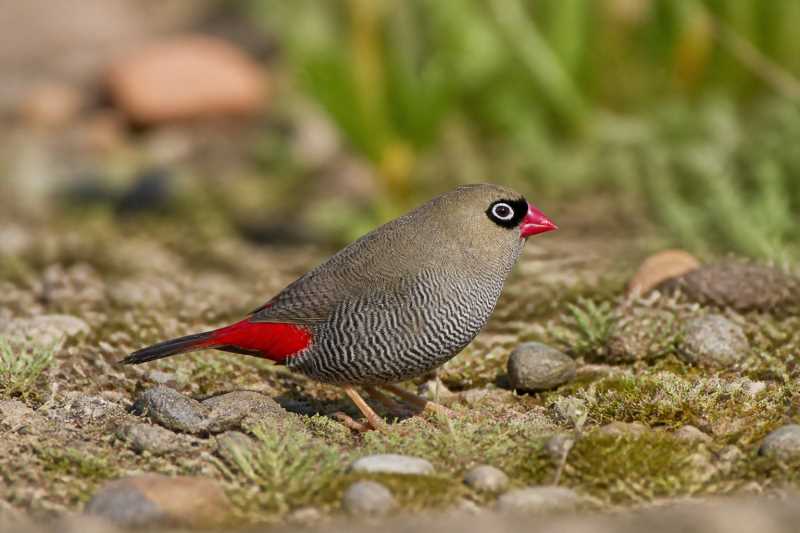
The beautiful firetail is aptly named for its vivid appearance. Measuring approximately 10–12 centimeters in length, it boasts a stout build with a short, conical bill adapted for seed eating. The plumage is predominantly olive-brown with a distinctive red rump and tail, which gives the bird its fiery moniker.
One of the most striking features of the beautiful firetail is its face pattern. The bird has a black face mask that contrasts sharply with its white throat and cheek patches. This striking facial pattern is not only a key identifying feature but also plays a role in social interactions within the species.
Behavior and Social Structure
Beautiful firetails are social birds, often seen in small flocks outside the breeding season. Their social structure is characterized by loose associations rather than strict hierarchies. These flocks provide safety in numbers, helping individuals spot predators and locate food more efficiently.
The flight of the beautiful firetail is swift and direct, often accompanied by a series of short, sharp calls. On the ground, they exhibit a hopping motion, which they use to move through dense vegetation while foraging.
Diet and Foraging
The diet of the beautiful firetail consists primarily of seeds, with a particular preference for native grasses. They are also known to consume small insects, which provide essential proteins, especially during the breeding season when nutritional demands are higher.
Foraging occurs mostly on the ground, where the birds use their strong bills to crack open seeds. They are opportunistic feeders and will exploit food sources as they become available, demonstrating a degree of dietary flexibility that aids their survival in varying conditions.
Breeding and Nesting
Breeding typically occurs from late winter to early summer, although the timing can vary depending on environmental conditions. Beautiful firetails are monogamous, forming strong pair bonds that last through the breeding season.
Nesting takes place in dense foliage, with both partners involved in constructing the nest. The nest is a dome-shaped structure made from grasses and twigs, lined with softer materials such as feathers. This structure provides insulation and protection from predators.
Clutch size generally ranges from 4 to 6 eggs, which are incubated primarily by the female, while the male takes on the role of protector and provider. Both parents participate in feeding the chicks, which fledge approximately three weeks after hatching.
Conservation Status and Threats
Currently, the beautiful firetail is listed as a species of least concern by the International Union for Conservation of Nature (IUCN). However, habitat loss due to land clearing for agriculture and urban development poses ongoing threats to their populations. Conservation efforts focus on habitat preservation and restoration to ensure the species’ long-term survival.
Predation by introduced species such as cats and foxes is another significant threat, particularly to nesting birds and fledglings. Efforts to control these invasive species are crucial for the protection of the beautiful firetail and other native wildlife.
Conclusion
The beautiful firetail is a testament to the rich biodiversity of Australia’s avian fauna. Its striking appearance and lively behavior make it a cherished subject for bird enthusiasts and a vital part of its ecosystem. Protecting its habitat and managing threats are essential for securing the future of this remarkable species.
References
- Higgins, P.J., Peter, J.M., & Cowling, S.J. (Eds.). (2006). Handbook of Australian, New Zealand and Antarctic Birds. Volume 7: Boatbill to Starlings. Melbourne: Oxford University Press.
- Pizzey, G., & Knight, F. (2012). The Field Guide to the Birds of Australia. Sydney: HarperCollins Publishers.
- Garnett, S.T., & Crowley, G.M. (2000). The Action Plan for Australian Birds 2000. Environment Australia, Canberra.
Acknowledgments
We are grateful to the Australian Bird Study Association for their invaluable contributions to our understanding of the beautiful firetail and their ongoing efforts in bird conservation.
Related posts