Understanding the Austral Thrush: Turdus falcklandii
The Austral Thrush, scientifically known as Turdus falcklandii, is a fascinating bird species native to the southern regions of South America, including Chile and Argentina, as well as the Falkland Islands. This bird, often referred to as the "Patagonian thrush," is a member of the family Turdidae, which also includes robins and other thrush species. Despite its relatively modest appearance, the Austral Thrush plays a significant role in its ecosystem and possesses intriguing behavioral traits that make it a worthy subject of study.
Habitat and Distribution
The Austral Thrush is primarily found in temperate forests, scrublands, and suburban areas. Its range extends from the central parts of Chile and Argentina to the southernmost regions, including Tierra del Fuego and the Falkland Islands. The bird is adaptable to various environments, thriving in both dense forests and open areas with scattered trees. Its presence in urban areas indicates its ability to coexist with human-altered landscapes, making it a common sight in gardens and parks across its range.
Physical Characteristics
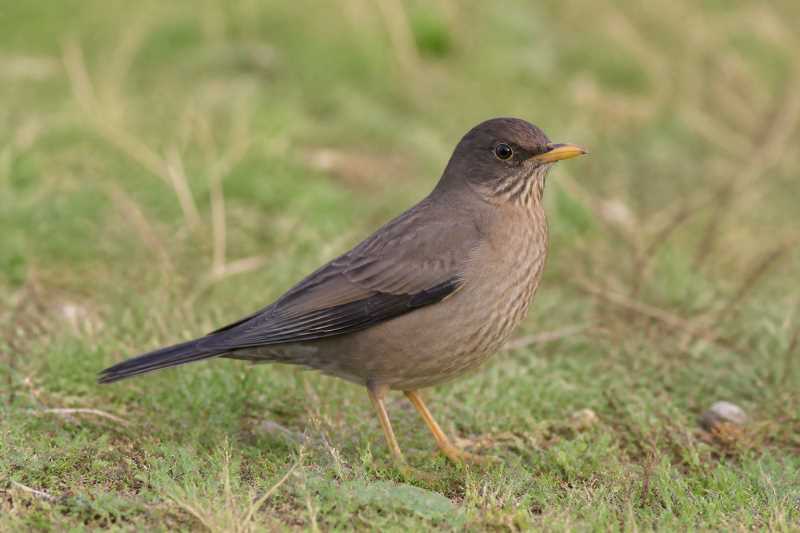
The Austral Thrush is a medium-sized bird, measuring between 24 to 27 centimeters in length with a wingspan of approximately 35 to 40 centimeters. It has a robust body, long legs, and a slightly curved bill. The plumage is generally dark brown with a paler underbelly. In adults, the throat and breast are streaked, while juveniles exhibit more pronounced streaking and a lighter overall coloration. The eyes are dark, and the legs are typically a pinkish hue, adding a subtle contrast to its otherwise subdued appearance.
Behavior and Diet
Austral Thrushes are primarily ground feeders, foraging for insects, larvae, and earthworms among leaf litter. They also consume a variety of fruits and berries, making them important seed dispersers in their habitats. Their diet can vary significantly depending on the season and availability of food resources.
These birds are known for their melodious song, which they use to establish territory and attract mates. The song is a series of clear, flute-like notes that can be heard echoing through the forests and gardens they inhabit. During the breeding season, which typically occurs from September to December, males sing more frequently to defend their territory and court females.
Reproduction
The Austral Thrush is a monogamous species, with pairs forming strong bonds during the breeding season. The female is primarily responsible for building the nest, which is constructed from twigs, grasses, and mud, and is usually located in a tree or shrub. The nest is cup-shaped and lined with softer materials to provide a comfortable environment for the eggs.
A typical clutch consists of three to four eggs, which are bluish-green with reddish-brown speckles. The female incubates the eggs for about 12 to 14 days, during which the male may assist by bringing food. Once hatched, both parents participate in feeding the chicks, which fledge approximately 14 to 16 days after hatching. The high level of parental care ensures a relatively high success rate for offspring survival.
Conservation Status
The Austral Thrush is currently listed as a species of Least Concern by the International Union for Conservation of Nature (IUCN). This status reflects its widespread distribution and stable population numbers. However, like many bird species, it faces potential threats from habitat destruction and climate change. Conservation efforts aimed at preserving native forests and promoting sustainable land-use practices can help secure the future of this species.
Importance in Ecosystem
Austral Thrushes play a crucial role in their ecosystems as both predators and seed dispersers. By controlling insect populations and aiding in plant propagation, they contribute to the health and balance of their habitats. Moreover, their presence serves as an indicator of environmental health, as changes in their population can reflect broader ecological shifts.
Conclusion
The Austral Thrush is an integral component of the South American and Falkland Islands ecosystems. Its adaptability to diverse environments, combined with its role in maintaining ecological balance, underscores its importance. Continued research and conservation efforts are essential to ensure that this melodious bird continues to thrive in its natural habitat.
For bird enthusiasts and conservationists alike, the Austral Thrush offers a fascinating glimpse into the rich tapestry of avian life in the southern hemisphere. By appreciating and protecting such species, we can help preserve the biodiversity that makes our world so wonderfully diverse.
Related posts