The Ash-breasted Antbird: An Enigmatic Denizen of the Amazon
In the verdant heart of the Amazon rainforest, where sunlight filters through dense foliage and the air is thick with the hum of biodiversity, resides a striking avian species known as the Ash-breasted Antbird (Myrmoborus lugubris). This small, elusive bird, characterized by its distinctive plumage and secretive habits, plays a vital role in the complex ecosystem of its tropical home. In this article, we delve into the fascinating world of the Ash-breasted Antbird, exploring its physical characteristics, habitat, behavior, and the conservation challenges it faces.
Physical Characteristics
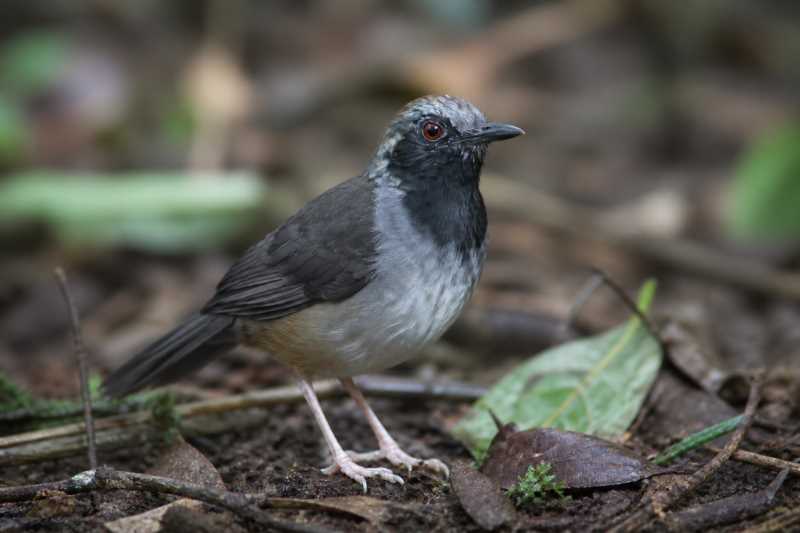
The Ash-breasted Antbird is a small passerine bird, measuring approximately 13 to 14 centimeters in length. As its name implies, it sports a subtle yet striking ash-colored breast. The male and female of the species exhibit sexual dimorphism, with males displaying a more pronounced grayish-blue breast and throat, contrasted by a black mask extending from the beak across the eyes. The rest of its plumage is predominantly dark gray, providing excellent camouflage amidst the forest understory.
Females, on the other hand, have a paler, more subdued coloration, with a lighter gray breast and less pronounced facial markings. This dimorphism is not merely ornamental but is thought to play a role in their breeding and nesting behavior, where the more cryptically colored females are less visible to predators when incubating eggs.
Habitat and Distribution
Myrmoborus lugubris is predominantly found in the lowland rainforests of the Amazon Basin, spanning across several South American countries, including Brazil, Peru, Colombia, and Ecuador. This species is particularly associated with the dense understory of terra firme forests—areas that remain unflooded throughout the year. The antbird’s preference for such habitats is likely due to the abundance of insects and arthropods, which constitute the bulk of its diet.
The availability of suitable habitat is crucial for the Ash-breasted Antbird’s survival, as it relies heavily on the intricate layers of vegetation for foraging and nesting. The bird typically nests in low shrubbery, constructing cup-shaped nests where it lays one to two eggs per breeding season. This reliance on specific forest conditions makes the species particularly susceptible to habitat disturbances.
Behavior and Ecology
The Ash-breasted Antbird is known for its elusive nature, often heard rather than seen. It communicates through a series of distinctive calls, which vary across its range, potentially indicating regional dialects. These vocalizations serve multiple purposes, from territory defense to mate attraction.
Myrmoborus lugubris is an insectivorous bird, adept at gleaning insects from leaves and branches. It often participates in mixed-species foraging flocks, a behavior that enhances feeding efficiency and reduces predation risk. By foraging in such groups, the antbird benefits from the vigilance of other species, allowing it to focus on feeding.
One of the most intriguing aspects of the Ash-breasted Antbird’s behavior is its association with army ant swarms. As the ants move through the forest, they flush out insects and other small creatures, providing a feeding opportunity for the antbird. This commensal relationship highlights the intricate interdependencies within rainforest ecosystems.
Conservation Status and Threats
Despite its adaptability, the Ash-breasted Antbird is not immune to the threats facing the Amazon rainforest. Deforestation, driven by logging, agriculture, and infrastructure development, poses the most significant threat to its habitat. The fragmentation of forests not only reduces available habitat but also isolates populations, making them more vulnerable to stochastic events.
Additionally, climate change presents an emerging threat, with shifts in temperature and precipitation patterns potentially altering the composition and structure of the Amazonian forests. Such changes could impact the availability of food resources and suitable nesting sites for the Ash-breasted Antbird.
Currently, the Ash-breasted Antbird is classified as Least Concern by the International Union for Conservation of Nature (IUCN). However, this status belies the potential risks posed by ongoing environmental changes. Conservation efforts aimed at preserving large tracts of contiguous rainforest are vital for ensuring the long-term survival of this species.
Conclusion
The Ash-breasted Antbird, with its subtle beauty and ecological significance, serves as a reminder of the rich biodiversity harbored by the Amazon rainforest. Protecting this enigmatic bird requires concerted efforts to address deforestation and mitigate the impacts of climate change. By safeguarding its habitat, we not only preserve a unique avian species but also contribute to the broader goal of maintaining the ecological integrity of one of the world’s most vital ecosystems.
In summary, the Ash-breasted Antbird is more than just a bird; it is a symbol of the interconnectedness of life in the Amazon. Its conservation is a testament to our commitment to protecting the natural world for future generations.
Related posts