Exploring the Enigmatic Collared Antshrike (Thamnophilus bernardi)
The Collared Antshrike, scientifically known as Thamnophilus bernardi, is a captivating avian species belonging to the family Thamnophilidae. This enigmatic bird, native to the neotropical regions of South America, particularly in countries like Peru and Ecuador, is a subject of fascination for ornithologists and bird enthusiasts alike. Its distinctive physical characteristics, intriguing behaviors, and ecological significance make the Collared Antshrike a noteworthy subject for study and appreciation.
Physical Characteristics
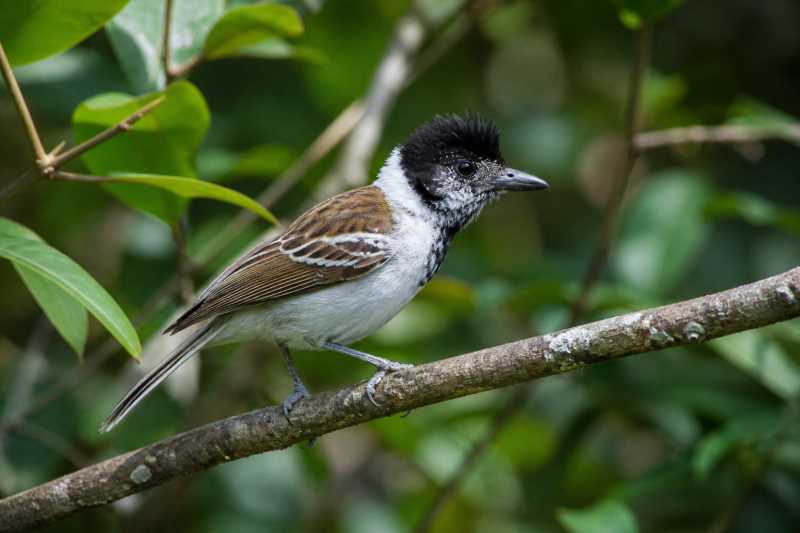
The Collared Antshrike is renowned for its striking appearance. Measuring approximately 16 to 18 centimeters in length, this bird exhibits sexual dimorphism, where males and females possess different plumage colors. Males are characterized by their predominantly black plumage, accentuated by a conspicuous white collar encircling the neck, which gives the bird its name. In contrast, females boast a more subdued brownish coloration with a faint rusty tinge on the wings and tail, providing them with effective camouflage in their natural habitat.
The Collared Antshrike’s robust bill is adapted for its insectivorous diet, allowing it to forage efficiently within the dense foliage of its habitat. Its strong legs and feet support its agile movements, enabling it to navigate through the understory with ease.
Habitat and Distribution
The Collared Antshrike is primarily found in the lowland and foothill forests of western Ecuador and northwestern Peru. It thrives in subtropical or tropical dry forests and moist lowland forests, favoring the dense undergrowth where it can forage for insects and other small invertebrates. This species is often observed in pairs or small family groups, maintaining territories within their preferred habitat.
Despite its relatively limited range, the Collared Antshrike exhibits remarkable adaptability to habitat variations. It can inhabit secondary growth forests and even areas disturbed by human activities, provided there is sufficient cover and food availability.
Behavior and Diet
The Collared Antshrike is an active and vocal bird, often detected by its distinctive calls before it is seen. Its vocalizations, a series of sharp, staccato notes, serve as a means of communication between mates and territorial signals to other individuals. These calls are vital for maintaining pair bonds and defending territories from intruders.
In terms of diet, the Collared Antshrike primarily feeds on insects, including beetles, ants, and caterpillars. It employs a foraging strategy known as "gleaning," where it inspects leaves and branches for prey, often hanging upside down or flitting through the undergrowth to capture its meal. This feeding behavior highlights the bird’s agility and adaptability in locating and securing food resources within its environment.
Reproduction and Lifespan
The breeding season for the Collared Antshrike typically coincides with the rainy season in its habitat, which ensures an abundance of food resources for raising their young. These birds are monogamous, forming long-term pair bonds that endure throughout multiple breeding seasons.
The nest of the Collared Antshrike is a cup-shaped structure constructed from twigs, leaves, and plant fibers, usually positioned in dense vegetation or shrubbery. The female lays two to three eggs, which both parents incubate. The collaborative nature of their parenting extends to feeding and protecting the chicks once they hatch, showcasing a strong familial bond.
The lifespan of the Collared Antshrike in the wild is not extensively documented, but similar species within the Thamnophilidae family are known to live several years, with their survival closely tied to habitat conditions and predation pressures.
Conservation Status
Currently, the Collared Antshrike is classified as a species of "Least Concern" by the International Union for Conservation of Nature (IUCN). However, like many birds inhabiting the neotropics, it faces potential threats from habitat destruction due to deforestation and agricultural expansion. Conservation efforts focused on preserving and restoring natural habitats are essential to ensuring the long-term survival of this species.
Human Interactions and Cultural Significance
While the Collared Antshrike may not hold significant cultural symbolism, it plays an important role in maintaining ecological balance within its habitat. By controlling insect populations and serving as prey for larger predators, it contributes to the biodiversity and health of its ecosystem.
Birdwatching enthusiasts often seek the Collared Antshrike for its unique behaviors and vocalizations, making it a cherished member of the avian community in its range. Promoting awareness and appreciation for this species can aid in fostering conservation initiatives and ensuring its continued presence in the wild.
Conclusion
The Collared Antshrike (Thamnophilus bernardi) is a remarkable bird with distinctive features and behaviors that capture the attention of bird lovers and researchers alike. Its adaptability and resilience in the face of environmental changes make it a symbol of nature’s tenacity. By understanding and valuing such species, we contribute to the broader efforts of conserving our planet’s rich and diverse avian heritage.
Related posts