Introduction
The Large Fig Parrot, scientifically known as Psittaculirostris desmarestii, is an enchanting avian species found primarily in the dense tropical rainforests of New Guinea and the surrounding islands. This vibrant parrot species is renowned for its striking plumage and unique dietary preferences, making it a fascinating subject of study for ornithologists and bird enthusiasts alike.
Taxonomy and Nomenclature
The Large Fig Parrot belongs to the order Psittaciformes, which comprises over 400 species of parrots and allies. Within this order, it is classified under the family Psittaculidae. The genus Psittaculirostris includes several species, with P. desmarestii being one of the most notable due to its size and distinct characteristics. The species name honors the French zoologist Anselme Gaëtan Desmarest, further highlighting its historical significance in zoological studies.
Physical Characteristics
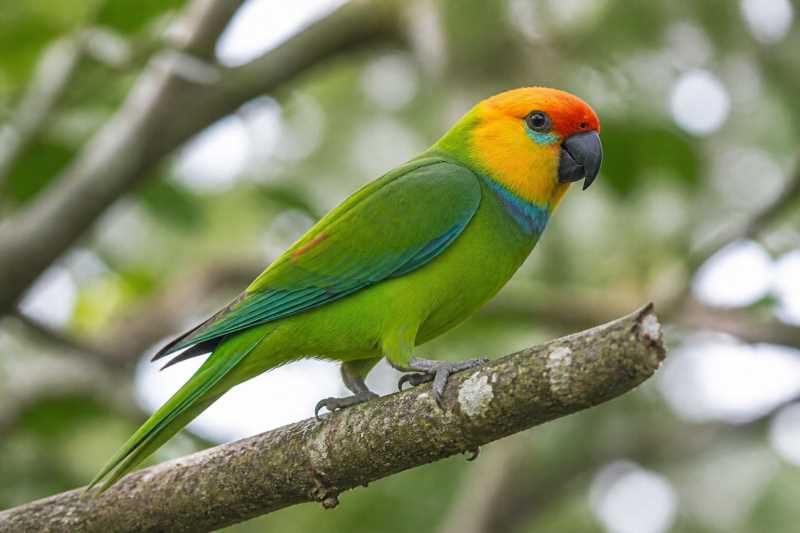
One of the most striking features of the Large Fig Parrot is its bright and vibrant plumage. Adult parrots exhibit a predominantly green coloration, which provides excellent camouflage within their lush forest habitat. This green backdrop is accentuated by a variety of hues, including vivid blues, yellows, and reds, particularly around the head and wings. Males and females are similar in appearance, with slight variations in coloration and size, where males are typically larger.
The average length of an adult Large Fig Parrot ranges from 18 to 22 centimeters, making it a relatively large member of the fig parrot group. They possess a robust, curved beak, ideal for consuming their primary diet of figs and other soft fruits. Their strong zygodactyl feet, having two toes pointing forward and two backward, facilitate climbing and maneuvering through the forest canopy.
Habitat and Distribution
The natural habitat of the Large Fig Parrot is the tropical rainforests of New Guinea, including both the Indonesian and Papua New Guinean regions. They thrive in dense, humid forest environments, often at elevations ranging from sea level to around 1,500 meters. These habitats provide ample food resources and nesting opportunities, crucial for their survival.
In addition to New Guinea, some populations are found on nearby islands, including the Aru Islands and parts of northern Australia. These regions offer similar ecological conditions, supporting the parrot’s dietary and nesting needs.
Behavior and Ecology
Large Fig Parrots are known for their social behavior, often forming small flocks outside the breeding season. These flocks can range from a few individuals to larger groups, depending on food availability. Their social structure plays a significant role in their survival, as group dynamics aid in locating food sources and avoiding predators.
Their primary diet consists of figs, which are abundant in their rainforest habitats. However, they are also known to consume other fruits, seeds, and occasionally insects. Their foraging habits are predominantly arboreal, rarely descending to the ground, which helps them avoid ground-based predators.
Reproduction and Lifespan
The breeding season of the Large Fig Parrot is typically aligned with the wet season when food resources are plentiful. During this period, pairs form strong monogamous bonds that last throughout the breeding cycle. They exhibit cooperative breeding behaviors, with both parents involved in nest building, incubation, and feeding the chicks.
Nesting usually occurs in tree hollows, where the female lays a clutch of 2 to 4 eggs. The incubation period lasts approximately 20 to 25 days, after which the chicks hatch. Both parents participate in feeding the young, which fledge after about 6 to 8 weeks. In the wild, Large Fig Parrots can live up to 20 years, though this can be longer in captivity with proper care.
Conservation Status
The conservation status of the Large Fig Parrot is currently classified as "Least Concern" by the International Union for Conservation of Nature (IUCN). Despite this, their populations face threats from habitat destruction, primarily due to logging and agricultural expansion in New Guinea. Conservation efforts are essential to ensure their habitat is preserved and protected from further degradation.
Conclusion
The Large Fig Parrot, with its vibrant plumage and fascinating ecological role, is a remarkable species that contributes significantly to the biodiversity of New Guinea’s rainforests. Continued research and conservation efforts are vital to safeguard this species and its habitat, ensuring its survival for future generations to admire.
References
- BirdLife International. (2021). Psittaculirostris desmarestii. The IUCN Red List of Threatened Species 2021.
- Forshaw, J. M. (2010). Parrots of the World. Princeton University Press.
- Juniper, T., & Parr, M. (1998). Parrots: A Guide to Parrots of the World. Yale University Press.
- del Hoyo, J., Elliott, A., & Christie, D. (eds.). (2006). Handbook of the Birds of the World, Vol. 4: Sandgrouse to Cuckoos. Lynx Edicions.
Further Reading
- Explore the unique behaviors of the Large Fig Parrot in "Parrot Behavior and Biology" by Mike Parr.
- Learn about the conservation efforts in New Guinea in "Conservation of Rainforest Birds" by Nigel Collar.
Related posts