The Japanese Sparrowhawk: A Comprehensive Overview
The Japanese Sparrowhawk (Tachyspiza gularis) is a remarkable bird of prey that graces the skies of East Asia. Known for its agility and speed, this hawk is a fascinating subject for ornithologists and birdwatchers alike. This article delves into the various aspects of the Japanese Sparrowhawk, including its habitat, physical characteristics, behavior, and conservation status.
Habitat and Distribution
The Japanese Sparrowhawk predominantly inhabits the forests and woodlands of East Asia. Its range extends across Japan, parts of China, Taiwan, and Korea. These birds prefer temperate regions and are often found in areas that offer ample cover and hunting opportunities. During the breeding season, they are typically located in mountainous regions, but they may move to lower altitudes or different regions during migration.
Migration is a significant aspect of the Japanese Sparrowhawk’s life cycle. In autumn, these birds migrate southward to Southeast Asia, including the Philippines and Indonesia, to escape the cold winter months. This migration is an impressive feat, demonstrating their endurance and navigational skills.
Physical Characteristics
The Japanese Sparrowhawk is a small raptor, with males typically measuring around 27-30 cm in length and females slightly larger at 30-33 cm. The wingspan ranges from 55-65 cm, allowing for agile flight through dense forests. One of the most distinguishing features is their sharp, hooked beak and strong talons, which are essential for capturing prey.
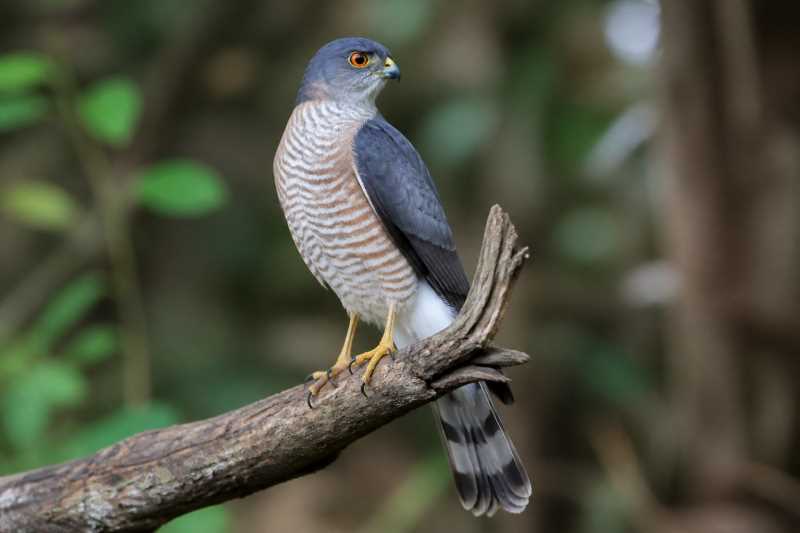
The plumage of the Japanese Sparrowhawk is also noteworthy. Adult males exhibit a striking blue-grey coloration on their upperparts, coupled with a white underbelly marked with fine, rufous barring. Females and juveniles differ slightly, possessing brownish upperparts and a more pronounced barring pattern on their underparts. These colorations not only aid in camouflage but also play a role in mating displays.
Behavior and Diet
Japanese Sparrowhawks are diurnal hunters, primarily active during the day. Their diet consists mostly of small birds, mammals, and insects. They are skilled hunters, employing stealth and speed to catch prey. The hawk typically perches silently in trees before launching a swift attack on unsuspecting prey, often catching them in mid-flight.
These birds are also known for their territorial nature, especially during the breeding season. Males perform elaborate flight displays to attract mates and establish territory. Once paired, the female lays 3-5 eggs, which she incubates while the male provides food. Both parents are involved in rearing the chicks, which fledge after approximately 30 days.
Conservation Status
Currently, the Japanese Sparrowhawk is listed as ‘Least Concern’ by the International Union for Conservation of Nature (IUCN). However, like many wildlife species, they face threats from habitat loss and environmental changes. Deforestation and urbanization are primary concerns, as they reduce the available habitat for these birds.
Climate change also poses a potential threat, as it may alter their migratory patterns and the availability of prey. Conservation efforts are essential to ensure that these hawks continue to thrive. Protecting their natural habitats, along with monitoring population trends, is crucial for their conservation.
Cultural Significance
In Japan, the sparrowhawk holds a special place in cultural folklore. It is often seen as a symbol of agility and determination, traits that are admired and respected. The bird’s presence in Japanese art and literature underscores its cultural importance and the deep connection between the people and their natural environment.
Conclusion
The Japanese Sparrowhawk is an extraordinary bird that captivates those who observe it. Its impressive hunting skills, migratory behavior, and cultural significance make it a subject of interest for many. While currently not endangered, ongoing conservation efforts are vital to protect its habitat and ensure its survival for future generations to admire.
With its unique characteristics and role in the ecosystem, the Japanese Sparrowhawk is a testament to the rich biodiversity of East Asia, deserving of both admiration and protection.
Related posts