The Enigmatic Violet Turaco: A Jewel of the Avian World
The avian world is replete with a myriad of colorful and fascinating creatures, but few are as captivating as the Violet Turaco (Tauraco violaceus). With its striking plumage and distinctive calls, this bird stands out as a remarkable example of nature’s artistry. Found primarily in the dense forests of West Africa, the Violet Turaco is not only a visual delight but also plays a significant role in its ecosystem. This article explores the unique attributes, habitat, behavior, and conservation status of the Violet Turaco, shedding light on why this bird is a true wonder of the natural world.
Appearance and Physical Characteristics
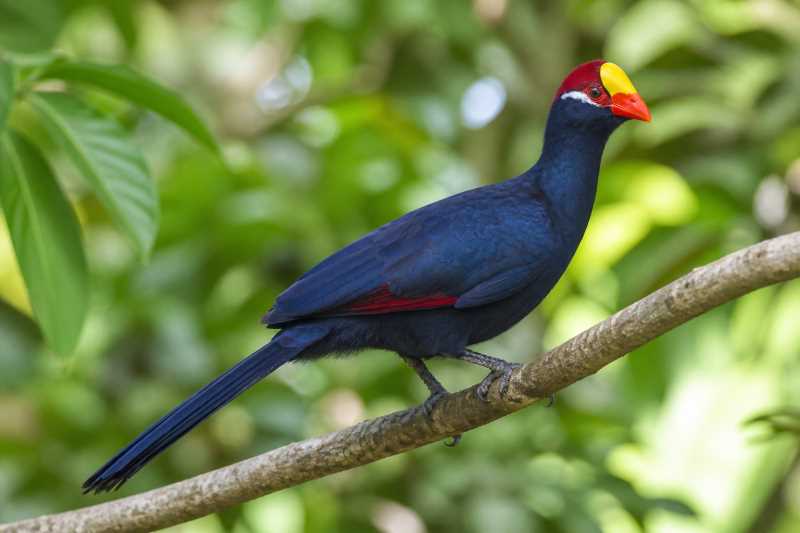
The Violet Turaco is a medium-sized bird, measuring about 45 to 50 centimeters in length. Its plumage is a vibrant violet, which gives the bird its name, and it is accentuated by a striking crimson crest and a bright yellow bill. The eyes are surrounded by a patch of bare skin that is also bright red, creating a vivid contrast against its violet feathers. The wings and tail add to the spectacle with their bold coloration, making the Violet Turaco a truly breathtaking sight in its natural habitat.
The bird’s striking appearance is not just for show; it plays a crucial role in communication and mating displays. The vivid colors are used to attract mates and signal territory ownership, with males often engaging in elaborate displays to win over females.
Habitat and Distribution
The Violet Turaco is native to the dense forests of West Africa, with its range extending from Guinea and Sierra Leone in the west to Nigeria and Cameroon in the east. These lush forest environments provide the ideal conditions for the Violet Turaco, offering ample food resources and nesting sites.
Preferring the canopy and mid-levels of the forest, the Violet Turaco is well-adapted to an arboreal lifestyle. Its strong legs and feet are perfect for gripping branches, while its powerful wings allow it to navigate the dense foliage with ease. These adaptations make it a master of its environment, able to move effortlessly through the trees in search of food and shelter.
Diet and Feeding Behavior
The Violet Turaco is primarily frugivorous, with a diet consisting mainly of fruit. However, it is known to supplement its diet with flowers, leaves, and the occasional insect. This varied diet ensures that the Violet Turaco gets the necessary nutrients for its energetic lifestyle.
Feeding primarily in the canopy, the Violet Turaco plays a crucial role in seed dispersal. As it consumes fruit, it inadvertently spreads seeds throughout the forest, contributing to the regeneration and diversity of its habitat. This ecological role underscores the importance of the Violet Turaco in maintaining the health and balance of its ecosystem.
Behavior and Social Structure
Violet Turacos are highly social birds, often found in small groups or family units. They engage in a variety of social interactions, from cooperative feeding to mutual grooming. These social bonds are essential for the survival and well-being of the group, providing protection and support in the challenging forest environment.
The Violet Turaco is also known for its distinctive calls, which range from soft coos to loud, harsh notes. These vocalizations serve multiple purposes, from communication within the group to territory defense. Males often use their calls to assert dominance and attract mates, while the group as a whole uses vocalizations to coordinate movements and alert each other to potential threats.
Reproduction and Breeding
Breeding in Violet Turacos typically occurs during the rainy season when food is abundant. They build their nests high in the trees, using twigs and leaves to create a secure platform for their eggs. The female typically lays two eggs, which are incubated by both parents.
The cooperative nature of Violet Turaco families extends to the rearing of young. Both parents are involved in feeding and protecting the chicks, ensuring they have the best chance of survival. This joint effort reflects the strong social bonds that characterize the species, highlighting the importance of family and community in the life of the Violet Turaco.
Conservation Status and Threats
Despite its vibrant presence in the forest, the Violet Turaco faces several threats that could impact its future. Habitat loss due to deforestation is the primary concern, as it reduces the available space and resources for the species. Additionally, hunting and trapping for the pet trade pose significant risks, as these activities can decimate local populations.
Conservation efforts are crucial to ensuring the survival of the Violet Turaco. Protecting its habitat through sustainable land management and anti-deforestation initiatives is essential. Moreover, raising awareness about the ecological importance of the Violet Turaco can help garner support for conservation measures and reduce the demand for these birds in the illegal pet trade.
Conclusion
The Violet Turaco is a testament to the beauty and complexity of the natural world. Its vibrant colors, social behavior, and ecological role make it a vital part of the West African forests. As we strive to protect our planet’s biodiversity, the Violet Turaco serves as a reminder of the wonders that nature has to offer and the responsibility we have to preserve it. By supporting conservation efforts and promoting sustainable practices, we can ensure that future generations will have the opportunity to marvel at the splendor of the Violet Turaco and its forest home.
Related posts