The Enchanting African Paradise Flycatcher: A Jewel of the Avian World
The African Paradise Flycatcher (Terpsiphone viridis) is an exquisite bird that captivates ornithologists and birdwatchers alike with its striking appearance and intriguing behaviors. Found across sub-Saharan Africa, this species is a testament to the continent’s rich biodiversity. This article delves into the fascinating world of the African Paradise Flycatcher, exploring its habitat, behavior, and significance in the ecosystem.
Habitat and Distribution
The African Paradise Flycatcher is widely distributed across sub-Saharan Africa, occupying a range of habitats from dense forests to open woodlands. This adaptability allows it to thrive in both humid and dry environments, although it prefers areas with abundant vegetation. The species is commonly found in riparian zones and forest edges, where it can easily forage for insects.
During the breeding season, these birds often migrate to higher altitudes, seeking cooler climates and more abundant food sources. The extensive distribution of the African Paradise Flycatcher across diverse habitats highlights its adaptability and resilience in the face of environmental changes.
Physical Characteristics
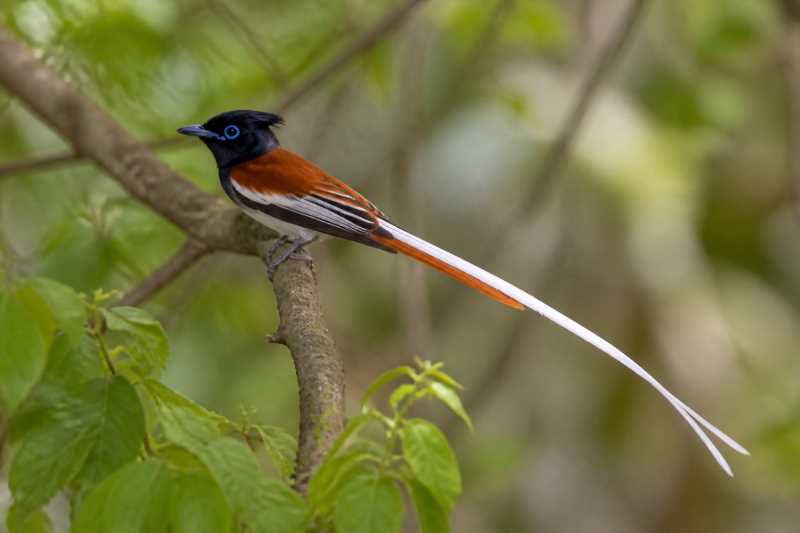
One of the most striking features of the African Paradise Flycatcher is its sexual dimorphism. Males are particularly eye-catching with their long, flowing tail feathers that can extend up to three times the length of their bodies. These feathers, combined with a vibrant chestnut or rufous body and a glossy blue-black head, make the males stand out in their natural habitat.
Females, on the other hand, have shorter tails and a more subdued coloration, usually in shades of grey and chestnut. Despite the differences, both sexes share a characteristic blue eye-ring and a robust, pointed bill.
Behavior and Diet
African Paradise Flycatchers are insectivorous birds, primarily feeding on a diet of flies, beetles, and other small insects. They are agile hunters, often seen darting through the air in pursuit of prey or sallying forth from a perch to snatch insects mid-flight. This active foraging behavior makes them an essential component of their ecosystem, helping to control insect populations.
These birds are also known for their elaborate courtship displays. Males showcase their impressive tail feathers and perform acrobatic flights to attract females. Once a pair bonds, they become highly territorial, defending their breeding area vigorously against intruders.
Reproduction and Nesting
The breeding season of the African Paradise Flycatcher varies depending on the region but generally aligns with the onset of the rainy season when food is abundant. The species is monogamous, with pairs often remaining together for several breeding seasons.
Nesting typically occurs in the fork of a tree branch, where the female uses grass, leaves, and spider webs to construct a small cup-shaped nest. Both parents share responsibilities, with the female primarily incubating the eggs and the male assisting in feeding the chicks once they hatch.
The chicks are altricial, hatching blind and featherless, requiring considerable parental care. Within about two weeks, the young fledge, but they remain dependent on their parents for several more weeks, learning essential survival skills.
Conservation Status
Currently, the African Paradise Flycatcher is classified as a species of Least Concern by the IUCN Red List. This status is largely due to its wide distribution and stable population numbers. However, habitat destruction and climate change pose potential threats to its habitat and food sources.
Conservation efforts focused on preserving natural habitats and promoting biodiversity are crucial for ensuring the species’ continued survival. Protecting forests and woodlands not only benefits the African Paradise Flycatcher but also supports countless other species that share its ecosystem.
Cultural Significance and Human Interaction
In many African cultures, the African Paradise Flycatcher holds symbolic value, often associated with beauty and freedom due to its vibrant plumage and graceful flight. Birdwatchers and ecotourists are frequently drawn to regions where these birds are found, contributing to local economies and promoting conservation awareness.
Efforts to educate the public about the ecological importance of the African Paradise Flycatcher and other indigenous wildlife can foster a sense of stewardship and encourage sustainable practices in communities.
Conclusion
The African Paradise Flycatcher is more than just a visually stunning bird; it is a vital player in the ecological balance of its habitat. Its adaptability, unique behaviors, and cultural significance make it a fascinating subject of study and a cherished part of Africa’s natural heritage.
As we continue to understand and appreciate the intricate dynamics of our planet’s ecosystems, the African Paradise Flycatcher serves as a reminder of the beauty and complexity of nature. Protecting this species and its habitat ensures that future generations can also experience the wonder of witnessing these avian jewels in the wild.
Related posts