The Evening Grosbeak: A Vibrant Visitor of North American Woodlands
The Evening Grosbeak (Hesperiphona vespertina) is a striking bird that captivates bird watchers and ornithologists alike with its vibrant plumage and intriguing behavior. Native to the forests of North America, this species is known for its distinctive appearance and fascinating migratory patterns. In this article, we delve into the characteristics, habitat, behavior, and conservation status of the Evening Grosbeak, providing an in-depth look at one of nature’s most charming avian species.
Physical Characteristics
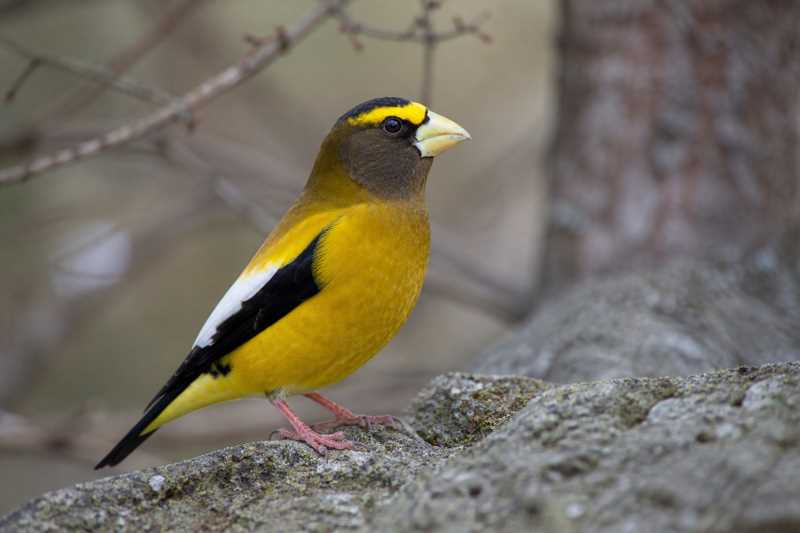
The Evening Grosbeak is notable for its robust build and colorful plumage. Adult males are particularly eye-catching, with a bright yellow body contrasted by black wings and a striking white wing patch. Their heads are adorned with a vivid yellow forehead and a massive, conical bill that is both pale and powerful, perfectly adapted for cracking seeds. Females, while less flamboyant, possess a subtle beauty with their softer gray plumage and hints of yellow.
Measuring approximately 18-22 cm (7-9 inches) in length and boasting a wingspan of around 30-36 cm (12-14 inches), these birds are relatively large in the finch family. Their weight ranges from 50-55 grams, giving them a solid presence among the branches.
Habitat and Distribution
Evening Grosbeaks thrive in deciduous and coniferous forests across North America, from southern Canada to Mexico. They are commonly found in mixed woodlands, where they enjoy the abundance of seeds and fruits. During the breeding season, they prefer the cooler climate of northern boreal forests, while in winter, they may migrate southward in search of food.
These birds are highly adaptable and can be found in a variety of environments, including suburban areas where bird feeders provide an easy food source. Their adaptability has allowed them to expand their range over the years, though fluctuations in their population are common due to changing environmental conditions and food availability.
Feeding Habits
Evening Grosbeaks are primarily granivorous, feeding on a wide array of seeds, buds, and fruits. Their powerful bills are adept at cracking open the tough shells of seeds, particularly those of maple, ash, and box elder trees. In addition to seeds, they also consume insects, which provide a crucial source of protein, especially during the breeding season.
Their feeding habits play an important role in the ecosystem as they help in seed dispersal and control insect populations. In areas where they are abundant, Evening Grosbeaks can often be seen flocking to bird feeders, where they feast on sunflower seeds and other offerings.
Behavior and Social Structure
Evening Grosbeaks are gregarious birds, often seen in flocks that can number in the dozens, particularly during the winter months. These flocks are not only social but also strategic, as they move in search of food resources. Their social nature is also evident during the breeding season when pairs work together to build nests and raise their young.
Nesting typically occurs between May and July, with females taking the lead in constructing the nest. They build cup-shaped nests high in trees, using twigs, grasses, and moss. Clutch sizes usually range from 2 to 5 eggs, which the female incubates for about 12-14 days. Both parents participate in feeding the fledglings, which leave the nest after approximately two weeks.
Vocalizations
Despite their name, Evening Grosbeaks are not particularly known for their melodious songs. Instead, they communicate through a series of short, sharp calls and whistles. Their vocalizations are often described as "chirp" or "cleer," and can be heard during flight or when perched.
Conservation Status
The Evening Grosbeak is currently listed as a species of concern due to declining populations across its range. Habitat loss, climate change, and changes in food supply are major threats to their numbers. Conservation efforts are focused on preserving their natural habitats and ensuring the availability of food resources through sustainable forestry practices.
Bird enthusiasts are encouraged to support these efforts by maintaining bird feeders during the winter months and planting native trees and shrubs that provide natural food sources. Citizen science programs also play a crucial role in monitoring population trends and contributing valuable data to conservation initiatives.
Conclusion
The Evening Grosbeak is a remarkable bird that continues to enchant those who are fortunate enough to encounter it. Its vibrant plumage, social behavior, and ecological importance make it a valuable part of North America’s natural heritage. By understanding and supporting conservation efforts, we can help ensure that future generations will continue to enjoy the presence of this captivating species in our forests and backyards.
Whether you are an avid bird watcher or simply enjoy the beauty of nature, the Evening Grosbeak serves as a reminder of the incredible diversity and resilience of the avian world.
Meta Title: "Evening Grosbeak: A Vibrant North American Bird"
Meta Description: "Explore the captivating world of the Evening Grosbeak, from its striking plumage to its migratory habits. Learn about its habitat, behavior, and conservation."
Related posts