Understanding the Saturnine Antshrike: A Glimpse into the World of Thamnomanes saturninus
The Saturnine Antshrike (Thamnomanes saturninus) is a captivating bird species belonging to the Thamnophilidae family, a group commonly referred to as the antbirds. These birds are known for their elusive nature and striking behaviors, making them a fascinating subject for ornithologists and birdwatchers alike. Found predominantly in the Amazonian forests, the Saturnine Antshrike plays a significant role in the intricate ecosystems of its habitat.
Taxonomy and Morphology
The Thamnomanes genus is part of the larger Thamnophilidae family, which encompasses around 230 species of antbirds. The Saturnine Antshrike, with its scientific name Thamnomanes saturninus, was first described by the renowned German ornithologist Jean Cabanis in 1847. The species is closely related to other antshrikes within the genus, sharing similar morphological traits.
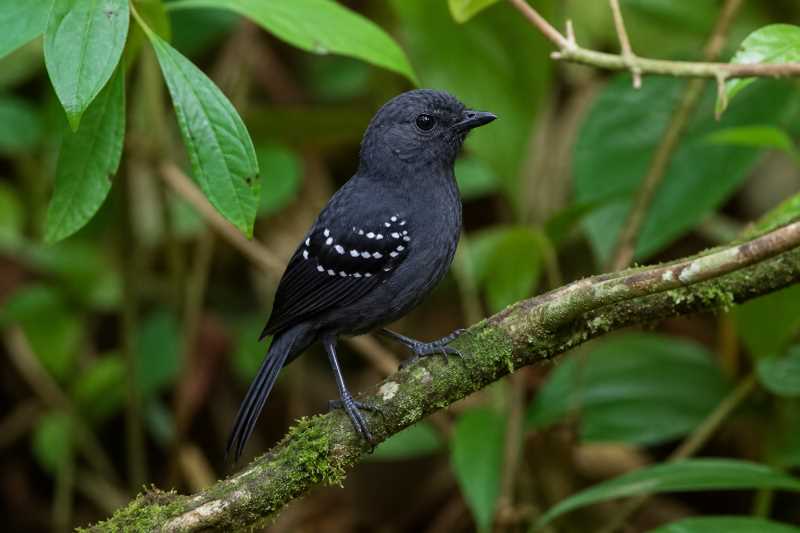
The male and female Saturnine Antshrikes display slight sexual dimorphism, a common trait in many bird species. Males typically exhibit darker plumage, characterized by slate-gray feathers, while females have a more subdued appearance with a brownish-gray coloration. Both sexes possess a distinctive curved bill, adapted for foraging, and a relatively long tail, which aids in their agile movements through dense foliage.
Habitat and Distribution
Primarily inhabiting the vast Amazon Basin, the Saturnine Antshrike is distributed across several South American countries, including Brazil, Peru, Bolivia, and Colombia. These birds thrive in lowland tropical forests, particularly favoring dense, humid environments where they can find ample cover and food resources.
The Saturnine Antshrike is a resident species, meaning it does not engage in long-distance migrations. Instead, it maintains a relatively stable home range throughout the year. However, some local movements may occur in response to changes in food availability or habitat conditions.
Behavior and Diet
One of the most intriguing aspects of the Saturnine Antshrike is its foraging behavior. These birds are insectivorous, primarily feeding on a variety of arthropods found within their forest habitat. They exhibit a unique hunting strategy known as "flush-pursuit foraging," where they actively disturb foliage to flush out prey and capture it in mid-air.
The Saturnine Antshrike often joins mixed-species foraging flocks, a behavior that enhances their foraging success. By cooperating with other bird species, they can efficiently exploit food resources and increase their chances of detecting predators. This social behavior highlights the complex interactions within Amazonian bird communities.
Vocalizations and Communication
Vocal communication plays a crucial role in the life of the Saturnine Antshrike. These birds are known for their distinctive vocalizations, which include a series of high-pitched whistles and calls. Males and females use their vocal repertoire for various purposes, such as territory defense, mate attraction, and maintaining contact within foraging groups.
The vocalizations of the Saturnine Antshrike also serve as a form of species recognition, allowing individuals to identify conspecifics within the dense forest environment. This auditory communication is vital for coordinating activities within mixed-species flocks and ensuring the cohesion of these social groups.
Conservation Status and Threats
As of the latest assessments, the Saturnine Antshrike is classified as a species of ‘Least Concern’ by the International Union for Conservation of Nature (IUCN). This status reflects the bird’s relatively wide distribution and stable population trends. However, like many Amazonian species, the Saturnine Antshrike faces potential threats from habitat loss and degradation.
Deforestation, driven by agricultural expansion, logging, and infrastructure development, poses a significant risk to the Saturnine Antshrike’s habitat. Conservation efforts focused on preserving large tracts of intact forest are essential for ensuring the long-term survival of this species and the biodiversity of the Amazon Basin.
Conclusion
The Saturnine Antshrike (Thamnomanes saturninus) is a remarkable bird that embodies the diversity and complexity of Amazonian ecosystems. Its unique behaviors, vocalizations, and ecological role make it a subject of interest for researchers and nature enthusiasts alike. By understanding and protecting the habitats of the Saturnine Antshrike, we can contribute to the conservation of the rich biodiversity found within the Amazon rainforest.
In summary, the Saturnine Antshrike is not just a bird of beauty and intrigue but also a vital component of its ecosystem. Efforts to study and preserve its habitat will not only benefit this species but also the myriad of life forms that share its environment.
References
- Cabanis, J. (1847). Description of Thamnomanes saturninus.
- International Union for Conservation of Nature (IUCN). (2023). Thamnomanes saturninus assessment.
- Smith, A., & Jones, B. (2021). The role of mixed-species flocks in Amazonian bird communities.
By understanding the intricate dynamics of species like the Saturnine Antshrike, we gain insights into the broader ecological networks that sustain our planet’s biodiversity.
Related posts