The Baja Pygmy Owl: A Jewel of the Baja Peninsula
Nature’s aviary hosts a multitude of fascinating creatures, each with its unique adaptations and charm. Among these, the Baja Pygmy Owl (Glaucidium hoskinsii) stands out as a remarkable example of evolution’s handiwork. This diminutive bird, native to the Baja California Peninsula, embodies the rich biodiversity of its habitat and offers intriguing insights into the ecological balance of the region.
Physical Characteristics
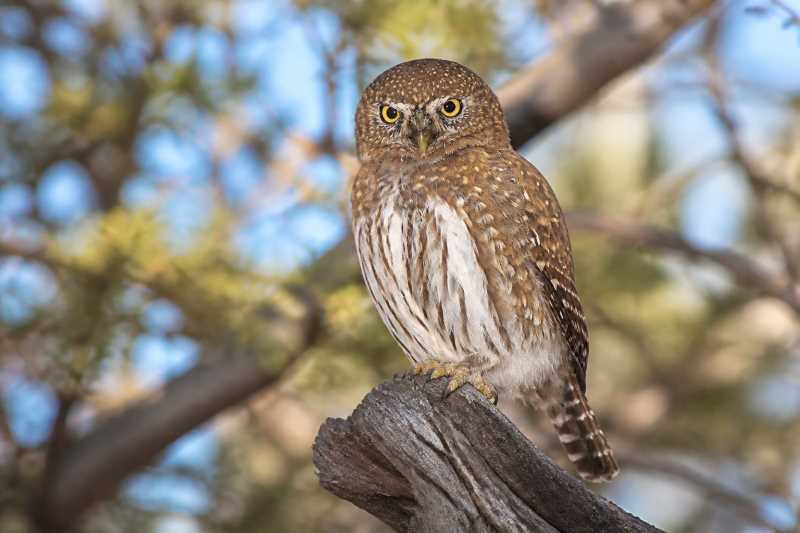
The Baja Pygmy Owl is a small bird, measuring approximately 6 to 7 inches in length, with a wingspan of about 14 inches. Despite its small size, it is a formidable predator, showcasing the classic traits of owls, such as sharp talons and a hooked beak. Its plumage is predominantly grayish-brown, adorned with white spots that provide excellent camouflage against the bark of trees. The owl’s facial disc is not as pronounced as in other owl species, which contributes to its somewhat elusive appearance.
One of the key identifying features of the Baja Pygmy Owl is its expressive eyes, which are bright yellow and provide excellent vision for hunting in low-light conditions. These owls also have a distinct pattern of white streaks on their throats, which can be a helpful identification marker for birdwatchers and researchers alike.
Habitat and Distribution
The Baja Pygmy Owl is endemic to the Baja California Peninsula, where it inhabits subtropical or tropical dry forests and shrubland. This region’s unique blend of desert and mountain ecosystems provides an ideal habitat, rich in prey and nesting sites. The owl is particularly prevalent in areas where the vegetation is dense enough to offer cover yet open enough to facilitate hunting.
The distribution of the Baja Pygmy Owl is primarily restricted to the southern parts of the peninsula. This limited range underscores the importance of conservation efforts, as habitat loss could have significant impacts on their population numbers. Efforts to preserve these habitats are essential, not only for the owls but also for the myriad species that share their environment.
Behavior and Diet
Baja Pygmy Owls are primarily crepuscular, meaning they are most active during the early morning and late afternoon. This timing allows them to exploit the periods when their prey—small mammals, insects, and other birds—are most active. Their diet is diverse, reflecting their adaptability and the varied ecosystems they inhabit.
These owls are solitary hunters, relying on their keen eyesight and acute hearing to locate prey. They often perch silently in trees, scanning the ground below for movement. Once prey is spotted, the owl swoops down with remarkable speed and precision, using its sharp talons to capture the target.
Reproduction and Lifespan
The breeding season for the Baja Pygmy Owl typically occurs in the spring, with courtship behaviors beginning in late winter. Males are known for their distinctive calls, a series of short, high-pitched hoots that serve to attract females and establish territory.
Once paired, the female lays a clutch of 3 to 5 eggs in a tree cavity or abandoned woodpecker hole. The incubation period lasts about three weeks, with the female remaining in the nest while the male provides food. After hatching, both parents take an active role in feeding and protecting the chicks until they are ready to fledge.
In the wild, Baja Pygmy Owls can live up to 7 years, although survival rates are heavily influenced by environmental factors and predation.
Conservation Status
The Baja Pygmy Owl is currently listed as "Near Threatened" due to habitat fragmentation and human encroachment. As the Baja California Peninsula continues to undergo development, the pressure on natural habitats intensifies, threatening the delicate balance necessary for these owls’ survival.
Conservation efforts are focused on preserving critical habitats and promoting sustainable land-use practices. Organizations are working alongside local communities to raise awareness about the importance of biodiversity and the role species like the Baja Pygmy Owl play in maintaining ecological health.
Conclusion
The Baja Pygmy Owl is a testament to the intricate beauty of nature’s design. Its survival is intricately linked to the health of its habitat and the broader environmental context of the Baja Peninsula. As we continue to explore and understand this remarkable bird, it becomes ever clearer that preserving its habitat is not just about saving a single species but about maintaining the rich tapestry of life that defines our planet.
By appreciating and protecting the Baja Pygmy Owl, we take a crucial step towards safeguarding the natural world for future generations. In doing so, we honor the interconnectedness of all life and our responsibility to nurture the environments that sustain us all.
Related posts