The Common Greenshank: A Comprehensive Overview
Introduction
The Common Greenshank (Tringa nebularia) is a notable bird species within the family Scolopacidae, widely recognized for its distinctive features and behaviors. Known for its long, slightly upturned bill and greenish legs, the Common Greenshank is a wader that inhabits a range of environments across Europe, Asia, and Africa. This article delves into various aspects of the Common Greenshank, including its habitat, behavior, migration patterns, and conservation status, providing a detailed understanding of this fascinating bird.
Taxonomy and Physical Description
The Common Greenshank belongs to the genus Tringa, which encompasses a variety of sandpipers. Its scientific name, Tringa nebularia, derives from Latin, with "Tringa" relating to a thrush-like bird and "nebularia" implying a fog or mist, perhaps alluding to its elusive nature in misty habitats.
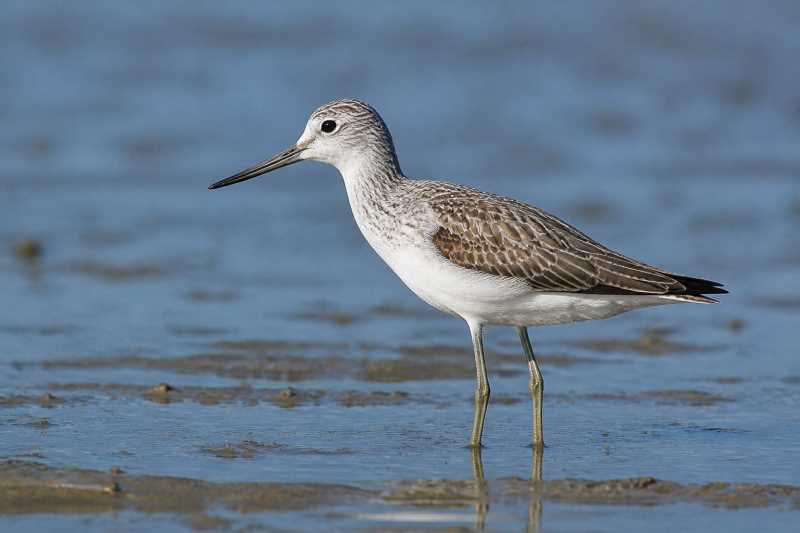
Physically, the Common Greenshank measures approximately 30-35 cm in length with a wingspan reaching 60-70 cm. It is characterized by its long, slender legs, which are typically olive-green, and a slightly upturned bill that aids in foraging. The plumage is primarily grey-brown on the upperparts with a lighter, speckled appearance on the underparts during the breeding season. In winter, its plumage becomes more subdued, with a predominantly grey and white coloration.
Habitat and Distribution
The Common Greenshank inhabits a wide variety of wetland environments, including marshes, estuaries, and mudflats. During the breeding season, it favors freshwater environments such as lakes, rivers, and peat bogs in the northern parts of Europe and Asia. These birds are highly adaptable and can also be found in man-made habitats like rice paddies and salt pans.
The species has a broad distribution, breeding across northern Europe and Asia, from Scotland to Siberia. In the non-breeding season, it migrates to southern Europe, Africa, the Indian subcontinent, and Southeast Asia. The Common Greenshank is a long-distance migrant, undertaking extensive journeys between its breeding and wintering grounds.
Behavior and Diet
Common Greenshanks are known for their active foraging behavior. They primarily feed on invertebrates, small fish, and amphibians. Their foraging technique involves walking briskly through shallow waters, using their long legs to wade, and their bills to probe the substrate or catch prey on the water’s surface. They are also known to run after prey in a swift and agile manner.
Socially, Common Greenshanks can be found in small groups, especially during migration and in wintering sites. However, during the breeding season, they tend to be more territorial. Their breeding display involves aerial flights accompanied by a series of melodious whistles, which serve to establish territory and attract mates.
Reproduction
The Common Greenshank’s breeding season begins in late April to May, depending on the location. They are ground nesters, with both males and females participating in the construction of a simple nest lined with grass and leaves. The female typically lays a clutch of three to four eggs, which are incubated by both parents for about 23-25 days.
Once hatched, the chicks are precocial, meaning they are relatively mature and mobile from birth. They leave the nest shortly after hatching and are capable of foraging with their parents. The fledging period lasts about 25-30 days, after which the young can fly and become independent.
Migration Patterns
Migration is a critical aspect of the Common Greenshank’s life cycle. These birds are known to travel long distances between their breeding and wintering grounds. Migration typically occurs in two phases: a post-breeding migration to wintering areas from July to November, and a return migration to breeding grounds from March to May.
During migration, Common Greenshanks utilize a network of stopover sites to rest and refuel. These sites are crucial for their survival, as they provide the necessary resources to sustain the birds over their long journeys. Some of the key stopover regions include the Mediterranean basin, the East African coast, and the Indian subcontinent.
Conservation Status
The Common Greenshank is currently listed as "Least Concern" on the IUCN Red List, indicating that it is not at immediate risk of extinction. However, like many migratory birds, it faces threats from habitat loss, climate change, and human disturbance. Wetland degradation, in particular, poses significant challenges, as these habitats are often drained or converted for agricultural and industrial purposes.
Conservation efforts for the Common Greenshank focus on protecting critical habitats along their migratory routes and breeding grounds. International cooperation is essential, given their extensive migratory paths, and initiatives like the Ramsar Convention play a vital role in safeguarding wetland ecosystems worldwide. Additionally, monitoring programs are crucial for tracking population trends and assessing the impact of environmental changes on their habitats.
Conclusion
The Common Greenshank is a remarkable bird, emblematic of the intricate connections between species, habitats, and global ecosystems. Its migratory behavior underscores the importance of international conservation efforts and highlights the challenges faced by many bird species in an increasingly human-dominated world. By understanding and protecting the habitats and ecosystems that support the Common Greenshank, we contribute to the broader goal of preserving biodiversity and maintaining the health of our planet.
As we continue to study and appreciate the Common Greenshank, it serves as a reminder of the beauty and complexity of avian life and the responsibility we share in ensuring its future.
References
- BirdLife International. (2021). Species factsheet: Tringa nebularia. Retrieved from BirdLife International.
- del Hoyo, J., Elliott, A., & Sargatal, J. (Eds.). (1996). Handbook of the Birds of the World. Vol. 3. Hoatzin to Auks. Lynx Edicions.
- Hayman, P., Marchant, J., & Prater, T. (1986). Shorebirds: An Identification Guide to the Waders of the World. Houghton Mifflin Company.
- Wetlands International. (2020). Waterbird Population Estimates. Retrieved from Wetlands International.
Related posts