The Remarkable Mountain Bulbul: A Study of Ixos mcclellandii
In the serene foothills of the Himalayas, among the dense foliage and the gentle whispers of the mountain breeze, resides a captivating avian species known as the Mountain Bulbul (Ixos mcclellandii). This bird, with its distinctive plumage and melodious call, offers a fascinating glimpse into the rich biodiversity of the Asian highlands.
Taxonomy and Distribution
The Mountain Bulbul belongs to the family Pycnonotidae, a diverse group of passerine birds known for their varied vocalizations and vibrant appearances. The species was first described by the British ornithologist Thomas C. Jerdon in 1841, and it has since intrigued birdwatchers and ornithologists alike.
Ixos mcclellandii is primarily found in the subtropical and tropical moist montane forests of South and Southeast Asia. Its range extends across the Himalayas, covering northern India, Nepal, Bhutan, and parts of Myanmar and southern China. The bird thrives at elevations between 800 to 2500 meters, where the climate and vegetation are ideal for its lifestyle.
Physical Characteristics
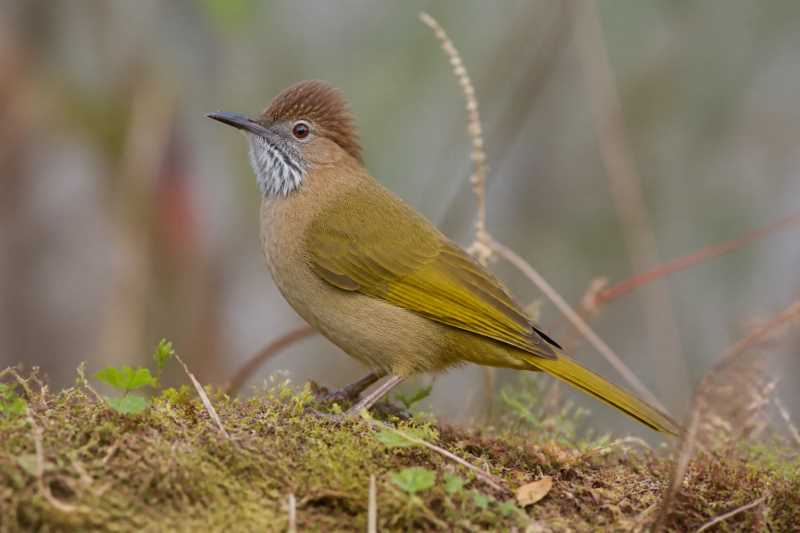
The Mountain Bulbul is a medium-sized bird, measuring approximately 20 to 22 centimeters in length. It has a robust body, characterized by olive-green upperparts and a more subdued, pale grayish-white underbelly. One of its most striking features is the conspicuous white eye-ring, which contrasts sharply with its dark iris.
The bird’s bill is short and slightly curved, adapted for its omnivorous diet. Its wings and tail are relatively short, aiding in agile movements through dense foliage. Overall, the Mountain Bulbul’s plumage provides excellent camouflage, blending seamlessly with its verdant surroundings.
Behavior and Ecology
The Mountain Bulbul is known for its lively and active nature. It often forms small flocks, especially outside the breeding season, and is frequently observed foraging in the upper canopy of forests. The bird is an omnivore, feeding on a varied diet that includes fruits, berries, insects, and small invertebrates.
Vocal communication is a significant aspect of the Mountain Bulbul’s behavior. It has a wide repertoire of calls, ranging from melodious whistles to harsher, chattering notes. These vocalizations play a crucial role in maintaining social bonds within flocks and in territorial displays during the breeding season.
Reproduction and Lifespan
Breeding occurs primarily between March and July, coinciding with the abundance of food resources. The Mountain Bulbul builds a cup-shaped nest, typically placed in a tree fork or dense bush, providing a secure site for raising young.
The female usually lays two to four eggs, which are incubated for about two weeks. Both parents participate in feeding the hatchlings, ensuring they receive a nutritious diet of insects and fruits. The young fledge approximately 12 to 14 days after hatching, although they remain dependent on their parents for several weeks.
Conservation Status
Currently, the Mountain Bulbul is classified as a species of "Least Concern" by the International Union for Conservation of Nature (IUCN). Its relatively wide distribution and stable population trends contribute to this status. However, like many forest-dwelling species, it faces threats from habitat destruction due to logging, agriculture, and urban expansion.
Conservation efforts in the region focus on preserving natural habitats and protecting biodiversity hotspots. Continued monitoring and research are essential to ensure the long-term survival of the Mountain Bulbul and its habitat.
Cultural and Ecological Significance
In many cultures across its range, the Mountain Bulbul is admired for its beauty and song. It serves as an important ecological indicator, reflecting the health of montane forest ecosystems. The bird’s role in seed dispersal and insect population control underscores its ecological value.
Birdwatching tourism, driven by species like the Mountain Bulbul, also contributes to local economies. Efforts to promote sustainable tourism help to raise awareness about the importance of conserving these natural habitats and the species that inhabit them.
Conclusion
The Mountain Bulbul (Ixos mcclellandii) is not just a bird of the mountains but a symbol of the rich biodiversity and ecological dynamics of the Asian highlands. Its presence in the forests is a reminder of the intricate connections within ecosystems and the need for conservation.
As we continue to study and appreciate such species, it becomes increasingly clear that protecting them is not just about preserving a single bird, but about safeguarding the delicate balance of nature that sustains life on Earth.
Related posts