The Enigmatic Crimson-crowned Fruit Dove: A Jewel of the Pacific
The Crimson-crowned Fruit Dove, scientifically known as Ptilinopus porphyraceus, is a captivating avian species that graces the tropical rainforests of the Pacific. Known for its vibrant plumage and melodious calls, this bird is a true symbol of the lush biodiversity found in its native habitats. While often overshadowed by more flamboyant avian species, the Crimson-crowned Fruit Dove stands out with its unique charm and ecological significance.
Taxonomy and Distribution
Belonging to the Columbidae family, which includes pigeons and doves, the Crimson-crowned Fruit Dove is a member of the genus Ptilinopus, which encompasses a variety of fruit doves known for their bright colors and frugivorous diets. The species is primarily distributed across several Pacific islands, including Samoa, Tonga, and Wallis and Futuna. These islands offer the perfect backdrop of dense forests that provide both sustenance and shelter for the species.
Physical Characteristics
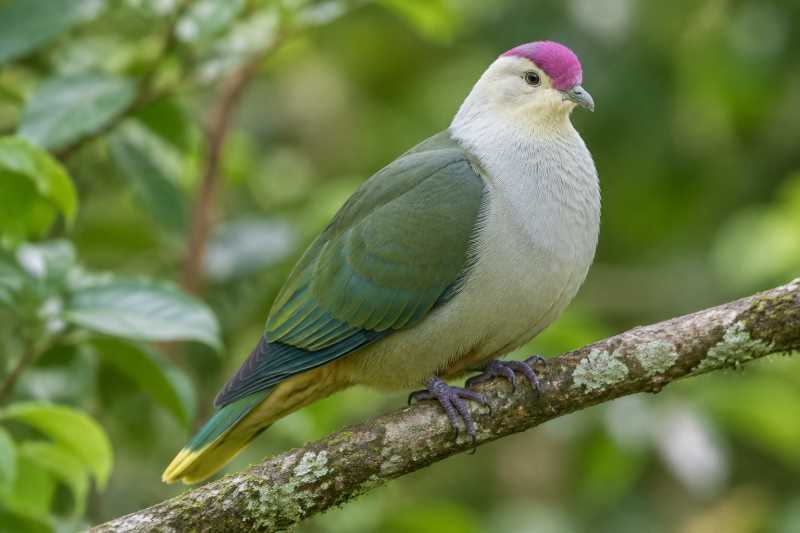
As its name suggests, the Crimson-crowned Fruit Dove is adorned with a striking crimson cap, which contrasts beautifully with its predominantly green plumage. This colorful crown is complemented by a subtle blend of purples and whites on its belly and wings, making it a visual delight for bird watchers and researchers alike. Typically measuring around 24 centimeters in length, this medium-sized dove is both agile and elegant, with a slight build that aids in swift navigation through dense foliage.
Habitat and Behavior
The Crimson-crowned Fruit Dove thrives in a variety of forested environments, ranging from lowland tropical forests to montane regions. It is particularly fond of areas abundant in fruit-bearing trees, as its diet consists predominantly of native fruits and berries. This dietary preference plays a crucial role in the ecosystem, as the dove acts as a seed disperser, aiding in forest regeneration and contributing to the ecological balance of its habitat.
In terms of behavior, the Crimson-crowned Fruit Dove is known for its elusive nature. It often perches quietly amidst the foliage, making it a challenge to spot despite its vivid coloration. However, its soft, melodious cooing calls are a telltale sign of its presence, often resonating through the forest canopy during dawn and dusk.
Reproduction and Lifespan
Reproductive behavior in the Crimson-crowned Fruit Dove is marked by a simple yet effective courtship display. Males often engage in a series of coos and physical displays to attract a mate. Once paired, the female typically lays a single egg, which both parents incubate over a period of about two weeks. The chicks are born altricial, requiring significant parental care before they are ready to fledge and explore the forest independently.
The lifespan of the Crimson-crowned Fruit Dove in the wild is not extensively documented; however, like many doves, they are believed to live several years, with some reaching up to a decade under favorable conditions.
Conservation Status and Threats
Currently, the International Union for Conservation of Nature (IUCN) lists the Crimson-crowned Fruit Dove as a species of Least Concern, indicating a relatively stable population across its range. However, this status does not exempt the species from threats that could impact its future survival. Habitat loss due to deforestation and agricultural expansion poses a significant risk, as it diminishes the available resources and nesting sites crucial for the dove’s survival.
Moreover, introduced predators such as rats and cats on some islands further exacerbate the threat to the species by preying on eggs and young chicks. Conservation efforts aimed at preserving natural habitats and controlling invasive species are essential to ensuring the long-term viability of the Crimson-crowned Fruit Dove populations.
Conclusion
The Crimson-crowned Fruit Dove is a remarkable example of the rich biodiversity found in the Pacific region. Its vibrant colors and ecological role as a seed disperser highlight its importance within its natural habitat. While it currently enjoys a stable population status, continued conservation efforts are vital to safeguard its future. By promoting awareness and fostering sustainable practices, we can ensure that this avian jewel continues to thrive in the tropical paradises it calls home.
As we learn more about the Crimson-crowned Fruit Dove, we gain valuable insights into the complex and interconnected ecosystems of the Pacific islands, reminding us of the intricate balance that exists within nature and the responsibility we bear in preserving it.
Related posts