Introduction
The Yellow Wattlebird (Anthochaera paradoxa) is a captivating avian species native to Tasmania, an island state of Australia. Recognizable by its striking yellow wattles and distinctive calls, this bird plays a crucial role in the ecosystems of its natural habitat. This article delves into the unique characteristics of the Yellow Wattlebird, its habitat, behavior, and the conservation efforts in place to ensure its survival.
Taxonomy and Classification
The Yellow Wattlebird belongs to the family Meliphagidae, which includes honeyeaters, known for their specialized brush-tipped tongues adapted for nectar feeding. The genus Anthochaera comprises several wattlebird species, with the Yellow Wattlebird being the largest honeyeater in Australia. Its scientific name, Anthochaera paradoxa, reflects its unique characteristics and somewhat paradoxical nature.
Physical Description
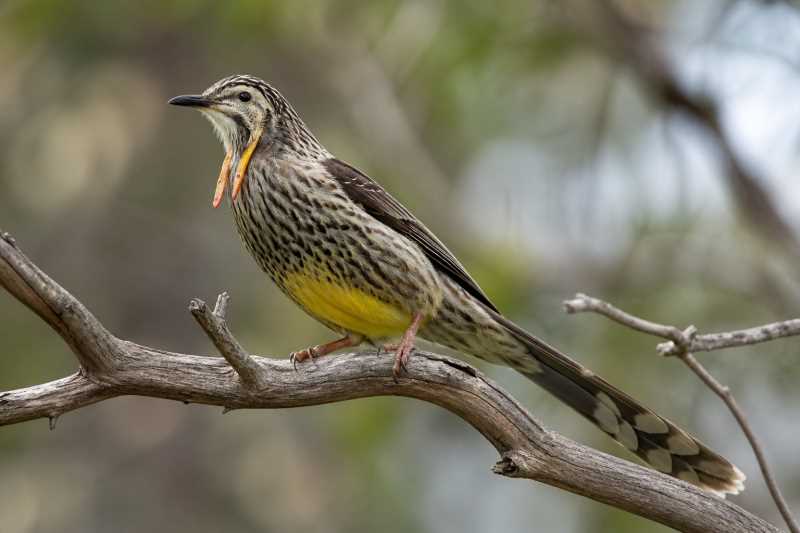
Adult Yellow Wattlebirds are notable for their large size, measuring approximately 37-45 cm in length. They exhibit a grey-brown plumage with pale streaks, and their most distinctive feature is the yellow-orange fleshy wattles hanging from either side of their face. These wattles are believed to play a role in sexual selection, with larger wattles potentially indicating better health or genetic fitness. The species exhibits sexual dimorphism, with males typically being larger than females.
Vocalizations
The Yellow Wattlebird is famous for its harsh, raucous calls, which can be heard echoing through the forests and woodlands of Tasmania. Their vocalizations are complex, consisting of a series of squawks and screeches that serve various purposes, such as marking territory, attracting mates, and communicating with other birds. These calls contribute to the wattlebird’s reputation as a noisy inhabitant of its environment.
Habitat and Distribution
Endemic to Tasmania, the Yellow Wattlebird inhabits a range of environments, from coastal heathlands to wet forests. They are particularly common in eucalyptus forests, where they find abundant sources of nectar and insects. Their range is limited to Tasmania, which makes them an important part of the island’s biodiversity. Seasonal migrations occur within the island, as these birds move in search of flowering plants and optimal feeding grounds.
Diet and Feeding Behavior
Primarily nectarivorous, the Yellow Wattlebird relies heavily on the nectar of flowering plants, particularly eucalyptus and banksias. Their brush-tipped tongues are perfectly suited for extracting nectar from flowers. In addition to nectar, they also consume insects and fruits, making them important pollinators and seed dispersers in their ecosystem. Their feeding behavior often involves aggressive interactions with other nectar-feeding birds, as they defend their feeding territories vigorously.
Breeding and Reproduction
Breeding occurs in the spring and summer months, with Yellow Wattlebirds building large, cup-shaped nests high in the canopy of trees. The nests are constructed using twigs and lined with softer materials such as feathers and grass. Females typically lay two to three eggs, which are incubated for about 16-18 days. Both parents participate in feeding and caring for the young, which fledge approximately two to three weeks after hatching.
Conservation Status
The Yellow Wattlebird is currently classified as Least Concern by the International Union for Conservation of Nature (IUCN). However, its limited range makes it vulnerable to habitat destruction and environmental changes. Conservation efforts focus on preserving Tasmania’s natural habitats and monitoring the impacts of climate change on local biodiversity. Organizations and government initiatives are working to ensure the protection of critical habitats and promote sustainable land-use practices.
Human Interactions
As a prominent species in Tasmania, the Yellow Wattlebird is of interest to birdwatchers and nature enthusiasts. Its distinctive appearance and vocalizations make it a popular subject for observation and study. Educational programs and ecotourism initiatives help raise awareness about the species and its ecological importance, encouraging conservation efforts at the local and national levels.
Conclusion
The Yellow Wattlebird is a remarkable species, integral to the biodiversity of Tasmania. Its unique characteristics, from its vibrant wattles to its loud calls, make it a symbol of the island’s natural heritage. While currently not at immediate risk, ongoing conservation efforts are essential to safeguard its future. By understanding and appreciating the Yellow Wattlebird, we can contribute to the preservation of Tasmania’s rich avian diversity.
Related posts