The Black-thighed Falconet: A Marvel of Avian Miniature
The avian world is full of wonders, from the majestic wingspans of eagles to the delicate beauty of hummingbirds. Among these marvels is the Black-thighed Falconet (Microhierax fringillarius), a testament to the incredible diversity and adaptability of birds. This diminutive raptor, no larger than a sparrow, is renowned for its striking appearance, unique behaviors, and ecological significance.
Description and Identification
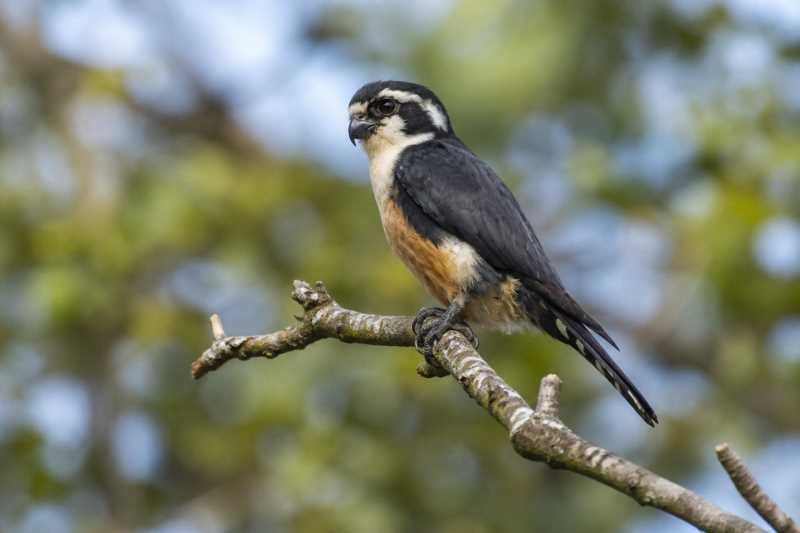
The Black-thighed Falconet is one of the smallest birds of prey in the world, measuring only about 14 to 16 centimeters in length. Despite its small size, this falconet is a formidable predator, showcasing the classic raptor characteristics of sharp talons and a hooked beak. Its plumage is predominantly black and white, with distinctive black thighs and a white throat, which provide camouflage in its natural habitat.
The bird’s head is adorned with a striking pattern: a black crown and a white face with a thin black stripe extending from the beak to the back of the head. This pattern not only provides a regal appearance but also serves practical purposes in communication and camouflage.
Habitat and Distribution
The Black-thighed Falconet is native to Southeast Asia, with its range extending through Thailand, Malaysia, Indonesia, and parts of the Philippines. It thrives in a variety of habitats, from lowland forests to open country landscapes with scattered trees. This adaptability is crucial for its survival, especially in regions undergoing rapid deforestation.
These falconets are often found near human settlements, taking advantage of the open spaces and abundance of prey. However, their presence is an indicator of relatively stable and healthy ecosystems, as they require a balanced environment to thrive.
Diet and Hunting Behavior
Despite their petite stature, Black-thighed Falconets are skilled hunters. Their diet primarily consists of insects, small birds, and occasionally lizards. They employ a sit-and-wait hunting strategy, perching patiently until prey is spotted. With remarkable speed and precision, they swoop down to capture their target in their talons.
Insects form the bulk of their diet, with dragonflies and grasshoppers being particularly favored. Their ability to control insect populations makes them valuable allies in maintaining ecological balance. This predatory role underscores the importance of conserving their habitats, as it impacts the broader ecosystem.
Reproduction and Social Behavior
Black-thighed Falconets are monogamous, forming long-term pair bonds. They are cavity nesters, often using abandoned woodpecker holes or natural tree cavities for nesting. The breeding season varies by region but generally falls between March and June.
During courtship, males engage in aerial displays to impress potential mates. Once paired, the female lays a clutch of 3-5 eggs, which both parents incubate. After hatching, both parents are involved in feeding and protecting the chicks until they fledge, highlighting their cooperative nature.
Conservation Status and Challenges
Currently, the Black-thighed Falconet is listed as a species of Least Concern by the International Union for Conservation of Nature (IUCN). However, this status does not imply the absence of threats. Habitat loss due to deforestation and agricultural expansion poses significant challenges, impacting their food sources and nesting sites.
Efforts to conserve these raptors focus on habitat protection and environmental education. Encouraging sustainable land-use practices and raising awareness about the ecological roles of small raptors are essential steps in ensuring their continued survival.
The Significance of Black-thighed Falconets
Beyond their ecological role, Black-thighed Falconets hold cultural significance in some regions. They are often considered symbols of agility and precision, admired for their hunting prowess and distinct appearance.
Birdwatchers and ornithologists are particularly drawn to these falconets due to their unique characteristics and behaviors. Observing them in their natural habitat offers valuable insights into the dynamics of small raptor species and their interactions within ecosystems.
Conclusion
The Black-thighed Falconet, with its striking appearance and remarkable adaptability, continues to captivate bird enthusiasts and researchers alike. As one of the smallest raptors, it embodies the intricate balance of nature and the importance of preserving biodiversity.
Efforts to protect these birds and their habitats are crucial, not only for the falconets themselves but for the health of entire ecosystems. By understanding and appreciating these avian wonders, we can contribute to a more sustainable coexistence with the natural world.
Related posts