Manus Brush Cuckoo: A Detailed Exploration of Cacomantis blandus
Introduction
The Manus Brush Cuckoo, scientifically known as Cacomantis blandus, is a fascinating bird species belonging to the Cuculidae family. Renowned for its distinctive vocalizations and elusive nature, this bird is primarily found within the lush, tropical environments of Manus Island. This article delves into the intricate details of the Manus Brush Cuckoo, exploring its habitat, physical characteristics, behavior, diet, and conservation status, while also highlighting its significance within the avian world.
Habitat and Distribution
The Manus Brush Cuckoo is endemic to Manus Island, part of Papua New Guinea. The island’s dense rainforest provides an ideal habitat for this species, offering abundant food sources and ample cover for nesting. Manus Island’s unique ecosystem is characterized by its high humidity and rich biodiversity, which supports a wide range of flora and fauna, making it an essential habitat for the Manus Brush Cuckoo.
The island’s isolation has led to the development of a distinct avian community, and the Manus Brush Cuckoo is a prime example of a species that has evolved in relative isolation. Its distribution is primarily confined to the lowland forests, although it can occasionally be spotted in secondary growth areas and forest edges.
Physical Characteristics
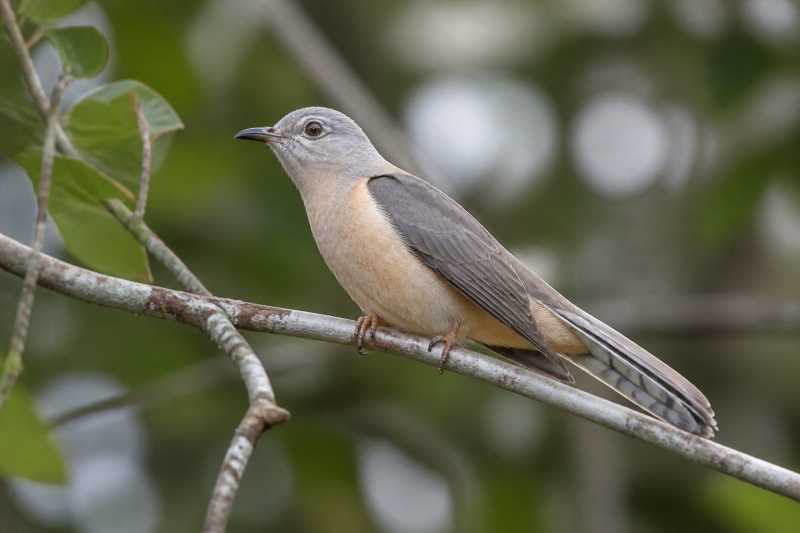
The Manus Brush Cuckoo is a medium-sized bird, measuring approximately 20 to 24 centimeters in length. It exhibits a predominantly brown plumage with subtle variations in shading across its body. The upperparts are generally a rich, dark brown, while the underparts are lighter, often displaying a buff or cream-colored hue.
One of the most striking features of the Manus Brush Cuckoo is its eye coloration. The bird possesses bright yellow irises that contrast sharply with its dark plumage, giving it a distinctive and penetrating gaze. The beak is slender and slightly curved, adapted for its insectivorous diet.
Sexual dimorphism is relatively minimal in this species, with males and females exhibiting similar coloration and size. This lack of pronounced sexual dimorphism is not uncommon among cuckoo species, where both sexes share similar ecological roles.
Behavior and Vocalizations
The Manus Brush Cuckoo is an elusive bird, often heard rather than seen. Its call is a characteristic series of repetitive, melodious whistles that can be heard echoing through the forest. These vocalizations serve multiple purposes, including territorial defense and mate attraction.
The species is known for its secretive behavior, often remaining hidden within the dense foliage of the rainforest. This cryptic nature, combined with its relatively muted plumage, makes it challenging for birdwatchers and researchers to observe in the wild.
Although primarily solitary, the Manus Brush Cuckoo may occasionally form loose associations with other bird species, particularly during feeding. This behavior is likely a strategy to increase foraging efficiency and reduce predation risk.
Diet and Feeding Habits
The Manus Brush Cuckoo is predominantly insectivorous, feeding on a diet rich in caterpillars, beetles, and other arthropods. Its foraging strategy involves a combination of perched hunting and sallying, where the bird makes short flights from a perch to capture prey in mid-air or on foliage.
The cuckoo’s slender, curved bill is well-suited for extracting insects from crevices and foliage. This adaptability allows it to exploit a wide range of invertebrate prey, contributing to its success as a predator within the rainforest ecosystem.
Reproduction and Lifecycle
Little is known about the specific breeding habits of the Manus Brush Cuckoo, primarily due to its secretive nature and the challenges of conducting field research in its dense habitat. However, like many members of the Cuculidae family, it is presumed that this species may exhibit brood parasitism, a behavior where the female lays her eggs in the nests of other bird species.
Brood parasitism allows the cuckoo to avoid the energetic costs associated with raising its young, as the host species assumes responsibility for incubation and chick rearing. This strategy can impact host bird populations and is a fascinating aspect of cuckoo ecology that warrants further study.
Conservation Status and Threats
Currently, the Manus Brush Cuckoo is classified as "Least Concern" by the International Union for Conservation of Nature (IUCN). However, like many island species, it faces potential threats from habitat degradation and the introduction of non-native species.
Deforestation and habitat fragmentation on Manus Island pose significant risks to the cuckoo’s habitat. Conservation efforts must prioritize the preservation of the island’s unique rainforest ecosystem to ensure the longevity of the Manus Brush Cuckoo and other endemic species.
Additionally, the potential introduction of invasive species, such as rats or snakes, could have detrimental effects on the bird’s population. These threats underscore the importance of ongoing monitoring and conservation initiatives on Manus Island.
Conclusion
The Manus Brush Cuckoo is a remarkable species that embodies the unique biodiversity of Manus Island. Its elusive nature, coupled with its intriguing ecological behaviors, makes it a subject of interest for ornithologists and bird enthusiasts alike. While currently not at immediate risk, the ongoing conservation of its habitat is crucial to safeguard its future.
Understanding and preserving the Manus Brush Cuckoo and its rainforest habitat is vital, not only for the species itself but also for the broader ecological health of Manus Island. Continued research and conservation efforts will ensure that this enigmatic bird continues to thrive in its native environment for generations to come.
Related posts