The Elusive Beauty of the Chinese Grouse: A Conservation Priority
Nestled within the rich tapestry of biodiversity in the temperate forests of China, the Chinese Grouse (Tetrastes sewerzowi) stands as a testament to the delicate balance of nature. Known for its elusive nature and striking plumage, the Chinese Grouse is a species that continues to captivate ornithologists and conservationists alike.
Habitat and Distribution
The Chinese Grouse is primarily found in the forested regions of the Qinghai-Tibet Plateau, particularly in the mountainous areas of central and southern China. Preferring dense coniferous forests interspersed with birch and rhododendron, these birds are most commonly spotted in the provinces of Gansu, Shaanxi, Sichuan, and Yunnan. Their habitat, characterized by cold winters and short growing seasons, offers the ideal environment for these birds to thrive, though it also presents unique conservation challenges.
Physical Characteristics
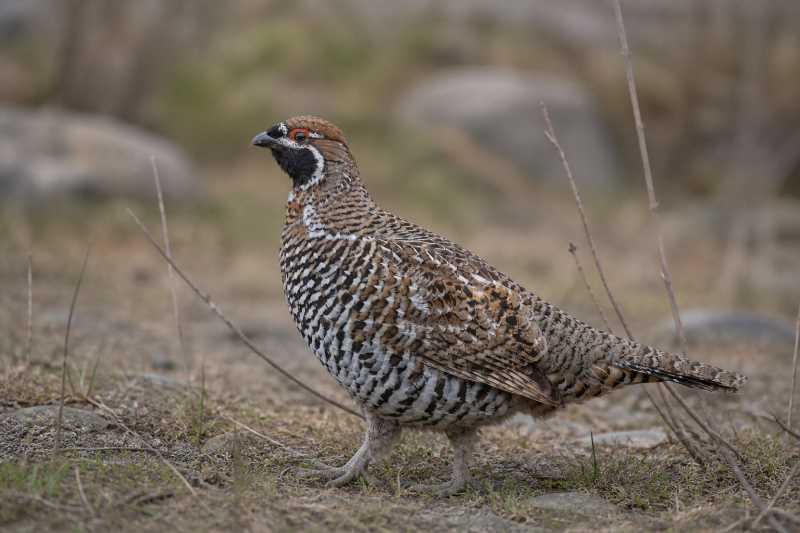
A medium-sized bird, the Chinese Grouse measures approximately 38-42 cm in length. Its plumage is a blend of intricate patterns and colors, with males displaying a more prominent array of markings than females. Males boast a distinguished black throat and face, contrasted by a white patch along the chest, and adorned with striking red eye combs. The rest of the body is cloaked in a mottled pattern of browns and grays, providing excellent camouflage against the forest floor. Females, while less conspicuous, share similar colors but with more muted patterns, aiding in their nesting roles.
Behavior and Diet
Chinese Grouse are known for their secretive behavior, often remaining motionless or silently retreating into the underbrush when approached. This behavior, alongside their camouflaged plumage, makes them difficult to observe in the wild. Typically solitary or found in pairs, these birds are more active during the early morning and late afternoon.
Their diet primarily consists of a variety of plant materials, including buds, leaves, and berries. During the harsh winter months, they rely heavily on the needles and buds of coniferous trees. The availability of these resources is critical, as their diet must be sufficiently nutritious to support them through the breeding season.
Breeding and Life Cycle
The breeding season for the Chinese Grouse begins in late April through June. Males engage in elaborate displays to attract females, including fanning their tails and performing a series of calls and postures. Once a pair is formed, the female takes on the responsibility of nesting and incubating the eggs.
Nests are typically built on the ground, concealed by dense vegetation, and lined with leaves and feathers. Clutch size ranges from 5 to 9 eggs, with the incubation period lasting about 24 days. After hatching, chicks are precocial, leaving the nest shortly after birth to follow their mother and learn essential survival skills.
Conservation Status
Classified as Near Threatened by the International Union for Conservation of Nature (IUCN), the Chinese Grouse faces several conservation challenges. Habitat loss due to deforestation and land conversion for agriculture poses the greatest threat to their survival. Additionally, climate change impacts their habitat, potentially altering the availability of food resources and suitable nesting sites.
Efforts to conserve the Chinese Grouse are ongoing, with several initiatives focused on habitat protection and restoration. Local and international conservation organizations are working in tandem with government agencies to establish protected areas and implement sustainable forestry practices.
The Role of Conservation and Research
Conservationists emphasize the importance of continued research to better understand the ecological needs of the Chinese Grouse. Detailed studies on their habitat preferences, breeding behaviors, and population dynamics are crucial for formulating effective conservation strategies.
Community involvement is also key to successful conservation efforts. Educating local communities about the importance of the Chinese Grouse and their forest habitats can foster a sense of stewardship and encourage participation in conservation activities.
In conclusion, the Chinese Grouse is not only a symbol of China’s natural heritage but also a critical indicator of forest ecosystem health. As threats continue to mount, the need for concerted conservation efforts becomes increasingly urgent. By prioritizing habitat protection and fostering community engagement, there is hope for securing a future for the Chinese Grouse and the myriad of species that share its forest home.
Related posts