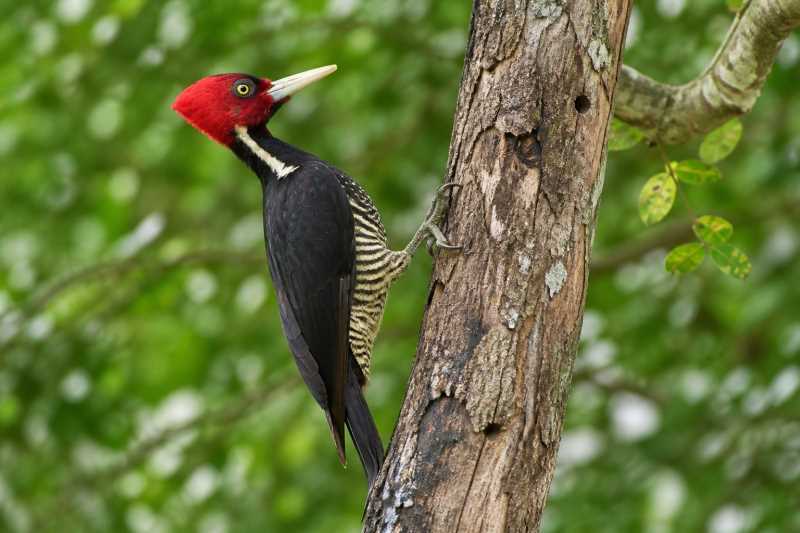
The Pale-billed Woodpecker: A Majestic Avian Architect
The Pale-billed Woodpecker (Campephilus guatemalensis) is an impressive and captivating member of the woodpecker family, Picidae. It is known for its striking appearance, distinctive behaviors, and significant ecological role in its native habitats. Found predominantly in the tropical forests of Central America, this species contributes to the biodiversity and health of its ecosystem, demonstrating the intricate balance of nature.
Description and Identification
The Pale-billed Woodpecker is renowned for its large size and striking features. It measures between 33 to 38 centimeters in length, making it one of the larger woodpecker species. Its most distinctive feature is its vibrant red crest, which contrasts sharply with its black-and-white body. The bird’s name derives from its pale, ivory-colored bill, a characteristic that sets it apart from other woodpeckers.
Males and females share similar plumage, though the males typically have a more prominent red crest. The bird’s back and wings are predominantly black, interspersed with white markings that vary among individual birds. Its underparts are mostly white, with some black streaks, providing excellent camouflage against the bark of trees.
Distribution and Habitat
The Pale-billed Woodpecker is native to the tropical and subtropical forests of Central America. Its range extends from southern Mexico through Belize, Guatemala, Honduras, Nicaragua, Costa Rica, and into western Panama. It prefers lowland and foothill forests, often found in areas with mature trees, which provide ample opportunities for foraging and nesting.
These woodpeckers are typically associated with primary forests but can also be found in secondary growth and forest edges. Despite their adaptability, habitat destruction poses a significant threat to their population, as logging and land conversion reduce the availability of suitable nesting sites.
Behavior and Ecology
The Pale-billed Woodpecker is a diurnal bird, active during the day. It is an exceptional climber, using its strong claws and stiff tail feathers to navigate tree trunks and branches. This species is known for its powerful drumming, a behavior used to communicate with other woodpeckers and to establish territory.
The diet of the Pale-billed Woodpecker primarily consists of insects, particularly beetle larvae, which it extracts from beneath bark using its robust bill. It also consumes fruits and nuts, exhibiting a degree of dietary flexibility. This foraging behavior plays a crucial role in controlling insect populations and maintaining the health of forest ecosystems.
Breeding and Nesting
Breeding in Pale-billed Woodpeckers typically occurs during the dry season, from February to June. These birds are monogamous, with pairs often staying together for several breeding seasons. They excavate nesting cavities in dead or decaying trees, a task that requires significant effort and cooperation between mates.
The female typically lays a clutch of two to three eggs, which both parents incubate. After hatching, the chicks are altricial, meaning they are born helpless and require significant parental care. Both parents are involved in feeding and protecting the young, ensuring the survival of their offspring.
Conservation Status
Currently, the Pale-billed Woodpecker is listed as a species of Least Concern by the IUCN Red List. However, ongoing habitat destruction and fragmentation pose significant threats to its long-term survival. Conservation efforts focused on preserving mature forest habitats and promoting sustainable forestry practices are essential to ensure the continued existence of this remarkable bird.
Cultural Significance
In many Central American cultures, the Pale-billed Woodpecker holds symbolic significance. It is often associated with strength and resilience, qualities admired by local communities. The bird’s distinctive drumming is sometimes considered a harbinger of rain or change, reflecting its integration into the cultural fabric of the regions it inhabits.
Conclusion
The Pale-billed Woodpecker is a vital component of the ecosystems it inhabits. Its role as both a predator and a prey species, along with its contribution to tree health and insect population control, underscores the importance of preserving its natural habitats. As we continue to understand the complexities of these ecosystems, it becomes increasingly clear that the conservation of species like the Pale-billed Woodpecker is crucial for maintaining the delicate balance of nature.
By fostering awareness and promoting conservation initiatives, we can ensure that future generations will continue to marvel at the beauty and ecological importance of the Pale-billed Woodpecker. Its presence in our forests is a testament to the rich biodiversity that defines Central America’s natural landscapes, a legacy worth protecting.
Related posts