The Coppery-tailed Coucal: A Unique Avian Marvel
The natural world is replete with fascinating creatures, and among them, the Coppery-tailed Coucal (Centropus cupreicaudus) stands out as a particularly intriguing bird. Known for its distinctive appearance and unique behavioral traits, this bird offers a captivating study in avian diversity. This article explores the physical characteristics, habitat preferences, ecological role, and conservation status of the Coppery-tailed Coucal, providing a comprehensive overview of this remarkable species.
Physical Characteristics
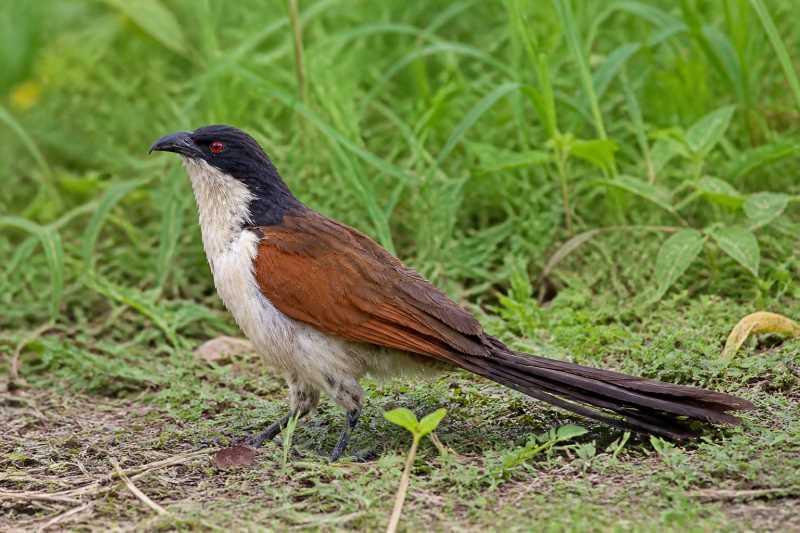
The Coppery-tailed Coucal is a member of the Cuculidae family, which includes other coucals, cuckoos, and roadrunners. It is a large, robust bird, averaging about 48 to 50 centimeters in length. As its name suggests, one of its most striking features is its copper-colored tail, which shimmers with a metallic sheen under sunlight. The rest of its plumage is predominantly black, with a greenish gloss on the wings, giving it a sleek and elegant appearance. The bird’s eyes are a deep red, adding to its striking visage.
In addition to its visual appeal, the Coppery-tailed Coucal is known for its distinctive calls. It produces a series of deep, resonant sounds that are often described as "booming" or "hooting," which can be heard over long distances. These vocalizations serve several purposes, including territorial defense and mate attraction.
Habitat and Distribution
The Coppery-tailed Coucal is primarily found in sub-Saharan Africa, with its range extending across countries such as Botswana, Namibia, Zambia, Zimbabwe, and Angola. It favors wetland habitats, such as swamps, marshes, and riverine forests, where it can find abundant food and suitable nesting sites.
These birds are well-adapted to their wetland environments, often seen clambering through dense vegetation or making short flights across water bodies. Their strong legs and feet are well-suited for walking and climbing through reeds and tall grasses, allowing them to navigate their habitats efficiently.
Diet and Foraging Behavior
Coppery-tailed Coucals are opportunistic feeders, and their diet reflects the diversity of their wetland habitats. They primarily consume insects, such as grasshoppers and beetles, but also feed on small vertebrates like frogs, lizards, and occasionally small birds. Their foraging technique is characterized by stealth and patience; they often move slowly through vegetation, using their keen eyesight and hearing to locate prey.
In addition to hunting, they are known to scavenge, feeding on carrion when available. This dietary flexibility allows them to thrive in various environmental conditions, making them resilient to changes in food availability.
Breeding and Reproduction
The breeding season for Coppery-tailed Coucals typically coincides with the rainy season, which varies depending on their geographic location. During this time, the birds become more vocal and active, with males performing elaborate displays to attract females. These displays often involve a series of calls, wing flapping, and tail spreading, showcasing their striking plumage to potential mates.
Nesting occurs in dense vegetation, often close to water. The nests are built from twigs and grasses, forming a large, dome-shaped structure that provides protection from predators and the elements. The female typically lays between three to five eggs, which both parents incubate and care for once hatched. The chicks are altricial, meaning they are born relatively undeveloped and require extensive parental care before fledging.
Ecological Role and Conservation
As both predators and scavengers, Coppery-tailed Coucals play a crucial role in their ecosystems. By controlling insect and small vertebrate populations, they help maintain ecological balance within their wetland habitats. Additionally, their scavenging habits aid in the decomposition process, contributing to nutrient recycling in the ecosystem.
Despite their ecological importance, Coppery-tailed Coucals face several threats, primarily due to habitat destruction and degradation. Wetland drainage for agriculture, urban development, and climate change pose significant risks to their populations. However, they are currently listed as "Least Concern" by the International Union for Conservation of Nature (IUCN), indicating that they are not immediately at risk of extinction. Nonetheless, continued habitat protection and sustainable land management practices are essential to ensure their long-term survival.
Conclusion
The Coppery-tailed Coucal is a testament to the diversity and adaptability of the avian world. With its striking appearance, unique vocalizations, and important ecological role, it captures the imagination of bird enthusiasts and researchers alike. As we continue to explore and understand the complexities of our natural world, the Coppery-tailed Coucal serves as a reminder of the delicate balance that must be maintained to preserve our planet’s rich biodiversity.
Protecting these birds and their habitats is not only vital for their survival but also for the health and stability of the ecosystems they inhabit. Through conservation efforts and increased awareness, we can ensure that future generations will have the opportunity to appreciate the beauty and wonder of the Coppery-tailed Coucal.
Related posts