Introduction
The Yellow-eared Woodpecker (Veniliornis maculifrons) is a captivating bird species known for its distinct markings and vibrant presence in the forests of South America. This medium-sized woodpecker, belonging to the Picidae family, is a vital part of its ecosystem due to its role in controlling insect populations and contributing to the health of trees. In this article, we will delve into the unique characteristics, habitat, and conservation status of the Yellow-eared Woodpecker, shedding light on why this bird is a symbol of biodiversity in its natural habitat.
Physical Characteristics
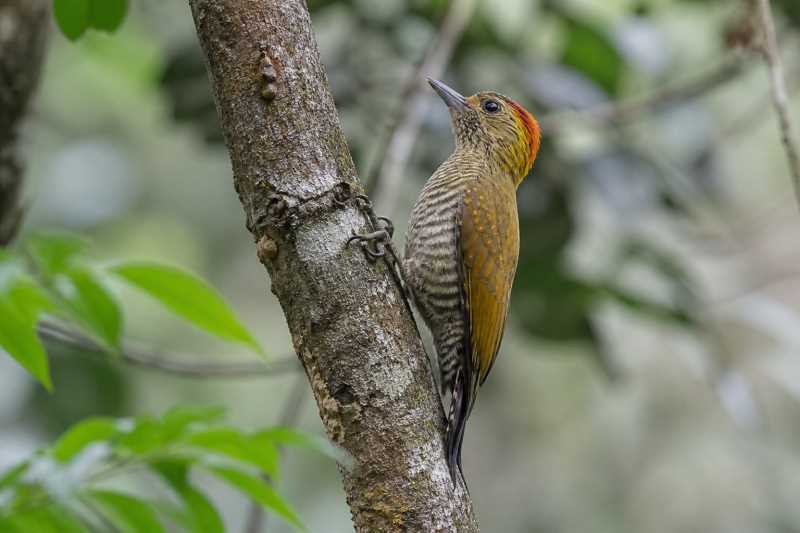
The Yellow-eared Woodpecker is recognized for its striking appearance. It measures approximately 18 to 20 centimeters in length, with a wingspan ranging from 28 to 30 centimeters. The plumage of this woodpecker is predominantly olive green, providing an excellent camouflage against the bark of trees. One of its most distinguishing features is the bright yellow patch around its ears, which contrasts sharply with its otherwise subdued coloration. This yellow marking is more prominent in males, which also display a small red patch on the nape, adding to their vibrant appearance. The beak is robust and chisel-like, adapted for drilling into wood to extract insects and larvae.
Habitat and Distribution
The Yellow-eared Woodpecker is native to the Atlantic Forest of Brazil, a region renowned for its rich biodiversity. Its range extends across the southeastern states, including São Paulo, Rio de Janeiro, and Minas Gerais. These woodpeckers inhabit subtropical and tropical moist lowland forests, thriving in areas with dense canopy cover and abundant dead trees, which are essential for nesting and foraging.
The Atlantic Forest is one of the most diverse ecosystems in the world, but it is also one of the most threatened. Urbanization, agriculture, and deforestation have significantly reduced its size, making the conservation of its remaining fragments crucial for the survival of species like the Yellow-eared Woodpecker.
Diet and Foraging Behavior
Yellow-eared Woodpeckers are primarily insectivorous, feeding on a diet rich in ants, beetles, and other small invertebrates. Their feeding habits are crucial for maintaining the health of trees, as they help control insect populations that could otherwise become pests. The woodpecker uses its strong beak to peck at tree bark, creating holes to access insects hiding within. Additionally, they may feed on fruits and seeds, especially during times when insects are less abundant.
Their foraging behavior is characterized by short flights between trees and methodical pecking along tree trunks and branches. They are often seen in pairs or small family groups, communicating through a series of calls and drumming patterns on wood surfaces.
Breeding and Nesting
The breeding season for Yellow-eared Woodpeckers typically occurs during the spring and early summer months. They are cavity nesters, preferring to excavate their own nesting holes in dead or decaying trees. The selection of nesting sites is critical, as it provides protection from predators and harsh weather conditions.
Once a suitable site is chosen, both male and female woodpeckers participate in the excavation process. The female typically lays a clutch of 2 to 4 eggs, which are incubated by both parents for about two weeks. After hatching, the chicks are fed a steady diet of insects and are cared for by both parents until they fledge, usually after about a month.
Conservation Status
The Yellow-eared Woodpecker is currently classified as ‘Least Concern’ by the International Union for Conservation of Nature (IUCN). However, its dependence on the Atlantic Forest makes it vulnerable to habitat loss. The continuous deforestation and fragmentation of this critical habitat pose a significant threat to its long-term survival.
Conservation efforts are essential to protect the remaining tracts of the Atlantic Forest. Initiatives that focus on habitat restoration, legal protection of forest areas, and sustainable land-use practices are crucial. Additionally, raising awareness about the importance of preserving biodiversity hotspots like the Atlantic Forest can help garner support for conservation measures.
Conclusion
The Yellow-eared Woodpecker is more than just a beautiful bird; it is an integral part of its ecosystem, contributing to the ecological balance of the Atlantic Forest. Protecting this species requires a concerted effort to conserve its habitat and address the challenges posed by human activities. By valuing and safeguarding the natural world, we ensure that future generations can continue to marvel at the wonders of birds like the Yellow-eared Woodpecker.
References
- BirdLife International. (2021). Species factsheet: Veniliornis maculifrons. Retrieved from BirdLife International
- Winkler, H., Christie, D. A., & Nurney, D. (1995). Woodpeckers: An Identification Guide. Boston: Houghton Mifflin.
- Marini, M. Â., & Garcia, F. I. (2005). Bird conservation in Brazil: A review of research on ecological impacts and conservation strategies. Bird Conservation International, 15, 127-139.
Related posts