Swainson’s Hawk: The Nomadic Raptor of the Skies
Swainson’s Hawk (Buteo swainsoni) is a remarkable bird of prey that captivates ornithologists, birdwatchers, and nature enthusiasts alike with its striking appearance, extraordinary migratory patterns, and unique ecological role. Named after the English naturalist William Swainson, this raptor is a member of the Buteo genus, known for their broad wings and robust bodies. Swainson’s Hawk is a fascinating study of adaptation and survival, perfectly illustrating the complexities and marvels of avian life.
Physical Characteristics
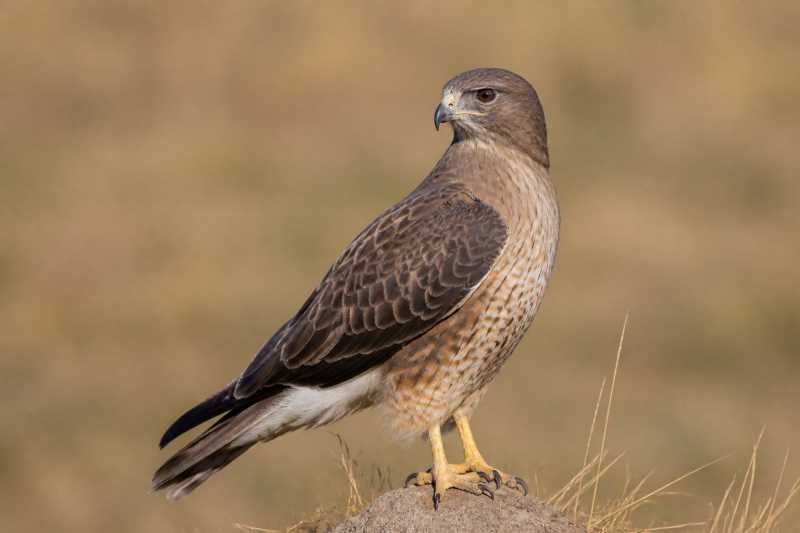
Swainson’s Hawk is a medium-sized raptor, measuring between 18 to 22 inches in length, with a wingspan extending from 46 to 54 inches. They typically weigh between 1.5 to 2.5 pounds. These hawks exhibit sexual dimorphism, with females being slightly larger than males, a common trait among birds of prey.
Their plumage varies significantly, ranging from light to dark morphs. The light morph adults typically possess a white underbelly and underwings, with a contrasting dark chest band and reddish-brown shoulders. The dark morph, however, features a uniformly darker plumage, which can range from chocolate brown to nearly black. Juveniles often appear more mottled and lack the distinct chest band seen in adults.
Habitat and Distribution
Swainson’s Hawks are native to North America, primarily breeding in the open country of the western United States and Canada. They favor prairies, grasslands, and agricultural areas where they can hunt for their prey. During the breeding season, these hawks are often seen perched on utility poles or fence posts, scanning the ground for potential food.
One of the most extraordinary aspects of Swainson’s Hawk is their long-distance migration. Following the breeding season, they embark on an epic journey spanning up to 14,000 miles to their wintering grounds in Argentina. This migration is one of the longest of any North American raptor and involves traversing diverse landscapes, including deserts, mountains, and tropical forests.
Diet and Hunting Behavior
Swainson’s Hawks are versatile hunters, adapting their diet to the availability of prey in their environment. During the breeding season, their diet predominantly consists of small mammals such as ground squirrels and rabbits. They are also known to consume reptiles and amphibians when available.
In contrast, during their wintering period in South America, Swainson’s Hawks shift their diet to focus heavily on insects, particularly grasshoppers and crickets. This diet shift is a remarkable example of their adaptability and ecological flexibility.
These hawks exhibit a variety of hunting techniques, including soaring at great heights to spot prey and then diving swiftly to capture it. They are also known to hunt in groups during the winter months, a behavior that enhances their efficiency in capturing swarming insects.
Breeding and Nesting
The breeding season for Swainson’s Hawks begins in late spring. They construct their nests in trees or large shrubs, often reusing or refurbishing old nests from previous years. The nests are built from sticks and lined with softer materials such as grass and leaves.
Females typically lay two to three eggs, which are incubated for about a month. Both parents participate in feeding and caring for the chicks, which fledge approximately four to six weeks after hatching. Swainson’s Hawks are known for their fierce defense of their nests, often attacking intruders that come too close.
Conservation Status
Currently, Swainson’s Hawk is classified as a species of "Least Concern" by the International Union for Conservation of Nature (IUCN), thanks to its wide range and large population. However, they face several threats that could impact their numbers, including habitat loss due to agricultural expansion and urban development.
Pesticide use, particularly during their wintering period in South America, poses a significant threat to these birds. In the late 20th century, thousands of Swainson’s Hawks were found dead in Argentina due to pesticide poisoning, prompting international conservation efforts to address the issue.
Conclusion
Swainson’s Hawk is a testament to the incredible resilience and adaptability of wildlife. Its awe-inspiring migratory journey and ability to thrive in diverse environments make it a symbol of nature’s wonder. As with many species, continued conservation efforts are essential to ensure that future generations can witness the majesty of Swainson’s Hawk soaring across our skies.
By understanding and appreciating the unique qualities of Swainson’s Hawk, we can foster a deeper connection with the natural world and inspire collective action to protect the delicate balance of our ecosystems.
Related posts