White-chinned Petrel: A Comprehensive Exploration of Procellaria aequinoctialis
The White-chinned Petrel, scientifically known as Procellaria aequinoctialis, is a notable member of the order Procellariiformes, which includes albatrosses, shearwaters, and other petrels. This seabird is renowned for its extensive range, impressive flight capabilities, and unique ecological role in the Southern Ocean. As a species, the White-chinned Petrel provides an intriguing subject for ornithologists and ecologists alike.
Taxonomy and Description
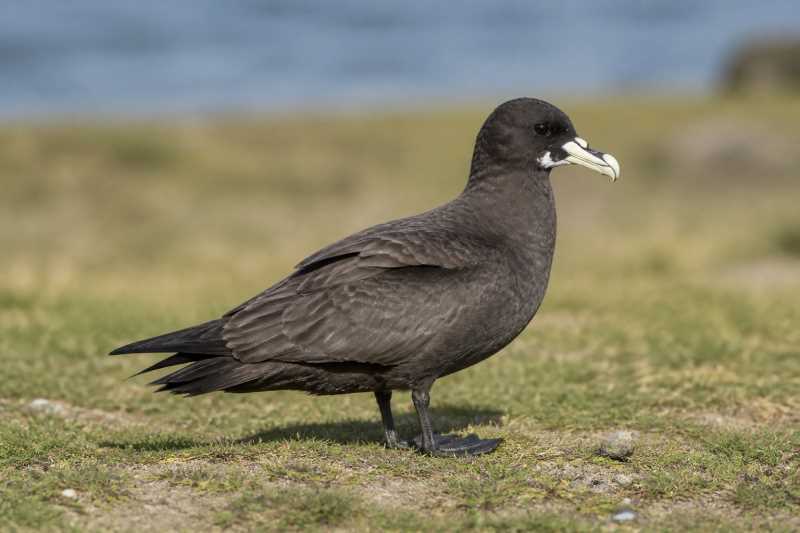
The White-chinned Petrel belongs to the family Procellariidae, which comprises petrels, shearwaters, and prions. It was first described by the German naturalist Johann Friedrich Gmelin in 1789. The species derives its name from the characteristic small white patch on the chin, although some individuals may lack this feature.
Adult White-chinned Petrels typically measure between 51 and 58 centimeters in length, with a wingspan ranging from 134 to 147 centimeters. They possess dark plumage with a glossy sheen, contributing to their streamlined appearance. Their robust bill is pale with a distinctive hooked tip, well-adapted for their diet and feeding habits.
Distribution and Habitat
The White-chinned Petrel is predominantly found in the Southern Hemisphere, particularly in sub-Antarctic and Antarctic waters. Their breeding colonies are mainly located on sub-Antarctic islands such as South Georgia, the Prince Edward Islands, Kerguelen Islands, and Crozet Islands. These islands provide the necessary breeding grounds, characterized by tussock grasses and steep terrains that offer protection from predators.
During the non-breeding season, White-chinned Petrels undertake extensive migrations, traveling as far north as the waters off South America, southern Africa, and Australia. They are highly pelagic, spending most of their life at sea, only returning to land to breed.
Behavior and Ecology
White-chinned Petrels are known for their exceptional flight abilities, utilizing dynamic soaring to travel vast distances with minimal energy expenditure. This skill allows them to exploit the rich feeding grounds of the Southern Ocean, where they primarily feed on krill, squid, and small fish. They are also known to follow fishing vessels, scavenging for offal and bycatch, which has implications for their conservation status.
These birds are predominantly nocturnal feeders, a behavior that may reduce predation risk from diurnal predators. Their foraging strategy involves both surface seizing and pursuit diving, showcasing their adaptability in exploiting varied prey sources.
Breeding and Lifecycle
Breeding occurs in large colonies, with pairs forming long-term monogamous bonds. The breeding season typically begins in November, when the birds return to their natal colonies. Nests are constructed in burrows or crevices, providing protection against harsh weather and predators.
Females lay a single egg, with both parents sharing incubation duties over a period of approximately 56 days. Once hatched, the chick is brooded and fed by both parents, with fledging occurring after about 105 days. Juveniles then disperse widely across the oceans, returning to their breeding colonies after several years.
Conservation Status and Threats
The White-chinned Petrel is currently listed as Vulnerable on the IUCN Red List, primarily due to the threats posed by longline fishing and introduced predators on breeding islands. Bycatch in fisheries is a significant concern, as these birds are often caught on hooks intended for fish. Conservation measures, such as the implementation of bird-scaring lines and night-setting of fishing lines, have been initiated to mitigate this threat.
Introduced species, including rats and cats, pose additional risks by preying on eggs and chicks. Efforts to eradicate invasive species from key breeding islands have seen some success, contributing to the improvement of breeding outcomes for the White-chinned Petrel.
Importance in Ecosystems
As apex predators in their marine environment, White-chinned Petrels play a crucial role in the Southern Ocean ecosystem. They are integral in the transfer of nutrients from the ocean to island ecosystems through their guano, which enriches the soil and supports plant growth. Their presence also provides insights into the health of marine ecosystems, acting as indicators of changes in prey populations and oceanic conditions.
Conclusion
The White-chinned Petrel is a fascinating species that highlights the complex interactions within marine ecosystems. Its wide distribution, unique adaptations, and ecological significance underscore the need for continued research and conservation efforts. Protecting these birds ensures the preservation of the intricate balance of life across the Southern Ocean and contributes to the broader understanding of global biodiversity.
Through international collaboration and effective conservation strategies, there is hope for securing the future of the White-chinned Petrel and the delicate ecosystems they inhabit.
References
- BirdLife International. (2023). Procellaria aequinoctialis.
- Brooke, M. (2004). "Albatrosses and Petrels Across the World." Oxford University Press.
- Croxall, J. P., & Gales, R. (1998). "The conservation status of albatrosses and petrels." Bird Conservation International.
- Phillips, R. A., & Croxall, J. P. (2003). "Control of provisioning in grey-headed albatrosses." The Condor.
Related posts