The African Green Pigeon: A Jewel of the Avian World
The avian world is replete with striking species, each characterized by unique traits and behaviors. Among these is the African Green Pigeon (Treron calvus), a bird that stands out not only for its vibrant plumage but also for its intriguing habits and ecological significance. Found across sub-Saharan Africa, this bird is a testament to the diversity and splendor of the continent’s wildlife.
Description and Physical Characteristics
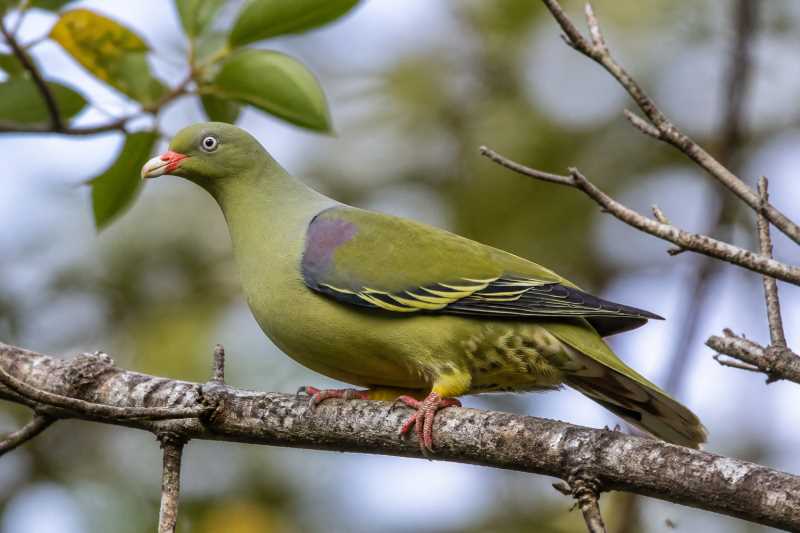
The African Green Pigeon is a medium-sized bird that captures attention with its stunning appearance. Measuring approximately 25 to 30 centimeters in length, it sports a predominantly green plumage that provides excellent camouflage among the foliage. Its head and neck are a lighter green, transitioning to a more vibrant shade on the body and wings. The bird’s eyes are surrounded by a red or maroon ring, adding an extra splash of color to its appearance. The legs and feet are a distinct purplish-red, a sharp contrast to its green body.
This species exhibits sexual monomorphism, meaning males and females appear similar, making it challenging to distinguish between the sexes based on plumage alone. However, males are generally slightly larger than females.
Habitat and Distribution
The African Green Pigeon is widely distributed across sub-Saharan Africa, inhabiting a variety of ecosystems from dense forests and woodlands to savannahs and riverine habitats. Its adaptability to different environments makes it a common sight in many parts of its range, although it tends to prefer areas with abundant fruiting trees, which are a primary food source.
These pigeons are often found in small flocks, flitting from tree to tree in search of food. They are highly arboreal, spending most of their time in the canopy, which provides both food and protection from predators.
Diet and Feeding Habits
The diet of the African Green Pigeon is primarily frugivorous, consisting largely of fruits and berries. They are particularly fond of figs and are known to feed on a variety of fruiting trees and shrubs. Their feeding habits play a crucial role in the ecosystem, as they aid in seed dispersal for many plant species, contributing to forest regeneration and maintenance of biodiversity.
Occasionally, these pigeons may consume seeds, flowers, and buds, but fruits remain the staple of their diet. Their strong, curved beaks are well-adapted to breaking into tough fruit skins, enabling them to access the nutritious pulp within.
Behavior and Social Structure
African Green Pigeons are social birds, often seen in small flocks, although solitary individuals and pairs are not uncommon. During the breeding season, these flocks disband as pairs form and establish territories. Courtship involves a series of display flights and soft cooing calls, which are characteristic of many pigeon species.
The breeding season varies across their range, generally coinciding with periods of fruit abundance. Nests are typically constructed in trees, where the female lays one or two eggs. Both parents share incubation duties and the feeding of the chicks.
Ecological and Cultural Significance
Beyond their role in seed dispersal, African Green Pigeons hold cultural significance in various African communities. In some cultures, they are considered symbols of peace and prosperity. Their presence is often welcomed in gardens and orchards, where they are seen as harbingers of good fortune.
Ecologically, their role as seed dispersers cannot be overstated. By facilitating the spread of fruit-bearing plants, they help maintain the health and diversity of their habitats, ensuring the survival of numerous other species that depend on these ecosystems.
Conservation Status
Currently, the African Green Pigeon is not considered threatened, and the species is classified as Least Concern by the International Union for Conservation of Nature (IUCN). However, their populations face threats from habitat destruction and fragmentation, particularly due to deforestation and agricultural expansion.
Conservation efforts aimed at preserving their habitats will be crucial in ensuring the continued survival of these vibrant birds. Protecting areas of natural forest and supporting reforestation projects are vital steps in safeguarding their future.
Conclusion
The African Green Pigeon is a remarkable bird that embodies the beauty and complexity of Africa’s natural world. Its vibrant colors, unique behaviors, and ecological roles make it a subject of fascination for bird watchers and researchers alike. As we continue to explore and understand the intricacies of this species, it becomes increasingly clear that conserving their habitats is essential not only for their survival but for the broader health of the ecosystems they inhabit.
In celebrating the African Green Pigeon, we are reminded of the rich biodiversity that the African continent hosts and the ongoing responsibility to protect these natural treasures for future generations.
Related posts