Introduction
The Lined Quail-Dove (Zentrygon linearis) stands as a fascinating subject in the world of ornithology, showcasing a blend of unique traits and behaviors that make it a captivating study for bird enthusiasts and researchers alike. Native to the lush, tropical forests of Central and South America, this bird is not only a testament to the biodiversity of its habitat but also a key player in the ecosystems it inhabits.
Description and Identification
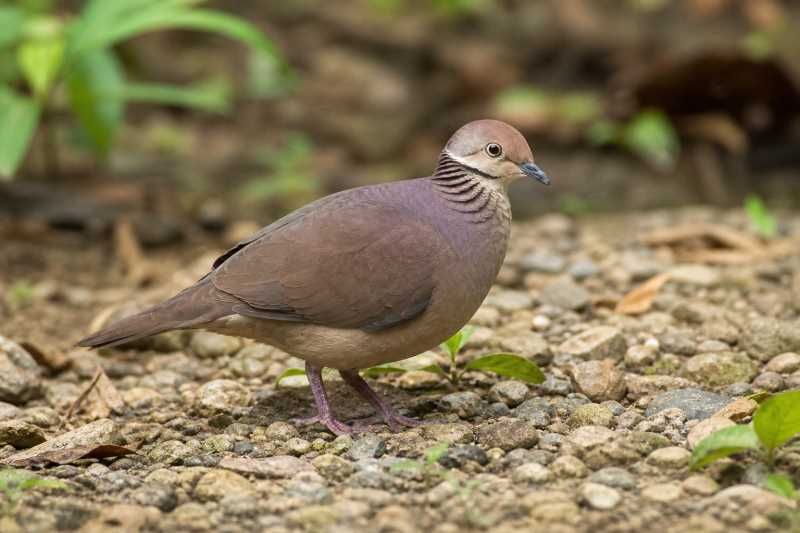
The Lined Quail-Dove is a medium-sized bird, measuring about 28-30 cm in length. Its plumage is a striking blend of earthy browns and grays, with a distinctive line pattern that gives the species its name. The dove’s body is robust and rounded, designed for life on the forest floor, where it spends a significant amount of time foraging. Its eyes are a deep, expressive brown, set against a pale face that highlights its gentle demeanor.
A key identifying feature of the Lined Quail-Dove is its reddish legs and feet, a characteristic that sets it apart from other doves. The wings, when spread, reveal a subtle but beautiful display of blue and green iridescence, a hidden gem that can be seen fleetingly as the bird takes flight.
Habitat and Distribution
This species is predominantly found in the humid lowland and montane forests of Central America, extending into parts of northern South America. Countries like Colombia, Venezuela, Panama, and Costa Rica are notable for hosting populations of the Lined Quail-Dove. It prefers densely vegetated areas where it can remain concealed from predators and human activity.
The Lined Quail-Dove is a ground-dweller, relying on the forest floor for much of its sustenance. Its diet consists mainly of seeds, fruits, and small invertebrates, which it forages for amidst the leaf litter. This bird’s preference for such habitats underscores the importance of forest conservation, as deforestation poses a significant threat to its survival.
Behavior and Ecology
Lined Quail-Doves are known for their elusive nature, often remaining hidden within the underbrush and only venturing out when necessary. They are solitary or found in pairs, seldom forming large flocks. Their behavior is typically cautious, a trait likely developed as a defense mechanism against predators.
The breeding season for the Lined Quail-Dove varies depending on its geographical location, though it generally aligns with periods of abundant food supply. The nest is usually a simple platform of twigs and leaves, strategically placed in a secluded part of the forest. Clutch sizes are typically small, with one or two eggs being the norm. Both parents participate in incubating the eggs and feeding the chicks, showcasing a strong pair bond.
Vocalization
The vocalizations of the Lined Quail-Dove are as understated as its appearance. Its call is a soft, low-pitched cooing, often described as mournful yet soothing. These calls serve as both mating calls and territorial warnings, echoing through the forest with a gentle persistence.
Conservation Status
Currently, the Lined Quail-Dove is classified as Least Concern by the International Union for Conservation of Nature (IUCN). However, this status should not lead to complacency. Habitat loss due to logging, agriculture, and urban expansion continues to threaten the species. Conservation efforts must focus on preserving the natural habitats and mitigating the impacts of human encroachment.
Conclusion
The Lined Quail-Dove, with its understated beauty and elusive nature, serves as a reminder of the intricate balance within tropical ecosystems. Protecting this species involves not just direct conservation efforts but also a broader commitment to preserving the rich biodiversity of the forests it calls home. As we continue to study and understand the Lined Quail-Dove, we gain insights into the delicate threads that weave the tapestry of life in these environments.
Further Research and Observation
For bird watchers and researchers, observing the Lined Quail-Dove in its natural habitat offers an opportunity to witness the subtle interactions and behaviors that define this species. Continued research is essential to monitor population trends and to develop strategies that can effectively address the challenges posed by environmental changes.
In conclusion, the Lined Quail-Dove is more than just a bird; it is a symbol of the rich, yet fragile ecosystems of Central and South America. Its presence is a testament to the diversity of life on our planet and a call to action for conservation efforts that ensure such species continue to thrive.
Related posts