Southern Red Muntjac (Muntiacus muntjak): A Comprehensive Guide
Introduction
The Southern Red Muntjac (Muntiacus muntjak), often referred to as the Indian Muntjac or Barking Deer, is a captivating species of deer found predominantly in South and Southeast Asia. Known for its distinctive barking call, which it uses as an alarm signal, the Southern Red Muntjac is a small, elusive mammal that exhibits unique behaviors and adaptations. This article delves into the various facets of the Southern Red Muntjac’s life, including its physical description, habitat, behavior, and conservation status.
Physical Description
The Southern Red Muntjac is a small and graceful deer species, with a body size ranging between 55 to 65 cm (22 to 26 inches) at the shoulder, and weighing between 15 to 35 kg (33 to 77 pounds). The species exhibits sexual dimorphism, with males generally larger than females.
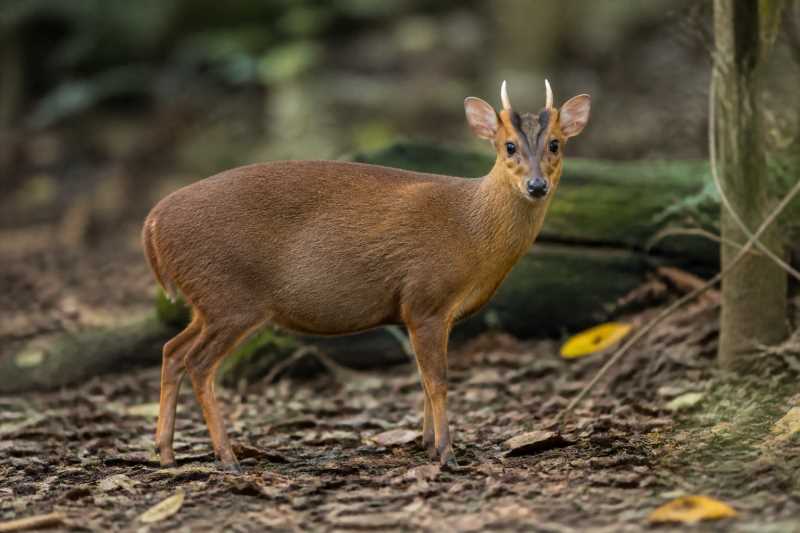
One of the most striking features of the Southern Red Muntjac is its rich, reddish-brown coat, which provides excellent camouflage within its forest habitat. The coat color can vary slightly depending on the subspecies and region, ranging from lighter shades of tan to darker hues. The underparts are usually lighter, and the face is adorned with distinctive dark markings.
Males possess short, simple antlers that can grow up to 15 cm (6 inches) in length. These antlers are shed and regrown annually. The males also have elongated canine teeth, which are used in territorial disputes and during mating season. Females, on the other hand, lack antlers and have a more delicate appearance.
Range and Habitat
The Southern Red Muntjac is native to a wide range of habitats across South and Southeast Asia. Its geographical distribution includes countries such as India, Sri Lanka, Nepal, Bangladesh, Myanmar, Thailand, Laos, Vietnam, Cambodia, Malaysia, Indonesia, and southern China.
This species thrives in a variety of environments, from tropical and subtropical forests to grasslands and shrublands. It is particularly fond of dense underbrush and forest edges, where it can find ample cover and forage. The Southern Red Muntjac is highly adaptable and can thrive in both primary and secondary forests, as well as near human settlements, provided there is sufficient vegetation for cover.
Behavior and Diet
The Southern Red Muntjac is primarily solitary and displays crepuscular activity, being most active during dawn and dusk. Its elusive nature makes it challenging to observe in the wild, as it tends to remain hidden within dense vegetation during the day.
Communication among Southern Red Muntjacs is fascinating. The species gets its nickname, "Barking Deer," from its distinctive alarm call, which resembles a dog’s bark. This call is used to alert other muntjacs of potential predators. Other vocalizations include soft grunts and squeals, particularly during mating season.
The diet of the Southern Red Muntjac is varied and includes a wide range of plant materials. It is primarily a browser, feeding on leaves, shoots, fruits, seeds, and bark. Additionally, it may occasionally consume small animals and birds, showcasing its opportunistic feeding behavior.
Identification Tips (Field Recognition Cues)
Field recognition of the Southern Red Muntjac can be achieved through several distinctive features:
- Size and Shape: Notice the small, compact body with a rounded back and slender legs.
- Coloration: Look for the rich, reddish-brown coat, which is often accompanied by darker markings on the face.
- Antlers: Males have short, simple antlers, while females lack antlers entirely.
- Vocalizations: Listen for the characteristic barking sound, especially when the animal is alarmed.
- Behavior: Watch for their shy, elusive nature, often found in dense vegetation.
Conservation Status (With Threats and Protections)
The Southern Red Muntjac is currently classified as Least Concern by the International Union for Conservation of Nature (IUCN). However, the species faces several threats that could impact its populations if not managed properly.
Threats
- Habitat Loss: Deforestation and land conversion for agriculture and urban development are significant threats to the Southern Red Muntjac’s habitat.
- Hunting: In some regions, the species is hunted for its meat and hide, posing a threat to local populations.
- Pet Trade: Illegal capture for the pet trade can also impact wild populations, although this is less common.
Protections
- Protected Areas: Many of the Southern Red Muntjac’s habitats fall within national parks and reserves, providing a level of protection.
- Legal Protections: Various countries have enacted laws to protect wildlife, including the Southern Red Muntjac, from hunting and habitat destruction.
- Conservation Programs: International and local conservation programs are working to monitor populations and promote habitat preservation.
Frequently Asked Questions
What is the Southern Red Muntjac’s natural habitat?
The Southern Red Muntjac thrives in tropical and subtropical forests, grasslands, and shrublands. It prefers dense underbrush and forest edges where it can find ample cover and forage.
How can you identify a Southern Red Muntjac in the wild?
Identifying the Southern Red Muntjac involves looking for its small, compact body, reddish-brown coat with dark facial markings, and listening for its characteristic barking sound.
What is the diet of the Southern Red Muntjac?
The Southern Red Muntjac is primarily a browser, feeding on leaves, shoots, fruits, seeds, and bark. It may occasionally consume small animals and birds.
Are Southern Red Muntjacs endangered?
The Southern Red Muntjac is currently listed as Least Concern, but it faces threats such as habitat loss and hunting, which could impact populations if not managed.
Why is the Southern Red Muntjac called the "Barking Deer"?
The nickname "Barking Deer" comes from its distinctive alarm call that resembles a dog’s bark, used to alert others of potential threats.
Related posts