Introduction
The Stripe-necked Mongoose (Urva vitticollis) is a fascinating member of the Herpestidae family, known for its unique appearance and intriguing behaviors. Primarily found in the Indian subcontinent, this mongoose species has garnered attention from wildlife enthusiasts and researchers alike. The Stripe-necked Mongoose plays a significant role in its ecosystem, acting as both predator and prey, and its presence is often indicative of a healthy environment.
Physical Description
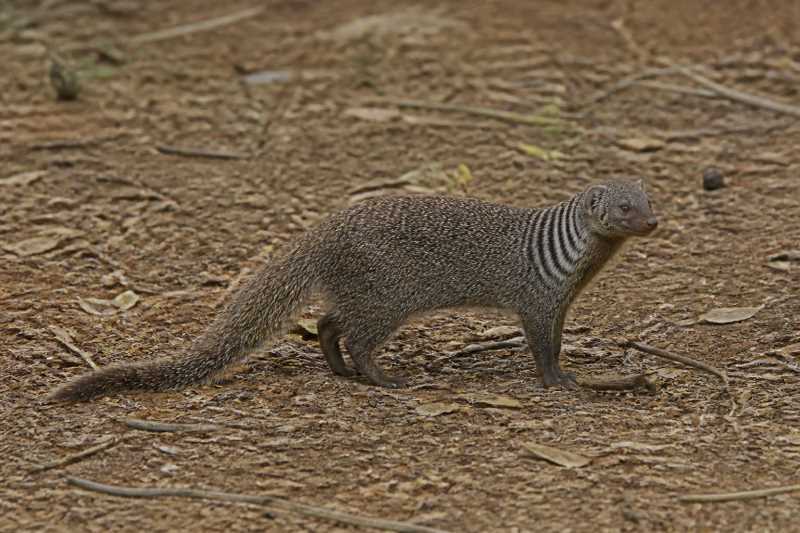
The Stripe-necked Mongoose is distinguished by its striking appearance. Adults typically measure between 55 to 67 centimeters in body length, with a tail adding an additional 45 to 60 centimeters. Males tend to be larger and more robust than females. The most distinctive feature of this mongoose is its neck, which is adorned with lateral stripes that extend from the ears to the shoulders. These stripes contrast with the overall reddish-brown to grayish body color, making the species easily recognizable.
The fur of the Stripe-necked Mongoose is coarse and dense, providing protection against harsh environmental conditions. The legs are relatively short and strong, equipped with sharp claws that aid in digging and climbing. The head is slender with a pointed snout, and the eyes are small yet sharp, facilitating enhanced night vision.
Range and Habitat
Urva vitticollis is predominantly found in India and Sri Lanka. In India, its range extends across the Western Ghats, encompassing states such as Kerala, Karnataka, and Tamil Nadu. It prefers dense forested areas, although it can also be found in secondary forests, plantations, and occasionally in grasslands.
The Stripe-necked Mongoose is adaptable to various altitudes, from sea level up to 2,000 meters, but it shows a preference for regions with abundant water sources and dense undergrowth. This habitat preference is likely due to the availability of prey and the cover provided by thick vegetation, which aids in avoiding predators.
Behavior and Diet
Stripe-necked Mongooses are primarily diurnal, although they may exhibit nocturnal activity in areas with significant human disturbance. They are solitary creatures, known for their elusive nature and keen senses, which make them formidable hunters.
Their diet is diverse, consisting mainly of small vertebrates such as rodents, birds, and reptiles. They are also known to consume insects, eggs, and occasionally fruits. The hunting strategy involves stealth and quick bursts of speed, utilizing their sharp claws and teeth to capture and kill prey. This opportunistic feeding behavior plays a critical role in controlling pest populations in their habitats.
Territorial by nature, Stripe-necked Mongooses mark their ranges with scent glands located near the anus. These scent markers communicate boundaries and reproductive status to other mongooses.
Identification Tips (Field Recognition Cues)
Identifying the Stripe-necked Mongoose in the wild involves observing several key characteristics:
- Neck Stripes: Look for the distinctive stripes running from the ears to the shoulders.
- Body Size: Note the overall size, with males being larger than females.
- Coloration: The reddish-brown to grayish body color is a significant cue.
- Tail Length: Observe the long bushy tail, which is often as long as the body itself.
- Habitat: Consider the location, as they are typically found in forested areas of the Western Ghats and Sri Lanka.
Conservation Status (with Threats and Protections)
The Stripe-necked Mongoose is currently listed as "Least Concern" on the IUCN Red List. However, like many species, it faces threats that could impact its population stability.
Threats:
- Habitat Loss: Deforestation and land conversion for agriculture and urbanization are primary threats.
- Human-Wildlife Conflict: Encounters with humans can lead to persecution and accidental trapping.
- Pollution: Water and soil pollution can affect the quality of habitat and prey availability.
Protections:
- Legal Protections: In India, they are protected under the Wildlife Protection Act of 1972, which prohibits hunting and trade.
- Conservation Areas: Their habitats overlap with several protected areas, providing some measure of safety.
Efforts are ongoing to monitor populations and mitigate threats through habitat conservation and community education initiatives.
Frequently Asked Questions
What does the Stripe-necked Mongoose eat?
The Stripe-necked Mongoose has a varied diet, including small mammals, birds, reptiles, insects, and occasionally fruits. Their opportunistic feeding habits help control pest populations.
Where can I find a Stripe-necked Mongoose?
Stripe-necked Mongooses are primarily found in the Western Ghats of India and Sri Lanka, preferring dense forested areas with abundant water sources.
How can I identify a Stripe-necked Mongoose?
Look for their distinctive neck stripes, reddish-brown to grayish body color, and long bushy tail. They are commonly found in forested regions of the Western Ghats and Sri Lanka.
Are Stripe-necked Mongooses endangered?
Currently, the Stripe-necked Mongoose is listed as "Least Concern" by the IUCN, but they face threats such as habitat loss and human-wildlife conflict.
What is the conservation status of the Stripe-necked Mongoose?
The Stripe-necked Mongoose is classified as "Least Concern," but efforts are needed to address threats like habitat destruction and ensure their continued survival.
Related posts