Introduction
The Dark Fruit-eating Bat, scientifically known as Artibeus obscurus, is a fascinating member of the Phyllostomidae family. These bats are crucial contributors to their ecosystems, primarily due to their role in seed dispersal and pollination. Despite their importance, they often go unnoticed due to their nocturnal habits and elusive nature. This article delves into the intriguing world of the Dark Fruit-eating Bat, exploring its physical characteristics, habitat, behavior, and the conservation challenges it faces.
Physical Description
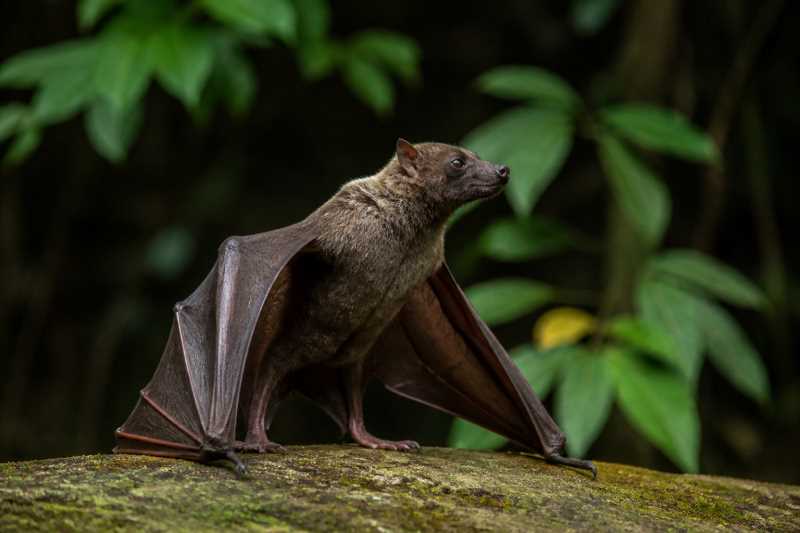
The Dark Fruit-eating Bat is a medium-sized bat, with a wingspan averaging between 40 to 50 centimeters. Its body length ranges from 7 to 10 centimeters, and it generally weighs between 30 to 50 grams. This species is characterized by its dark brown to black fur, which provides excellent camouflage during its nocturnal excursions. The fur is typically denser on the back and lighter on the underside.
One of the distinctive features of Artibeus obscurus is its broad, rounded wings, which enable efficient maneuvering through dense forest canopies. The bat’s face is adorned with a short, broad muzzle and large, round eyes that enhance its night vision. Its ears are relatively small and rounded, an adaptation that aids in echolocation.
A notable physical feature of the Dark Fruit-eating Bat is its noseleaf – a fleshy, leaf-like structure on the nose that plays a crucial role in its sophisticated echolocation system. This adaptation allows the bat to navigate and locate food with remarkable precision in complete darkness.
Range and Habitat
The Dark Fruit-eating Bat is predominantly found in the tropical and subtropical regions of South America. Its range extends from Venezuela and Colombia through the Amazon Basin, encompassing countries like Brazil, Ecuador, Peru, and Bolivia. This species thrives in a variety of habitats, including lowland rainforests, cloud forests, and secondary growth forests.
These bats prefer areas with abundant fruit-bearing trees, which provide both food and roosting opportunities. They are commonly found in forest edges and clearings, where fruit availability is high. However, they are also known to venture into agricultural areas, particularly those with fruit plantations.
Behavior and Diet
The Dark Fruit-eating Bat is primarily nocturnal, emerging from its roosts at dusk to forage for food. It is a frugivorous species, with its diet predominantly consisting of a wide variety of fruits. Common dietary staples include figs, bananas, guavas, and papayas. The bat uses its sharp teeth to bite into fruit, and its strong jaws aid in processing the pulp.
In addition to fruits, Artibeus obscurus occasionally consumes nectar and pollen, contributing to the pollination of certain plant species. This dietary flexibility allows the bat to adapt to seasonal fluctuations in fruit availability.
Socially, these bats are known for their gregarious nature, often roosting in colonies that can range from a few individuals to several dozen. They use a variety of roosting sites, including tree cavities, foliage, and man-made structures. Vocalizations play a crucial role in their social interactions, with a range of calls used for communication and navigation.
Identification Tips (Field Recognition Cues)
Identifying the Dark Fruit-eating Bat in the field requires attention to several key features:
- Coloration: Look for the dark brown to black fur, which is a hallmark of this species.
- Size: Note the medium size, with a wingspan of 40-50 cm and a weight of 30-50 grams.
- Noseleaf: Observe the distinctive noseleaf, which aids in their echolocation.
- Roosting Habits: They are often found in colonies, roosting in tree cavities or foliage.
- Flight Pattern: These bats exhibit agile flight, maneuvering deftly through forest canopies.
Conservation Status (with Threats and Protections)
The Dark Fruit-eating Bat is currently classified as Least Concern by the International Union for Conservation of Nature (IUCN). However, like many species, it faces several threats that could impact its population in the future.
Threats
- Habitat Loss: Deforestation for agriculture and urban development is the most significant threat, reducing the availability of roosting and foraging sites.
- Climate Change: Altered weather patterns can affect fruit availability, impacting the bat’s food resources.
- Human Disturbance: Increased human presence and activity in forested areas can disrupt bat colonies.
Protections
Efforts to conserve the Dark Fruit-eating Bat include:
- Protected Areas: Establishing and maintaining protected areas that safeguard critical habitats.
- Reforestation Projects: Initiatives aimed at restoring degraded forests to provide more foraging and roosting opportunities.
- Public Awareness: Educating local communities about the ecological importance of bats and promoting coexistence.
Frequently Asked Questions
What do Dark Fruit-eating Bats eat?
Dark Fruit-eating Bats primarily consume a variety of fruits, including figs, bananas, and guavas. They also occasionally feed on nectar and pollen, aiding in plant pollination.
Where can you find Dark Fruit-eating Bats?
These bats are found in the tropical and subtropical regions of South America, particularly in rainforests and cloud forests. They are also known to inhabit forest edges and agricultural areas.
How do Dark Fruit-eating Bats contribute to the ecosystem?
Dark Fruit-eating Bats play a crucial role in seed dispersal and pollination, helping to maintain healthy forest ecosystems and promoting plant diversity.
What are the main threats to Dark Fruit-eating Bats?
The primary threats include habitat loss due to deforestation, climate change affecting fruit availability, and human disturbance in their natural habitats.
How can we help protect Dark Fruit-eating Bats?
Supporting conservation initiatives, promoting reforestation, and raising awareness about the ecological importance of bats can help protect this species and their habitats.
Related posts