Introduction
The Least Dwarf Shrew, scientifically known as Suncus infinitesimus, is one of the smallest mammals in the world. This elusive creature is a part of the Soricidae family, which encompasses a variety of shrew species. Despite its diminutive size, the Least Dwarf Shrew plays a critical role in its ecosystem, acting as both predator and prey. This article delves into the various aspects of this fascinating species, from its physical characteristics to its habitat and conservation status.
Physical Description
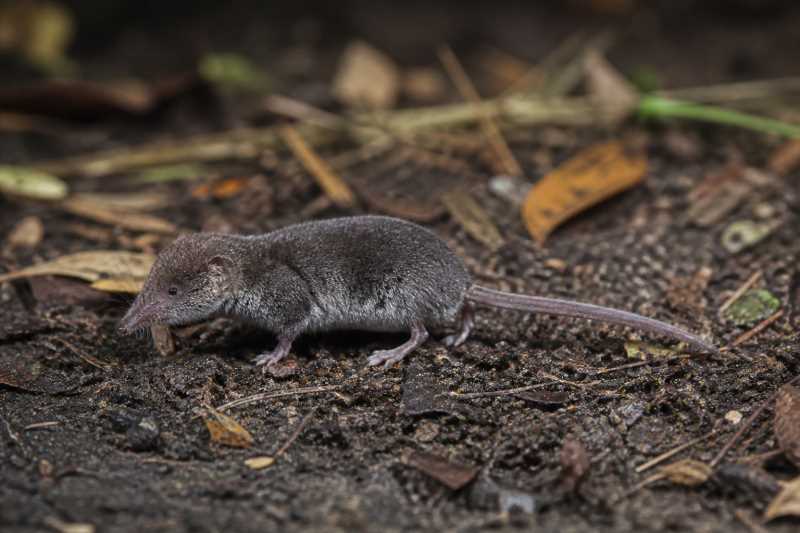
The Least Dwarf Shrew is notable for its minute size, often measuring only 35 to 50 millimeters in length, excluding the tail. Weighing just 1.2 to 3 grams, it is one of the lightest mammals globally. Its fur is typically a grayish-brown color, which helps it blend seamlessly into its environment. The shrew’s slender body and pointed snout are adapted for burrowing and hunting insects, while its small, beady eyes are more attuned to detecting movement than details. Its feet are short and equipped with sharp claws, useful for digging and foraging.
Range and Habitat
The Least Dwarf Shrew is primarily found in Sub-Saharan Africa, although its exact range is not completely documented due to its secretive nature. It prefers moist environments, such as forest floors, grasslands, and areas with abundant leaf litter. The shrew’s habitat selection is often influenced by the availability of insect prey and protective cover. These habitats provide both the food resources and the cover needed to evade predators.
Behavior and Diet
This shrew is primarily nocturnal, spending most of its active hours hunting for food under the cover of darkness. Its diet mainly consists of insects and other small invertebrates, which it captures with swift, precise movements. The Least Dwarf Shrew has a high metabolism, requiring it to consume food almost constantly. It is known to be a solitary creature, except during the breeding season, which occurs multiple times a year due to the shrew’s short lifespan.
Identification Tips (field recognition cues)
Identifying the Least Dwarf Shrew in the field can be challenging due to its size and secretive habits. However, there are key characteristics to look for:
- Size: Remarkably small, with a body length of less than 5 centimeters.
- Color: Grayish-brown fur that blends with the forest floor.
- Movement: Quick, darting movements typical of shrews.
- Vocalizations: High-pitched squeaks and chirps, often heard at night.
Conservation Status (with threats and protections)
The conservation status of the Least Dwarf Shrew is currently classified as Least Concern by the IUCN Red List. However, this status is primarily due to a lack of comprehensive data. Potential threats include habitat destruction due to agriculture, deforestation, and climate change. While there are no specific conservation measures in place for the shrew, protecting its habitat is essential for its survival. Conservation efforts that focus on preserving forest ecosystems indirectly benefit this species.
Frequently Asked Questions
1. What is the lifespan of the Least Dwarf Shrew?
The Least Dwarf Shrew typically has a short lifespan, averaging around 1 to 2 years. This brief life cycle is common among small mammals with high metabolisms.
2. How does the Least Dwarf Shrew find food?
The shrew uses its keen sense of smell and hearing to locate prey. Its quick movements allow it to capture insects and invertebrates effectively.
3. Is the Least Dwarf Shrew endangered?
Currently, the Least Dwarf Shrew is not considered endangered. However, ongoing habitat destruction could pose future risks.
4. Can the Least Dwarf Shrew be kept as a pet?
No, the Least Dwarf Shrew is a wild animal, and its specialized dietary and environmental needs make it unsuitable for domestication.
5. What role does the Least Dwarf Shrew play in the ecosystem?
As both predator and prey, the Least Dwarf Shrew helps control insect populations and serves as a food source for larger predators, contributing to the ecological balance.
Related posts