Introduction
The Greater Egyptian Gerbil (Gerbillus pyramidum) is a fascinating small mammal belonging to the family Muridae. Known for their adaptability and resilience, these gerbils are native to arid regions of North Africa and the Middle East. Their ability to thrive in harsh desert conditions makes them a subject of interest for researchers studying desert ecology and adaptation. This article delves into various aspects of the Greater Egyptian Gerbil’s life, including its physical characteristics, habitat, behavior, and conservation status.
Physical Description
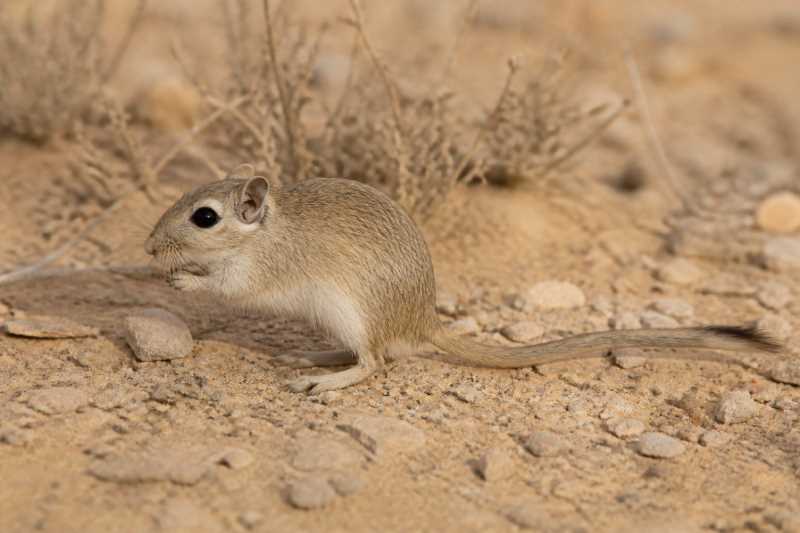
The Greater Egyptian Gerbil is a small rodent with a robust body and distinctive features that aid its survival in desert environments. Typically, an adult gerbil measures between 9 to 12 centimeters in body length, with a tail ranging from 11 to 16 centimeters. The tail, often longer than the body, is covered with fine hairs and ends with a tuft of fur, which aids in balance and agility.
These gerbils exhibit a coloration that blends well with their sandy surroundings. Their dorsal fur is usually a light sandy-brown, while the underbelly is white, providing camouflage against predators. The large, dark eyes and pronounced ears are adaptations for nocturnal activity, allowing them to detect predators and navigate their environment effectively.
Their hind limbs are notably elongated compared to their forelimbs, an adaptation that facilitates their ability to leap and move swiftly, which is crucial for escaping predators and foraging over large areas.
Range and Habitat
Greater Egyptian Gerbils are predominantly found in the arid and semi-arid regions of North Africa, including countries such as Egypt, Libya, and Sudan. They inhabit a variety of desert landscapes, ranging from sandy dunes to rocky plateaus. Despite the harsh conditions, these gerbils have evolved to exploit the sparse resources available in these environments.
Their burrows, often dug in sandy soils, provide shelter from extreme temperatures and predators. These burrows are complex networks with multiple entrances and exits, ensuring the gerbils can escape quickly if threatened. The burrow system also helps maintain a stable microclimate, essential for conserving water and energy.
Behavior and Diet
Greater Egyptian Gerbils are primarily nocturnal, venturing out at night to forage for food. This behavior helps them avoid the extreme daytime temperatures of their desert habitat. They are omnivorous, with a diet consisting of seeds, grains, insects, and vegetation. The ability to consume a varied diet allows them to adapt to seasonal changes in food availability.
Socially, these gerbils exhibit solitary behavior, with each individual maintaining its own burrow. However, they communicate through vocalizations, scent markings, and physical gestures to establish territory and attract mates during the breeding season. Breeding usually occurs in the cooler months, with a gestation period of around 20-22 days, resulting in litters of 2 to 5 young.
Identification Tips (Field Recognition Cues)
Identifying the Greater Egyptian Gerbil in the wild requires attention to specific physical and behavioral traits:
- Size and Shape: Look for a small rodent with a body length of 9 to 12 centimeters and a longer tail of 11 to 16 centimeters.
- Coloration: Note the sandy-brown dorsal fur and white underbelly which provides camouflage in desert environments.
- Tail: Observe the distinctive tufted tail, often used for balance.
- Movement: Their unique hopping and leaping movements are key indicators, facilitated by their elongated hind limbs.
- Behavior: Nocturnal activity and solitary burrow use are important behavioral cues.
Conservation Status (With Threats and Protections)
The Greater Egyptian Gerbil is currently not listed as endangered, but like many desert species, it faces threats from habitat loss and climate change. The expansion of agricultural activities and urban development in arid regions can lead to habitat fragmentation. Additionally, changes in climate patterns can alter the availability of food and water, posing significant challenges.
Conservation efforts focus on habitat preservation and monitoring population dynamics to ensure sustainable populations. Protected areas and reserves play a crucial role in safeguarding their natural habitats. Education and awareness initiatives are also essential in promoting the coexistence of human activities and wildlife conservation.
Frequently Asked Questions
1. What do Greater Egyptian Gerbils eat in the wild?
Greater Egyptian Gerbils are omnivores, primarily feeding on seeds, grains, insects, and some vegetation. Their diet varies based on seasonal availability, allowing them to adapt to the desert’s changing conditions.
2. How do Greater Egyptian Gerbils survive in the desert?
These gerbils have evolved several adaptations to survive harsh desert conditions, including nocturnal behavior to avoid heat, efficient water conservation, and burrowing to escape predators and extreme temperatures.
3. Are Greater Egyptian Gerbils endangered?
Currently, Greater Egyptian Gerbils are not classified as endangered. However, they face threats from habitat loss due to human activities and climate change, necessitating ongoing conservation efforts.
4. How do Greater Egyptian Gerbils communicate?
They communicate through a combination of vocalizations, scent markings, and physical gestures, especially during mating season and in territorial disputes.
5. Where can I observe Greater Egyptian Gerbils in the wild?
To observe these gerbils, visit arid regions in North Africa, particularly in sandy dunes and rocky plateaus where they are commonly found, especially at night when they are most active.
Related posts