Introduction
The Pacific degu (Octodon pacificus) is an intriguing species of rodent that captures the interest of scientists and nature enthusiasts alike. As a member of the Octodontidae family, this mammal shares its lineage with the more commonly known degus of mainland South America. However, the Pacific degu is distinct in its adaptations and ecological significance, earning its place as a subject of ongoing research and conservation efforts. Understanding the unique characteristics and challenges faced by this species is crucial for its preservation and the maintenance of biodiversity in its native habitats.
Physical Description
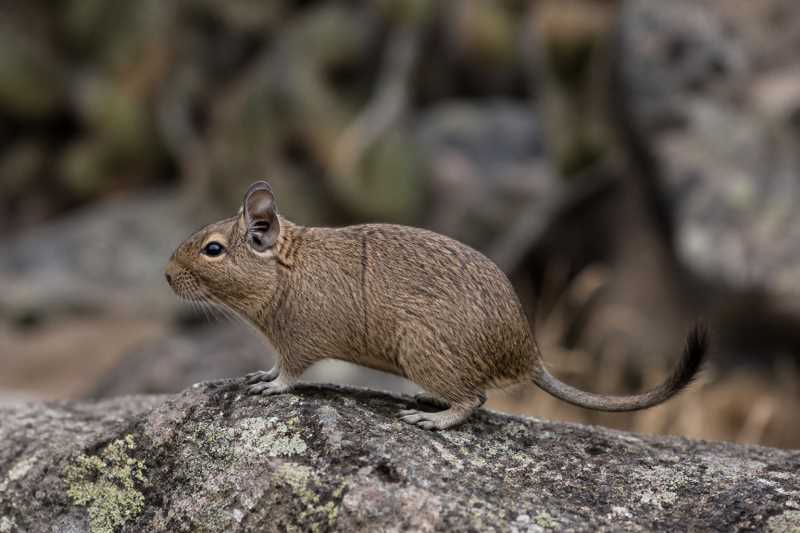
Pacific degus are small to medium-sized rodents with a total length ranging from 25 to 30 centimeters, including their tails. They possess a robust body structure, characterized by a compact build and strong limbs, which are well-adapted for their terrestrial lifestyle. Their fur is typically a mix of brown and gray, providing excellent camouflage against the rocky and scrubby landscapes they inhabit.
The fur is soft and dense, offering both insulation and protection. Their large, rounded ears and prominent, dark eyes are well-suited for detecting predators and navigating their environment. The tail is relatively long, covered in short hair, and ends with a tuft, which can serve as a means of communication or balance. The Pacific degu’s dental formula is well-adapted for their herbivorous diet, with ever-growing incisors that require constant gnawing to maintain.
Range and Habitat
The Pacific degu is endemic to the Pacific coast of Chile, specifically the Juan Fernández Archipelago. This group of islands includes Robinson Crusoe Island, where the majority of the Pacific degu population is found. The archipelago’s unique environment, characterized by rugged terrain and a mix of temperate and subtropical climates, provides a suitable habitat for these rodents.
Their preferred habitats include rocky outcrops, shrublands, and forested areas where they can find ample food sources and shelter. The Pacific degu’s adaptability to various microhabitats within the islands highlights their ecological versatility and resilience in the face of environmental changes.
Behavior and Diet
Pacific degus are primarily diurnal, meaning they are most active during the day. This aligns with their need to forage for food and avoid nocturnal predators. They are social animals, often found in small family groups or colonies, which helps them in resource sharing and protection against threats.
Their diet is predominantly herbivorous, consisting of a variety of plant materials such as leaves, seeds, and fruits. The availability of these food sources can vary with the seasons, prompting the Pacific degu to exhibit flexible foraging behaviors. Their ability to store food in caches allows them to survive in periods of scarcity, demonstrating their adaptability to the fluctuating conditions of their island habitat.
Identification Tips (Field Recognition Cues)
Identifying a Pacific degu in the wild can be facilitated by several key features:
- Size and Shape: Look for a small to medium-sized rodent with a stocky body and a long, tufted tail.
- Fur Color: Their fur is a mix of brown and gray, providing effective camouflage against the rocks and shrubs.
- Ears and Eyes: Notice the large, rounded ears and dark eyes, which are prominent features.
- Behavior: Observe their diurnal activity patterns and social interactions within groups.
- Habitat: Confirm their presence in rocky outcrops and shrublands of the Juan Fernández Archipelago.
Conservation Status (with Threats and Protections)
The Pacific degu is classified as "Endangered" on the IUCN Red List due to its limited range and the specific threats it faces. Habitat degradation from invasive plant species, introduced predators like cats and rats, and human activities pose significant risks to its survival. Conservation efforts focus on habitat restoration, invasive species control, and the establishment of protected areas to safeguard their natural environments.
Ongoing research and monitoring are essential to understand the population dynamics and ecological needs of the Pacific degu. Collaborative efforts between local communities, conservation organizations, and government agencies are vital to implement effective protection measures and ensure the species’ long-term survival.
Frequently Asked Questions
What is the natural habitat of the Pacific degu?
The natural habitat of the Pacific degu is the Juan Fernández Archipelago off the coast of Chile. They thrive in rocky outcrops, shrublands, and forested areas where they find food and shelter.
How do Pacific degus communicate?
Pacific degus communicate through a combination of vocalizations, body language, and scent markings. Their social nature means they often interact with conspecifics within family groups or colonies.
What are the main threats to the Pacific degu?
The main threats to the Pacific degu include habitat degradation from invasive plant species, predation by introduced animals like cats and rats, and human activities that disrupt their environment.
How can we help conserve the Pacific degu?
Conservation efforts for the Pacific degu should focus on habitat restoration, controlling invasive species, and supporting protected areas. Public awareness and involvement in conservation programs are also crucial for their survival.
Are Pacific degus related to other degu species?
Yes, Pacific degus are closely related to other degu species within the Octodontidae family. Their closest relatives include the common degu (Octodon degus) found on the South American mainland.
Related posts