Introduction
The Silver Dik-dik (Madoqua piacentinii) is a small, charming antelope species native to the Horn of Africa. It is one of the lesser-known members of the family Bovidae, yet it stands out due to its unique physical characteristics and adaptive behavior. As a species restricted to specific regions, the Silver Dik-dik plays an important role in its ecosystem, contributing to biodiversity and the health of its habitat. This article will explore the various facets of the Silver Dik-dik, including its physical appearance, habitat preferences, behaviors, and conservation status.
Physical Description
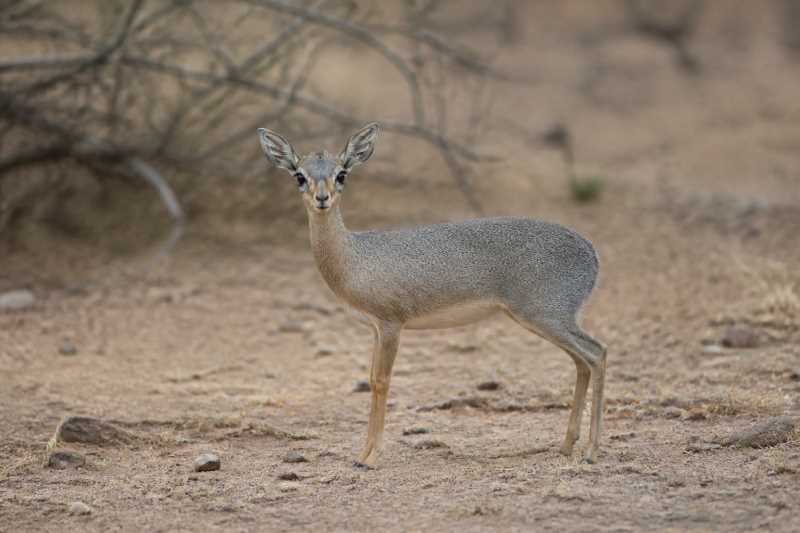
The Silver Dik-dik is a diminutive antelope, with adults standing at approximately 30 to 40 centimeters at the shoulder and weighing between 3 to 5 kilograms. True to its name, the Silver Dik-dik exhibits a distinctive silvery-gray coat that provides effective camouflage in its native environment. This coat is short and dense, suitable for the arid and semi-arid climates it inhabits.
One of the most striking features of the Silver Dik-dik is its elongated snout, which is an evolutionary adaptation that enhances its ability to cool the blood before it reaches the brain, a critical feature in its hot, dry habitat. The large, dark eyes are encircled by white rings, and its ears are large relative to its head, aiding in acute hearing. Both males and females possess preorbital glands, but only males have small, backward-curving horns that are often hidden by a tuft of hair.
Range and Habitat
The Silver Dik-dik is endemic to the Horn of Africa, specifically found in northeastern Somalia. Its range is largely restricted to this region, where it inhabits dry scrubland, savanna, and semi-desert areas. These environments are characterized by sparse vegetation, rocky terrain, and limited water sources. The Silver Dik-dik is adept at surviving in these conditions, requiring minimal water intake due to its efficient metabolic processes.
These antelopes favor areas with thick shrubbery, which provides cover from predators and harsh weather conditions. They are territorial animals, often found in monogamous pairs that establish and defend a home range. Their territories are marked by scent from their preorbital glands, which they rub on vegetation within their boundaries.
Behavior and Diet
Silver Dik-diks are crepuscular, meaning they are most active during the early morning and late afternoon, avoiding the extreme heat of midday. They are known for their impressive speed and agility, which they rely on to escape predators such as large birds of prey, jackals, and hyenas.
Their diet primarily consists of leaves, shoots, fruits, and flowers. The dik-dik’s specialized diet allows it to extract sufficient moisture from its food, reducing its need for water. This diet also makes them important seed dispersers within their ecosystem, contributing to plant biodiversity.
Dik-diks communicate through a series of whistles and other vocalizations, which they use to alert each other of potential threats. They also rely heavily on scent for communication, using their preorbital glands to mark territory and signal reproductive status.
Identification Tips (Field Recognition Cues)
Identifying the Silver Dik-dik requires attention to several key features:
- Size and Shape: Look for a small, slender antelope with a height of 30 to 40 centimeters at the shoulder.
- Coloration: Note the silvery-gray coat, which distinguishes it from other dik-dik species.
- Snout and Eyes: Observe the elongated snout and the large, expressive eyes encircled by white rings.
- Horns: Males have small, backward-curving horns, often obscured by their hair tuft.
- Behavior: Watch for their characteristic zigzag running pattern, a tactic used to evade predators.
Conservation Status (with Threats and Protections)
The Silver Dik-dik is currently classified as Data Deficient by the International Union for Conservation of Nature (IUCN), primarily due to the lack of comprehensive studies on its population trends and ecological requirements. However, it is believed that habitat destruction, hunting, and competition with livestock pose significant threats to their survival.
Habitat destruction, primarily from agricultural expansion and overgrazing by domestic animals, reduces the availability of food and cover. Hunting for bushmeat and traditional medicine also contributes to population declines.
Conservation efforts for the Silver Dik-dik should focus on habitat preservation and restoration, as well as community-based conservation programs that mitigate human-wildlife conflicts and promote sustainable land use practices.
Frequently Asked Questions
- What is the lifespan of a Silver Dik-dik?
Silver Dik-diks typically live up to 10 years in the wild, though this can vary based on environmental conditions and predation pressures.
- How do Silver Dik-diks adapt to their arid environment?
Silver Dik-diks have several adaptations for survival in arid environments, including obtaining moisture from their diet and possessing a specialized snout for regulating body temperature.
- Are Silver Dik-diks social animals?
Silver Dik-diks are generally monogamous and territorial, living in pairs rather than large groups. They establish and defend a home range, marking it with scent from their preorbital glands.
- What is the main diet of Silver Dik-diks?
Their diet mainly consists of leaves, shoots, fruits, and flowers, which provide the necessary nutrients and moisture for survival.
- What are the main threats to Silver Dik-diks?
Habitat destruction, competition with livestock, and hunting are the primary threats to Silver Dik-dik populations.
Related posts