Introduction
Rosenberg’s Fruit-eating Bat, scientifically known as Dermanura rosenbergi, is a captivating species of bat that plays a crucial role in its ecosystem. As a member of the Phyllostomidae family, this bat is integral in the pollination of various plant species and the dispersal of seeds, which helps maintain the health and diversity of tropical forests. Rosenberg’s Fruit-eating Bat is primarily found in Central and South America, where it contributes significantly to the ecological balance of these regions. This article explores the various aspects of this intriguing mammal, from its physical characteristics to its behavior and conservation status.
Physical Description
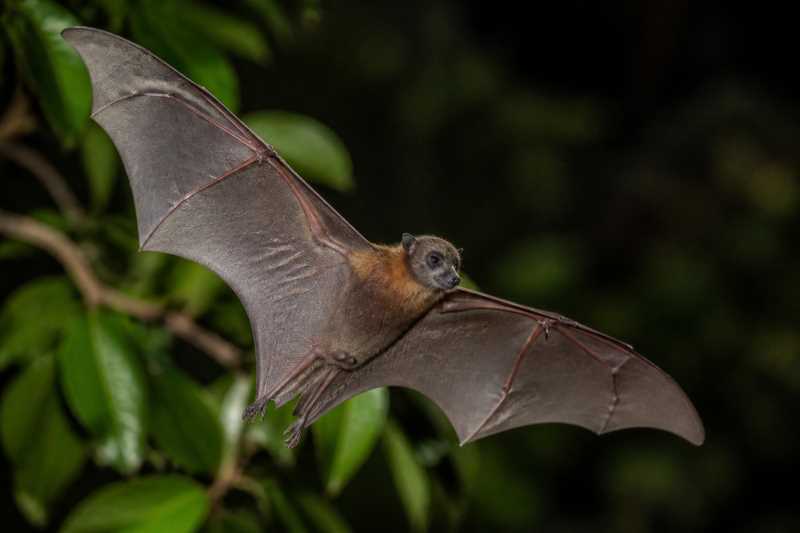
Rosenberg’s Fruit-eating Bat is a small to medium-sized bat, typically measuring around 5 to 7 cm in body length, with a wingspan that can reach up to 30 cm. One of the most distinctive features of this species is its leaf-shaped nose, which is common among members of its family and aids in echolocation. The bat’s fur is soft and dense, usually ranging from dark brown to grayish tones, providing excellent camouflage in its forest habitat. Its eyes are relatively large, suggesting a reliance on visual cues in addition to echolocation, especially when navigating the dense foliage of its environment.
The bat’s wings are long and narrow, adapted for agile flight among trees. The tail is short and partially enclosed by the interfemoral membrane, a feature that distinguishes it from other bats. Rosenberg’s Fruit-eating Bat has sharp teeth, specifically adapted to pierce fruit skins and consume the pulp, which forms the primary component of its diet.
Range and Habitat
Rosenberg’s Fruit-eating Bat is predominantly found across Central and South America, with its range extending from southern Mexico to northern Peru. It thrives in tropical and subtropical environments, favoring dense forests, including rainforests and cloud forests. The bat is highly adaptable and can also be found in secondary forests, plantations, and occasionally in urban areas where fruit is abundant.
This species prefers habitats with rich vegetation that provide ample food sources and roosting sites. During the day, Rosenberg’s Fruit-eating Bat roosts in tree hollows, caves, or under large leaves, where it remains concealed from predators. At night, it becomes active, foraging for food and playing a vital role in seed dispersal and pollination.
Behavior and Diet
Rosenberg’s Fruit-eating Bat is primarily nocturnal, conducting most of its activities under the cover of darkness. Its diet consists mainly of fruits, though it may also consume nectar and insects occasionally. By feeding on a variety of fruits, the bat aids in the dispersal of seeds, promoting forest regeneration and plant diversity.
The bat exhibits social behavior, often roosting in small groups. These groups provide protection against predators and help in maintaining body warmth. Communication among individuals is facilitated through a complex system of vocalizations and echolocation calls, which are used to navigate, locate food, and interact with other bats.
Identification Tips (Field Recognition Cues)
Identifying Rosenberg’s Fruit-eating Bat in the field can be challenging due to its nocturnal nature and rapid flight. However, there are specific cues that can aid in its recognition:
- Nose Leaf: Look for the characteristic leaf-shaped nose, which is prominent in this species.
- Fur Color: Note the dark brown to grayish fur, which provides excellent camouflage.
- Size and Wingspan: Observe the small size and relatively long wingspan, which are typical of this species.
- Flight Pattern: Watch for agile and erratic flight patterns, often close to fruiting trees.
- Roosting Sites: Check tree hollows and large leaves for small groups of roosting bats.
Conservation Status (With Threats and Protections)
Rosenberg’s Fruit-eating Bat is currently classified as Least Concern by the International Union for Conservation of Nature (IUCN). However, like many bat species, it faces threats that could impact its population in the future. The primary threats include habitat destruction due to deforestation, urbanization, and agricultural expansion. Additionally, climate change poses a long-term risk by altering the bat’s habitat and food availability.
Conservation efforts are essential to ensure the survival of Rosenberg’s Fruit-eating Bat. Protecting and restoring forest habitats, establishing conservation areas, and promoting sustainable agricultural practices can mitigate some of the threats faced by this species. Public education and awareness campaigns can also play a significant role in preserving this bat and its ecological contributions.
Frequently Asked Questions
- What role does Rosenberg’s Fruit-eating Bat play in its ecosystem?
Rosenberg’s Fruit-eating Bat is vital for seed dispersal and pollination, contributing to forest regeneration and plant diversity.
- Where can Rosenberg’s Fruit-eating Bat be found?
This bat is commonly found in Central and South America, from southern Mexico to northern Peru, primarily in tropical and subtropical forests.
- What are the main threats to Rosenberg’s Fruit-eating Bat?
The main threats include habitat destruction due to deforestation, agricultural expansion, urbanization, and climate change.
- How can Rosenberg’s Fruit-eating Bat be identified in the wild?
Look for its leaf-shaped nose, dark brown to grayish fur, small size, long wingspan, and agile flight patterns near fruiting trees.
- What does Rosenberg’s Fruit-eating Bat eat?
Its diet primarily consists of fruits, but it may also consume nectar and insects occasionally.
Related posts