Introduction
The Ke Go White-toothed Shrew, scientifically known as Crocidura kegoensis, is a fascinating yet lesser-known species of mammal that inhabits the dense forests of Vietnam. This small mammal, part of the Soricidae family, was only recently identified, contributing to the rich biodiversity of Southeast Asia. Due to its elusive nature and limited habitat range, it has become a significant subject for conservationists and researchers alike.
Physical Description
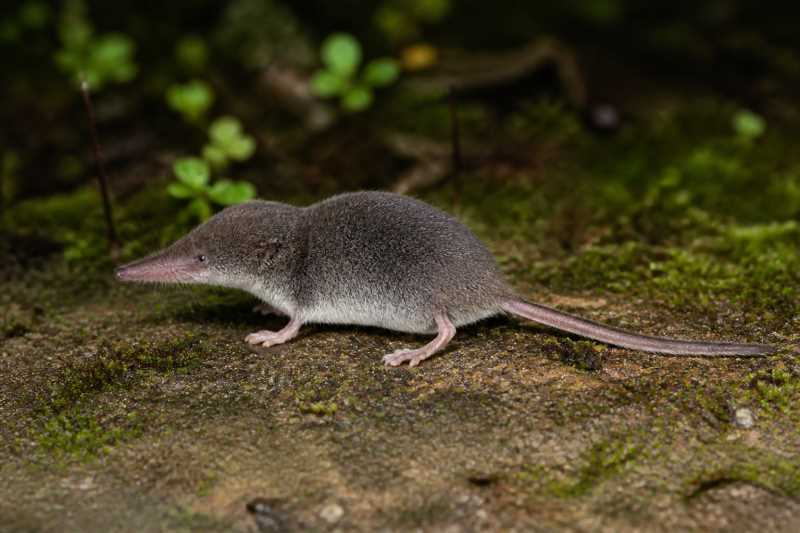
The Ke Go White-toothed Shrew is characterized by its diminutive size, typical of the Crocidura genus. It possesses a slender, elongated body with a total length ranging from 60 to 80 millimeters, excluding its tail, which adds an additional 40 to 50 millimeters. Its weight is modest, generally between 5 and 10 grams. The shrew’s pelage is soft and dense, primarily grayish-brown on the dorsal side, transitioning to a lighter shade underneath. Its most distinguishing feature is its white teeth, which is a common trait among members of its genus, contrasting with the pigmentation of the rest of its body.
The Ke Go White-toothed Shrew has a pointed snout, which is highly sensitive and aids in foraging. Its small, beady eyes suggest a reliance on other senses such as smell and touch for navigation and hunting. The ears are relatively small and often hidden within its fur, further emphasizing its adaptation to a life spent burrowing and foraging in dense underbrush.
Range and Habitat
This shrew is endemic to the central regions of Vietnam, particularly within the confines of Ke Go Nature Reserve, from which it derives its name. The reserve, located in Ha Tinh Province, provides an ideal habitat with its combination of dense tropical forests, rich in undergrowth and leaf litter, which are crucial for the shrew’s survival.
The habitat in Ke Go is characterized by its moist, evergreen forests with a diverse array of flora and fauna. The region’s climate, marked by high humidity and substantial rainfall, supports a complex ecosystem where this shrew can thrive. However, its range is severely limited, confined to this specific geographic location, which makes it especially vulnerable to environmental changes.
Behavior and Diet
The Ke Go White-toothed Shrew is predominantly nocturnal, spending most of its active hours under the cover of darkness. It is highly energetic and constantly foraging for food due to its high metabolic rate, a common trait among shrews. Its diet primarily consists of small invertebrates such as insects, worms, and arachnids. Occasionally, it may consume plant matter, but it is primarily insectivorous.
In terms of behavior, this shrew is solitary, except during breeding seasons when males and females come together. It utilizes a series of high-pitched squeaks for communication, especially when navigating or warding off potential threats. The shrew’s keen sense of smell and touch is vital for finding food and avoiding predators in the dense underbrush.
Identification Tips (Field Recognition Cues)
Identifying the Ke Go White-toothed Shrew in the field requires attention to several key features:
- Size and Shape: Small, slender body with a long tail relative to its body length.
- Coloration: Grayish-brown fur with a lighter underside.
- Teeth: Notably white, which stands out against the darker body.
- Snout and Ears: Long, pointed snout with small, concealed ears.
- Behavior: Active at night with quick, erratic movements.
- Habitat: Found exclusively in dense, tropical forests of Ke Go Nature Reserve.
Conservation Status (With Threats and Protections)
The Ke Go White-toothed Shrew is currently classified as Data Deficient by the International Union for Conservation of Nature (IUCN). This status indicates that there is insufficient information to make a direct assessment of its risk of extinction based on its distribution and population trends.
Threats
- Habitat Loss: Deforestation and habitat fragmentation due to agricultural expansion and logging are primary threats.
- Climate Change: Alterations in temperature and precipitation patterns could impact the delicate ecosystem balance.
- Limited Range: Its confinement to a specific geographic location makes it particularly susceptible to local environmental changes.
Protections
Efforts to conserve the Ke Go White-toothed Shrew include the protection of its habitat within the Ke Go Nature Reserve. Conservationists advocate for sustainable land use practices and the enforcement of existing environmental regulations to prevent illegal logging and land conversion.
Frequently Asked Questions
What is the habitat of the Ke Go White-toothed Shrew?
The Ke Go White-toothed Shrew inhabits the tropical evergreen forests of the Ke Go Nature Reserve in Vietnam, where it relies on dense understory and abundant leaf litter for foraging and shelter.
How does the Ke Go White-toothed Shrew find its food?
This shrew uses its keen sense of smell and touch to locate small invertebrates, its primary food source, within the dense vegetation and leaf litter of its forest habitat.
What are the main threats facing the Ke Go White-toothed Shrew?
The primary threats include habitat loss due to deforestation and agricultural expansion, climate change affecting its ecosystem, and its limited geographic range making it vulnerable to local environmental changes.
Why is the Ke Go White-toothed Shrew important for the ecosystem?
As an insectivore, the Ke Go White-toothed Shrew plays a crucial role in controlling insect populations, thus maintaining ecological balance within its forest habitat.
Are there any conservation efforts in place for the Ke Go White-toothed Shrew?
Yes, conservation efforts focus on protecting its habitat within the Ke Go Nature Reserve and promoting sustainable land use practices to mitigate habitat loss and environmental degradation.
Related posts