Introduction
The Small Red-nosed Tree Mouse, scientifically known as Juliomys pictipes, is a captivating yet lesser-known rodent species inhabiting the dense forests of South America. This elusive mammal is a member of the Cricetidae family and is renowned for its distinctive red nose and arboreal lifestyle. As a species with unique ecological traits, understanding its characteristics and conservation status is essential for preserving biodiversity in its natural habitat.
In this comprehensive article, we delve into the various aspects of Juliomys pictipes, including its physical description, natural range, habitat, behavior, diet, and conservation status. We also offer identification tips for those interested in observing this intriguing species in the wild.
Physical Description
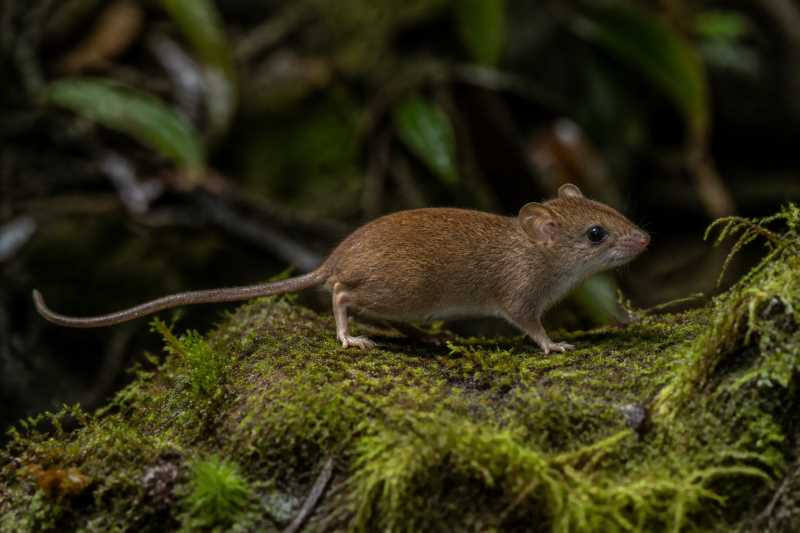
The Small Red-nosed Tree Mouse is a small rodent, typically measuring around 8 to 10 centimeters in body length, with a tail that often surpasses the length of its body, adding another 10 to 15 centimeters. Its most distinctive feature is its bright red nose, which stands out against the otherwise muted hues of its fur.
The fur of Juliomys pictipes is soft and dense, providing insulation against the cool temperatures of its forest habitat. The dorsal side is usually a blend of brown and gray, while the ventral side is lighter, often white or pale gray. The large, round ears and prominent eyes are adaptations for an arboreal and nocturnal lifestyle, enhancing its hearing and vision in low-light environments.
The limbs of the Small Red-nosed Tree Mouse are adapted for climbing, with sharp claws and padded feet that provide grip on tree bark. This physical adaptability is crucial for its survival and efficiency in navigating the forest canopy.
Range and Habitat
Juliomys pictipes is primarily found in the Atlantic Forest biome of South America, particularly in regions of Brazil, including the states of Minas Gerais, Espírito Santo, and Bahia. This species thrives in subtropical and tropical moist lowland forests, where it can find ample food sources and suitable nesting sites high in the trees.
The Atlantic Forest is one of the world’s most biodiverse regions, supporting a multitude of plant and animal species. However, it is also one of the most threatened, with significant portions of its original area having been deforested for agriculture and urban development. The Small Red-nosed Tree Mouse relies on the dense canopy and complex structure of this forest for shelter and sustenance.
Behavior and Diet
The Small Red-nosed Tree Mouse is primarily nocturnal, spending its nights foraging for food and its days resting in nests constructed from leaves and twigs high in the trees. Its arboreal nature means it spends most of its life in the canopy, rarely descending to the forest floor.
The diet of Juliomys pictipes consists mainly of fruits, seeds, and insects, making it an omnivore with a preference for plant material. During the fruiting season, it plays a vital role in seed dispersal, contributing to the ecological dynamics of its habitat.
Socially, these mice are relatively solitary, although they may occasionally be observed in small groups, particularly during the breeding season. Communication is facilitated through vocalizations and scent marking, which help maintain territory and attract mates.
Identification Tips (Field Recognition Cues)
Identifying the Small Red-nosed Tree Mouse in the wild can be challenging due to its elusive nature and nocturnal habits. However, several field recognition cues can aid in its identification:
- Red Nose: The most distinctive feature is the bright red nose, which is unique to this species.
- Tail Length: A long tail that exceeds the body length is a key characteristic.
- Habitat: Look for these mice in the canopy of subtropical and tropical moist forests.
- Activity Pattern: As a nocturnal species, they are most active at night.
- Vocalizations: Listen for soft, high-pitched calls at night, which may indicate their presence.
Conservation Status (with Threats and Protections)
Currently, the Small Red-nosed Tree Mouse is classified as "Data Deficient" by the International Union for Conservation of Nature (IUCN), primarily due to the lack of comprehensive data on its population size and distribution. However, it is suspected that the species may be at risk due to the ongoing destruction of the Atlantic Forest.
Threats
- Habitat Loss: Deforestation for agriculture, logging, and urbanization has significantly reduced the available habitat for Juliomys pictipes.
- Fragmentation: The division of forest areas into smaller, isolated patches limits the movement and genetic exchange between populations.
- Climate Change: Altered weather patterns can affect the availability of food resources and suitable habitat conditions.
Protections
Efforts to protect the Atlantic Forest are critical for the conservation of Juliomys pictipes. This includes:
- Protected Areas: Establishing and maintaining protected areas within the Atlantic Forest to preserve its biodiversity.
- Reforestation: Initiatives to restore deforested areas can help expand and connect forest habitats.
- Research and Monitoring: Increasing research efforts to better understand the ecology and distribution of Juliomys pictipes.
Frequently Asked Questions
What is the diet of the Small Red-nosed Tree Mouse?
The Small Red-nosed Tree Mouse is an omnivore, primarily consuming fruits, seeds, and insects. Its diet varies seasonally, with a higher intake of fruits during the fruiting season, which aids in seed dispersal.
Where can the Small Red-nosed Tree Mouse be found?
This species is native to the Atlantic Forest of South America, particularly in Brazil. It inhabits subtropical and tropical moist lowland forests, relying on the dense canopy for shelter and food.
How does the Small Red-nosed Tree Mouse contribute to its ecosystem?
Juliomys pictipes plays a crucial role in its ecosystem by aiding in seed dispersal. As it feeds on various fruits, it helps in the propagation of plant species, maintaining the biodiversity of the forest.
What are the main threats to the Small Red-nosed Tree Mouse?
The primary threats include habitat loss due to deforestation, habitat fragmentation, and the effects of climate change, all of which pose significant risks to its survival.
How can we help conserve the Small Red-nosed Tree Mouse?
Conservation efforts should focus on protecting the remaining Atlantic Forest, promoting reforestation, and supporting research to gather more data on the species’ population and distribution.
Related posts