Introduction
The New England Cottontail (Sylvilagus transitionalis) is a small, elusive mammal native to the northeastern United States. Known for its distinctive appearance and critical role in local ecosystems, this species has fascinated biologists and conservationists alike. However, threats from habitat loss and competition have placed the New England Cottontail in a precarious position, drawing significant attention towards its conservation.
Physical Description
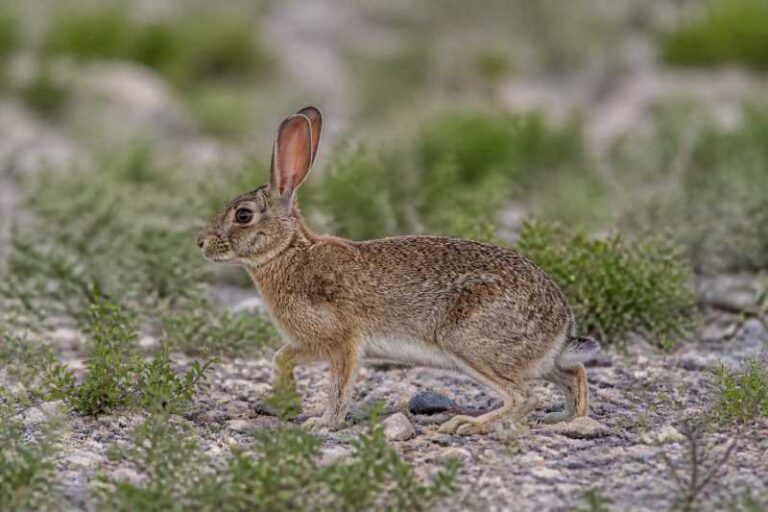
The New England Cottontail is a medium-sized rabbit, typically weighing between 1.5 to 2.5 pounds. Its body length ranges from 15 to 17 inches. This species is characterized by its uniformly brownish coat with a slight reddish hue, which provides effective camouflage in its natural habitat. One of the distinguishing features is the black line that runs along the top of its tail, contrasting with the white underside—hence the name "cottontail." The ears are relatively short, and unlike other rabbits, lack black tips.
Range and Habitat
Historically, the New England Cottontail’s range extended across the New England states, New York, and parts of southern Quebec and Ontario. Today, its range has significantly contracted, predominantly found in parts of Maine, New Hampshire, Massachusetts, Rhode Island, Connecticut, and eastern New York.
This species thrives in early successional habitats—areas that have been disturbed and are in the process of regrowth, such as young forests, shrublands, and thickets. These environments provide the dense cover necessary for protection from predators and harsh weather conditions.
Behavior and Diet
New England Cottontails are crepuscular, meaning they are most active during dawn and dusk. They spend a significant portion of their time in dense cover to avoid predation. This nocturnal behavior helps minimize encounters with diurnal predators.
Their diet primarily consists of herbaceous plants, woody vegetation, grasses, and sedges. During winter, when greenery is scarce, they rely on bark, twigs, and buds of shrubs and trees. This opportunistic feeding behavior allows them to adapt to seasonal changes in food availability.
Identification Tips
Field identification of the New England Cottontail can be challenging due to its close resemblance to the Eastern Cottontail (Sylvilagus floridanus). Key differences include:
- Tail: The New England Cottontail has a black line on the top of its tail.
- Ears: Unlike the Eastern Cottontail, its ears do not have black tips.
- Size and Shape: While size can overlap, the New England Cottontail has a more compact build compared to the Eastern Cottontail.
- Skull Features: For definitive identification, skull measurements and DNA analysis are required, which are generally conducted by experts.
Conservation Status
The New England Cottontail is currently listed as a species of concern. The primary threat to its survival is habitat loss due to urban development, agriculture, and forest maturation. As forests mature, they provide less dense cover, which is unsuitable for the cottontail’s survival.
Competition with the more adaptable Eastern Cottontail, which was introduced in the early 20th century, also poses a significant threat. The Eastern Cottontail thrives in a wider array of habitats, often outcompeting the New England Cottontail for resources.
Conservation efforts focus on habitat restoration and management. Programs aimed at creating and maintaining early successional habitats are crucial. Additionally, breeding programs and reintroductions in suitable habitats have been initiated to bolster population numbers.
Frequently Asked Questions
What are the main threats to the New England Cottontail?
The main threats include habitat loss, competition with the Eastern Cottontail, and predation. Conservation efforts are in place to mitigate these issues.
How can you tell the difference between a New England Cottontail and an Eastern Cottontail?
Key differences include the presence of a black line on the tail of the New England Cottontail and the absence of black ear tips.
Where can you find the New England Cottontail today?
They are primarily found in parts of Maine, New Hampshire, Massachusetts, Rhode Island, Connecticut, and eastern New York in dense, shrubby areas.
Why is the New England Cottontail important to its ecosystem?
As a prey species, it plays a crucial role in the food web, supporting predators like foxes and hawks. It also contributes to plant seed dispersion.
What is being done to protect the New England Cottontail?
Efforts include habitat restoration, breeding programs, and legal protections to prevent habitat destruction.
Related posts