Introduction
The White-bellied Woolly Mouse Opossum, scientifically known as Marmosa constantiae, is a fascinating species belonging to the family Didelphidae. These small marsupials, often overshadowed by their more famous relatives like the Virginia opossum, play a crucial role in the ecosystems of South America. Known for their distinctive appearance and intriguing behaviors, the White-bellied Woolly Mouse Opossum is an animal worth understanding in greater detail.
Native to the neotropical regions, these opossums are an integral part of the biodiversity in their natural habitats. Despite their small size, they exhibit a range of behaviors and adaptations that allow them to thrive in varied environments. This article aims to shed light on the unique characteristics of this species, including its physical description, habitat, behavior, and conservation status.
Physical Description
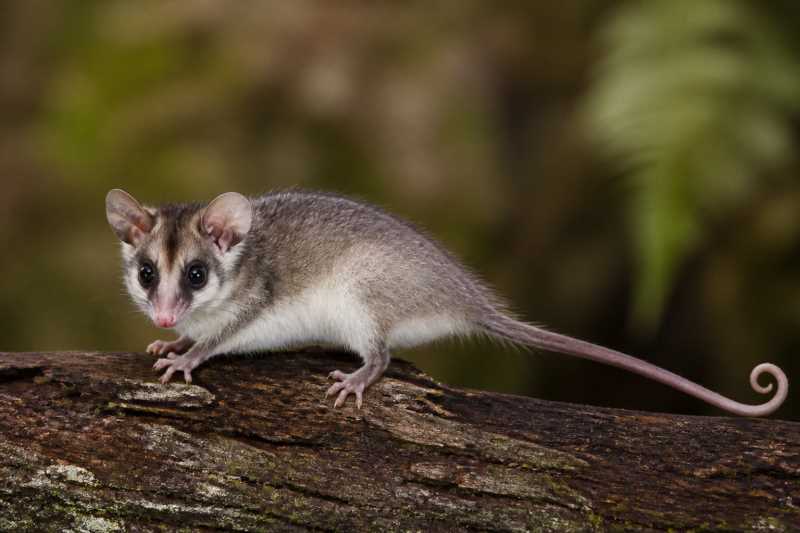
The White-bellied Woolly Mouse Opossum is a small marsupial with a distinctive appearance. Adults typically measure about 10 to 15 centimeters in body length, with a tail that is roughly equal in length to the body, providing balance and agility. Weighing between 25 to 50 grams, these opossums have a compact and lightweight build, ideal for their arboreal lifestyle.
Their fur is soft and dense, providing insulation against the elements. As their name suggests, they possess a whitish or creamy belly, while the dorsal fur is generally grayish-brown. This coloration provides effective camouflage against predators when they’re moving through the trees.
One of the most striking features of the White-bellied Woolly Mouse Opossum is its large, rounded ears and prominent, dark eyes, which enhance their nocturnal vision and hearing. These sensory adaptations are crucial for their survival, aiding in navigation and prey detection during nighttime foraging activities.
Range and Habitat
Marmosa constantiae is primarily found in the neotropical regions of South America. Their range extends across Bolivia, Brazil, and Paraguay, inhabiting a variety of forested environments. These opossums are highly adaptable, thriving in both primary and secondary forests, as well as in disturbed habitats where vegetation is dense.
They prefer humid, tropical climates, often residing in the canopy where they can avoid many ground-dwelling predators. Their arboreal nature means they are rarely seen on the ground, spending much of their time in trees. This lifestyle not only helps them avoid predators but also positions them closer to their dietary staples, which include insects and fruits.
Behavior and Diet
The White-bellied Woolly Mouse Opossum is predominantly nocturnal, engaging in most of its activities under the cover of darkness. Their nocturnal habits help them evade many diurnal predators and make use of their acute senses for nighttime foraging.
Their diet is omnivorous, consisting mainly of insects, fruits, and small vertebrates. This dietary flexibility allows them to adapt to seasonal changes in food availability. They are known to be opportunistic feeders, consuming whatever is readily available in their environment.
Social interactions among these opossums are minimal, as they tend to be solitary creatures, coming together only for mating. Breeding behavior involves brief courtship, with the female raising the young alone. After a short gestation period, the female gives birth to underdeveloped young, which continue to develop in the mother’s pouch or clinging to her back.
Identification Tips (field recognition cues)
Identifying the White-bellied Woolly Mouse Opossum in the wild can be challenging due to their elusive nature and nocturnal habits. However, there are several key features to look for:
- Size and Shape: Look for a small, mouse-sized marsupial with a long, prehensile tail, ideal for grasping branches.
- Coloration: Note the grayish-brown dorsal fur contrasting with the white or creamy underside.
- Facial Features: Large, round ears and prominent dark eyes are characteristic of this species.
- Behavior: Observe their arboreal habits; these opossums are rarely seen on the ground and are most active at night.
Conservation Status (with threats and protections)
The conservation status of the White-bellied Woolly Mouse Opossum is currently listed as Least Concern by the International Union for Conservation of Nature (IUCN). However, like many species, they face several threats that could impact their populations in the future.
Habitat loss due to deforestation and agricultural expansion poses the most significant threat to this species. As forests are cleared for timber and land converted for crops, the opossum’s natural habitats are fragmented and reduced.
Despite these threats, the species has shown resilience, partly due to its adaptability to disturbed habitats. Conservation efforts focus on preserving large tracts of forest and promoting sustainable land-use practices. Protected areas and national parks within their range provide some refuge against habitat destruction.
Frequently Asked Questions
1. What is the primary diet of the White-bellied Woolly Mouse Opossum? The White-bellied Woolly Mouse Opossum primarily feeds on insects and fruits. They are omnivorous and opportunistic feeders, which allows them to adapt to changing food availability in their environment.
2. How does the White-bellied Woolly Mouse Opossum adapt to its nocturnal lifestyle? This opossum has developed several adaptations for its nocturnal lifestyle, including large, sensitive ears and prominent eyes that enhance its night vision and hearing. These adaptations are crucial for detecting prey and avoiding predators in the dark.
3. What threats do White-bellied Woolly Mouse Opossums face in the wild? The primary threat to these opossums is habitat loss due to deforestation and agricultural expansion. Protecting their forest habitats is vital for their continued survival.
4. Where are White-bellied Woolly Mouse Opossums typically found? They are typically found in the neotropical regions of South America, including Bolivia, Brazil, and Paraguay, favoring humid, tropical forests.
5. Are White-bellied Woolly Mouse Opossums social animals? No, they are generally solitary animals, interacting mainly for mating purposes. Females raise their young alone after a brief gestation period.
Related posts