Introduction
The Dusky Hopping Mouse (Notomys fuscus) is a fascinating mammal species native to the arid regions of Australia. Known for its distinctive hopping gait and nocturnal lifestyle, this small rodent has adapted remarkably well to some of the harshest environments on Earth. The Dusky Hopping Mouse is a member of the Notomys genus, which includes several other hopping mouse species, all of which are characterized by their elongated hind legs and tail, allowing them to move efficiently across the desert terrain. In this comprehensive article, we will explore the Dusky Hopping Mouse’s physical characteristics, habitat, behavior, diet, conservation status, and more.
Physical Description
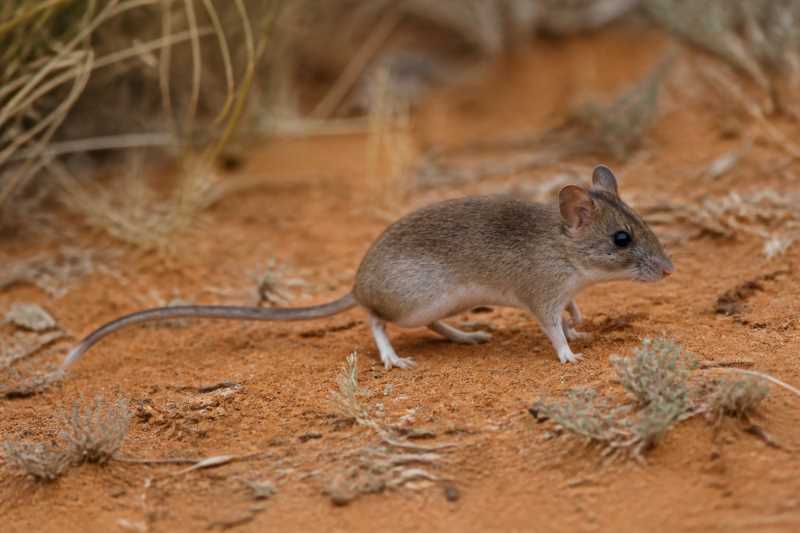
The Dusky Hopping Mouse is a small rodent, with adults typically weighing between 30 and 50 grams. Its body length ranges from 10 to 12 centimeters, with a tail that is slightly longer than its body, averaging 14 to 16 centimeters. The tail is a notable feature, as it helps the mouse maintain balance while hopping and serves as a fat storage site. Its fur is soft and dense, with a predominantly grey-brown coloration that provides excellent camouflage against the sandy desert backdrop. The underparts are generally a lighter, off-white hue. Like other members of the Notomys genus, the Dusky Hopping Mouse has large eyes and ears, adaptations that enhance its nocturnal lifestyle by improving night vision and auditory sensitivity.
Range and Habitat
The Dusky Hopping Mouse is endemic to Australia, primarily found in the arid and semi-arid regions of central and eastern parts of the country. Its range includes parts of South Australia, New South Wales, and Queensland. The species inhabits a variety of desert environments, from sandy dunes to stony plains. These environments are characterized by sparse vegetation, including spinifex grasses, acacia shrubs, and saltbush. The mouse constructs burrows in loose, sandy soil, which provide shelter from predators and extreme temperatures, as well as a site for nesting and rearing young.
Behavior and Diet
The Dusky Hopping Mouse is primarily nocturnal, which allows it to avoid the extreme heat of the day. During the night, it becomes active, foraging for food and socializing with other mice. The species is known for its social behavior, often living in small family groups. Communication within these groups is facilitated through a series of vocalizations and scent markings.
The diet of the Dusky Hopping Mouse is varied but predominantly herbivorous. It primarily feeds on seeds, leaves, and grasses, but it can also consume insects and small invertebrates when plant-based food sources are scarce. This opportunistic feeding behavior is crucial for survival in the unpredictable desert environment, where food availability can fluctuate dramatically.
Identification Tips (Field Recognition Cues)
Identifying the Dusky Hopping Mouse in the field involves looking for several key characteristics:
- Body Size and Shape: Look for a small rodent with a compact body and long tail.
- Coloration: Note the grey-brown fur on its back and lighter underparts.
- Hopping Gait: Observe its distinctive hopping movement, facilitated by long hind legs.
- Habitat: Check for signs of burrows in sandy or loose soil within arid environments.
- Activity Timing: Look for activity primarily during nighttime hours.
Conservation Status (with Threats and Protections)
The Dusky Hopping Mouse is currently listed as a vulnerable species under the IUCN Red List of Threatened Species. The primary threats to its survival include habitat destruction due to agricultural expansion and land degradation, as well as predation by introduced species such as cats and foxes. Climate change also poses a significant threat by altering the availability of food and water resources in its habitat.
Conservation efforts are underway to protect the Dusky Hopping Mouse and its habitat. These efforts include habitat restoration projects, predator control programs, and research into the species’ ecology and population dynamics. Additionally, some areas where the species is found are designated as protected reserves, helping to preserve critical habitat and reduce human-induced pressures.
Frequently Asked Questions
What is the Dusky Hopping Mouse’s primary habitat?
The Dusky Hopping Mouse primarily inhabits arid and semi-arid regions of Australia, including sandy dunes and stony plains. These environments provide the loose, sandy soil necessary for burrow construction.
How does the Dusky Hopping Mouse adapt to its environment?
The Dusky Hopping Mouse adapts to its harsh desert environment through its nocturnal lifestyle, which helps avoid daytime heat. Its diet is opportunistic, allowing it to survive on available vegetation and insects.
What are the main threats to the Dusky Hopping Mouse?
The main threats include habitat destruction from agricultural practices, predation by introduced species like cats and foxes, and the impacts of climate change on food and water availability.
How can the Dusky Hopping Mouse be identified?
The Dusky Hopping Mouse can be identified by its small size, grey-brown fur, long tail, and distinctive hopping gait. It is primarily active at night and typically found in arid habitats.
What conservation measures are in place for the Dusky Hopping Mouse?
Conservation measures include habitat protection, predator control, and research initiatives. Some areas of its habitat are designated as protected reserves, aiding in its conservation.
Related posts