Introduction
The San Quintin Kangaroo Rat (Dipodomys gravipes) is a small, nocturnal rodent that is part of the Heteromyidae family, which includes pocket mice and other kangaroo rats. Found exclusively in the Baja California Peninsula of Mexico, this species is particularly notable for its unique adaptations to arid environments. The San Quintin Kangaroo Rat is not just a fascinating subject for scientists but also a symbol of the delicate balance required to maintain biodiversity in desert ecosystems. This article will provide an in-depth exploration of this remarkable species, covering its physical attributes, habitat, behavior, and the conservation challenges it faces.
Physical Description
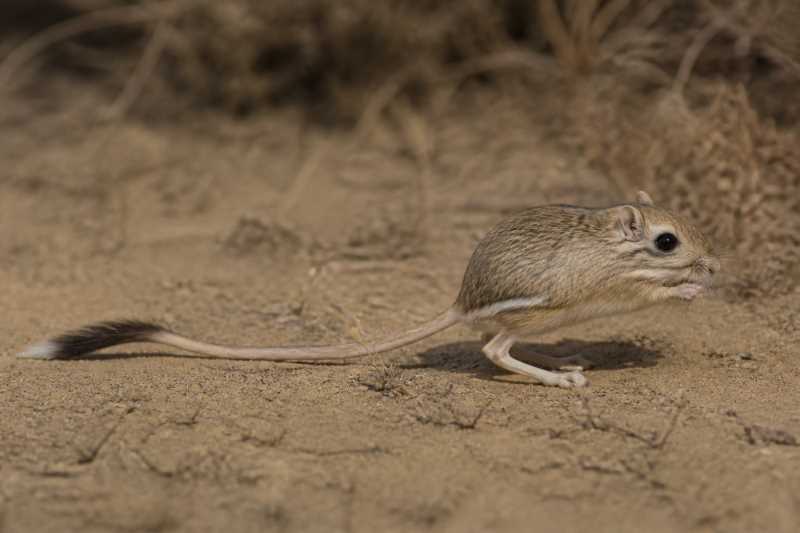
The San Quintin Kangaroo Rat is a medium-sized rodent, typically measuring about 12 to 14 inches in total length, including its tail. Its most distinguishing feature is its long, bushy tail, which it uses for balance while hopping. The fur is a light brown with a white underbelly, allowing it to blend seamlessly into its sandy surroundings. Its hind legs are significantly longer than its forelegs, an adaptation that facilitates its unique mode of locomotion—bipedal hopping, similar to that of a kangaroo.
The head of the San Quintin Kangaroo Rat is round with large eyes and small, rounded ears that aid in detecting predators. Its cheek pouches are fur-lined and used for storing food. The incisors are sharp and adapted for gnawing on a variety of plant material. These rodents have a highly developed sense of hearing, which is crucial for avoiding predators in their open desert habitats.
Range and Habitat
The San Quintin Kangaroo Rat is endemic to the Baja California Peninsula in Mexico, particularly the San Quintin region. Its range is limited to a specific type of habitat: coastal scrub and sandy plains that are characterized by sparse vegetation. The soil in these areas is loose and sandy, providing an ideal substrate for burrowing.
This species prefers areas that are slightly elevated to avoid flooding during rare rain events. The vegetation in its habitat typically includes cacti, shrubs, and grasses, which provide both food and cover from predators. Human-induced changes to the landscape, such as agriculture and urban development, have significantly reduced the available habitat for this species, making its conservation a critical concern.
Behavior and Diet
San Quintin Kangaroo Rats are primarily nocturnal, venturing out of their burrows at night to forage for food. Their diet mainly consists of seeds, which they are adept at locating even with minimal light. They use their cheek pouches to transport food back to their burrows, where they store it for future consumption.
In addition to seeds, they occasionally consume insects and other small invertebrates, particularly when plant food is scarce. Their water needs are minimal, as they have adapted to extract sufficient moisture from their food.
Socially, these rodents are mostly solitary, with each individual typically occupying its own burrow. They are territorial and use scent markings to communicate with other kangaroo rats. During the breeding season, which occurs in the early spring, males may venture into the territories of females, leading to brief interactions that result in mating.
Identification Tips (Field Recognition Cues)
Identifying the San Quintin Kangaroo Rat in the field requires careful observation of its physical and behavioral traits. Here are some tips for recognizing this species:
- Size and Shape: Look for a small to medium-sized rodent with a distinctive long, bushy tail.
- Locomotion: Observe its hopping movement, which is a key characteristic of kangaroo rats.
- Coloration: Note the light brown fur with a white underbelly, which helps it blend into sandy environments.
- Habitat: Focus on sandy plains and coastal scrub areas within its limited range in Baja California.
- Activity Patterns: Since they are nocturnal, sightings are more likely at night. Use a flashlight to spot their reflective eyes.
Conservation Status (With Threats and Protections)
The San Quintin Kangaroo Rat is classified as "Critically Endangered" on the IUCN Red List. The primary threats to its survival include habitat loss due to agricultural expansion, urban development, and the introduction of invasive plant species that alter the natural landscape.
Conservation efforts are focused on habitat preservation and restoration. Protected areas have been established to safeguard critical habitats, and there are ongoing efforts to remove invasive species and reintroduce native vegetation. Public awareness campaigns are also crucial in promoting the importance of preserving this unique species and its habitat.
Frequently Asked Questions
What is the San Quintin Kangaroo Rat’s primary diet?
The San Quintin Kangaroo Rat primarily feeds on seeds, which it collects and stores in its burrow. It may also consume insects when seeds are scarce.
How does the San Quintin Kangaroo Rat avoid predators?
This species has adapted to avoid predators through its nocturnal lifestyle, excellent hearing, and the ability to quickly hop away to the safety of its burrow.
Why is the San Quintin Kangaroo Rat considered critically endangered?
The San Quintin Kangaroo Rat is critically endangered due to habitat loss from agricultural and urban development, as well as competition with invasive plant species.
Are there any conservation efforts in place for the San Quintin Kangaroo Rat?
Yes, conservation efforts include habitat protection, restoration projects, and public awareness campaigns to highlight the importance of this species.
Where can the San Quintin Kangaroo Rat be found?
This species is found exclusively in the Baja California Peninsula of Mexico, particularly in sandy, coastal scrub habitats near San Quintin.
Related posts