Introduction
The Eastern Fox Squirrel (Sciurus niger) is the largest species of tree squirrel native to North America. Known for its adaptability and distinctive appearance, this charismatic mammal is a common sight in urban parks, suburban backyards, and rural woodlands across its expansive range. The Eastern Fox Squirrel plays a significant role in its ecosystem as both a seed disperser and a prey species for various predators. This article explores the unique characteristics, behaviors, and conservation status of this fascinating creature.
Physical Description
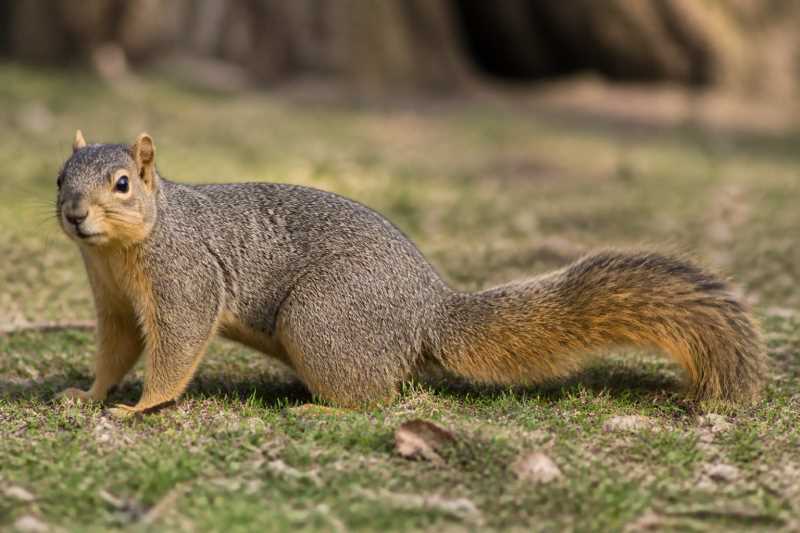
The Eastern Fox Squirrel is notable for its large size and striking coloration. Adults typically measure between 17 to 27 inches in total length, including their bushy tails, which alone can be 8 to 13 inches long. They weigh between 1.5 to 2.5 pounds, making them the largest of the tree squirrel species in North America.
Their fur is a mix of gray and red, with a characteristic rusty or orange tint that gives them their "fox" moniker. The underparts are usually a paler orange or reddish-yellow, while the face often showcases a white nose and ears with white edges. This species exhibits a variety of color morphs, including melanistic (all-black) and albino individuals, although these are less common.
Range and Habitat
The Eastern Fox Squirrel is widely distributed across the eastern and central United States, extending into southern Canada. Their range spans from the eastern coastlines westward to the Great Plains, and from the northern reaches of Ontario down to the Gulf of Mexico.
These squirrels are highly adaptable and thrive in diverse habitats, including deciduous and mixed forests, woodlands, and agricultural areas. They are also well-suited to urban and suburban environments, where they often take advantage of human-altered landscapes. Ideal habitats feature a mix of mature trees that provide both food and nesting sites.
Behavior and Diet
Eastern Fox Squirrels are diurnal, meaning they are active during the day, with peak activity occurring in the early morning and late afternoon. They are primarily arboreal but will descend to the ground to forage for food.
Their diet is highly varied and includes a wide range of plant and animal matter. They feed on nuts, seeds, fruits, and flowers, with a particular fondness for acorns, hickory nuts, and walnuts. Eastern Fox Squirrels also consume fungi, buds, bark, and occasionally insects and bird eggs. They are known for their caching behavior, where they bury nuts across their territory to retrieve later, an activity that inadvertently aids in forest regeneration.
Socially, Eastern Fox Squirrels are generally solitary, coming together only during the breeding season or when food is abundant. They communicate using a series of vocalizations and tail movements to convey warnings or other messages to conspecifics.
Identification Tips (Field Recognition Cues)
Identifying the Eastern Fox Squirrel in the field can be done by paying attention to several key characteristics:
- Size: Look for a large squirrel, larger than the more common Eastern Gray Squirrel.
- Coloration: Note the reddish-orange fur and bushy tail with hints of orange.
- Habitat: They are often found in open forests, woodlots, and urban areas with mature trees.
- Behavior: Observe their ground-foraging behavior and nut-burying activities.
- Vocalizations: Listen for the characteristic chattering and clucking sounds.
Conservation Status (With Threats and Protections)
The Eastern Fox Squirrel is currently listed as Least Concern by the International Union for Conservation of Nature (IUCN), indicating that it is not at immediate risk of population decline. However, certain localized threats could impact populations, including habitat loss due to urbanization, deforestation, and changes in land use.
Predation by domestic cats and dogs, as well as collisions with vehicles, pose additional threats. Conservation efforts focus on maintaining and restoring natural habitats, promoting urban greenspaces, and raising public awareness about the ecological role of squirrels.
Legal protections vary by region, but in many areas, hunting regulations are in place to manage populations sustainably. Public education initiatives emphasize the importance of coexisting with these adaptable mammals in urban environments.
Frequently Asked Questions
What do Eastern Fox Squirrels eat?
Eastern Fox Squirrels have a varied diet consisting primarily of nuts (such as acorns and hickory nuts), seeds, fruits, and flowers. They also consume fungi, buds, bark, and occasionally insects and bird eggs.
Are Eastern Fox Squirrels aggressive?
Eastern Fox Squirrels are generally not aggressive towards humans. They are solitary creatures that prefer to avoid confrontations, although they may communicate with vocalizations if threatened.
How can I attract Eastern Fox Squirrels to my backyard?
To attract Eastern Fox Squirrels to your backyard, provide a mix of native trees that produce nuts and seeds, such as oaks and hickories. Bird feeders with seeds can also attract them, but be sure to place them where squirrels can safely access them without causing damage.
What is the lifespan of an Eastern Fox Squirrel?
In the wild, Eastern Fox Squirrels can live up to 12 years, although many do not survive past their first year due to predation and other challenges. In captivity, they may live longer due to the absence of these pressures.
How do Eastern Fox Squirrels contribute to their ecosystem?
Eastern Fox Squirrels play a crucial role in their ecosystem by dispersing seeds through their caching behavior. This activity aids in forest regeneration and provides food sources for other wildlife.
Related posts