Introduction
The Colombian Spiny-rat, scientifically known as Proechimys canicollis, is a fascinating rodent species that thrives in the lush landscapes of South America. With its unique adaptations and ecological role, this species is an intriguing subject for naturalists and researchers alike. This article delves into the various aspects of the Colombian Spiny-rat, covering its physical characteristics, natural habitat, and behavioral patterns. Additionally, we’ll explore how to identify this species in the wild, its current conservation status, and address some common questions about the species.
Physical Description
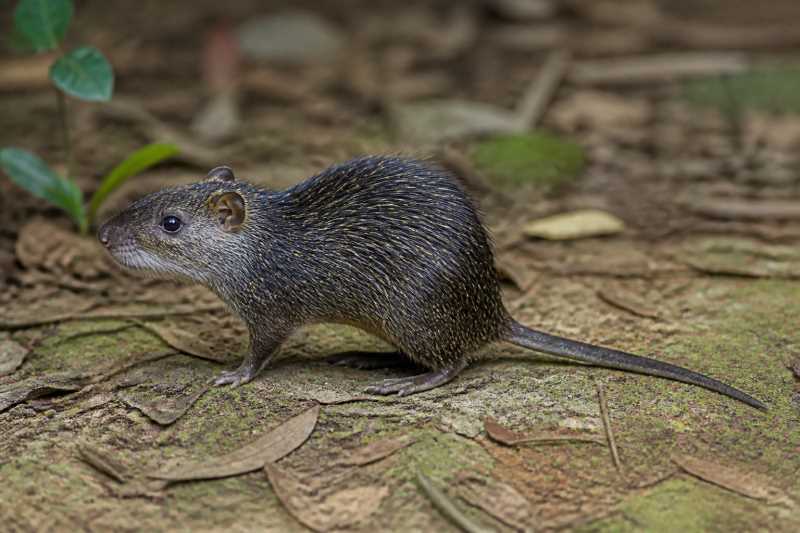
The Colombian Spiny-rat is distinguished by its robust body and characteristic spiny fur. Adult individuals typically range from 20 to 30 centimeters in body length, with a tail that adds an additional 15 to 25 centimeters. The coat is generally coarse, with spiny hairs that serve as a protective mechanism against predators. The coloration of the fur is primarily grayish-brown, with a silvery sheen across the nape and back, which is where its name ‘canicollis’—meaning ‘gray-necked’—originates. The underbelly is usually a lighter shade, ranging from pale gray to off-white.
The rodent’s head is equipped with large, round ears and a relatively short muzzle. The eyes are prominent and adapted for nocturnal activity, providing excellent night vision. The limbs are strong and well-suited for digging and climbing, with sharp claws that aid in navigating their complex habitats.
Range and Habitat
The Colombian Spiny-rat is predominantly found in the northern regions of South America, with its range extending across Colombia and parts of Venezuela. This species thrives in tropical and subtropical forests, favoring dense undergrowth and areas with abundant leaf litter. It is also known to inhabit secondary forests and areas undergoing regrowth, showcasing its adaptability to varying environmental conditions.
The preferred habitat is characterized by warm temperatures and high humidity, which supports the lush vegetation that the Spiny-rat relies on for food and shelter. These rodents are often found in lowland areas, although they can also inhabit montane regions if suitable conditions are present.
Behavior and Diet
The Colombian Spiny-rat is primarily nocturnal, spending the daylight hours hidden in burrows or dense vegetation to avoid predators. At night, it becomes active, foraging for food and engaging in social interactions. These rodents are known for their agility and can often be seen climbing trees and navigating the forest floor with ease.
Their diet is primarily herbivorous, consisting of a variety of seeds, fruits, and foliage. The Spiny-rat plays a crucial role in seed dispersal, contributing to the maintenance and regeneration of their forest ecosystems. Occasionally, they may consume insects or small invertebrates, although such occurrences are rare.
Socially, the Colombian Spiny-rat is relatively solitary, with individuals maintaining defined territories. However, they may form loose colonies in areas with abundant resources, particularly during the breeding season.
Identification Tips
Recognizing a Colombian Spiny-rat in the wild involves observing several key features:
- Fur and Spines: Look for the distinctive spiny coat, which is unique among the rodent species in its range.
- Coloration: The silvery sheen on the neck and back is a clear identifying marker.
- Size and Shape: Note the rodent’s size and robust build, with a relatively long tail.
- Behavior: Active primarily at night, these rodents can often be spotted foraging on the forest floor or climbing trees.
Conservation Status
Currently, the Colombian Spiny-rat is listed as a species of Least Concern by the International Union for Conservation of Nature (IUCN). This classification is due to its wide distribution and presumed large population. However, like many forest-dependent species, it faces threats from habitat loss and degradation due to agricultural expansion, logging, and urban development.
Conservation efforts focus on habitat preservation and the establishment of protected areas. Maintaining the integrity of tropical forests is crucial for the continued survival of the Colombian Spiny-rat and the myriad other species that share its habitat.
Frequently Asked Questions
1. What is the primary habitat of the Colombian Spiny-rat?
The Colombian Spiny-rat primarily inhabits tropical and subtropical forests with dense undergrowth. It is adaptable to secondary forests and regenerating areas, provided there is sufficient cover and food supply.
2. Are Colombian Spiny-rats dangerous to humans?
Colombian Spiny-rats are not considered dangerous to humans. They are primarily herbivorous and avoid human contact, posing no direct threat. Their spiny fur can deter predators, but it is not harmful to humans unless handled improperly.
3. How can I differentiate a Colombian Spiny-rat from other rodents?
Key differences include the unique spiny fur, the silvery sheen on their back, and their nocturnal behavior. Observing these characteristics can help distinguish them from other rodents in the region.
4. What role do Colombian Spiny-rats play in their ecosystem?
They are vital for seed dispersal, aiding in forest regeneration and maintaining biodiversity. Their foraging habits help distribute various plant seeds across their habitat.
5. What conservation measures are in place for the Colombian Spiny-rat?
Conservation measures include habitat preservation and the protection of tropical forests. Efforts are underway to limit deforestation and promote sustainable land-use practices to ensure their continued survival.
Related posts