Introduction
The Spectacled Lesser Galago, scientifically known as Galago matschiei, is a captivating primate species that belongs to the family Galagidae. Also referred to as the Matschie’s galago, this nocturnal mammal is an intriguing subject for primatologists and wildlife enthusiasts alike. Known for their distinctive appearance and agile movements, these small primates play a significant role in their ecosystems. This article explores the various facets of the Spectacled Lesser Galago, from its physical features to its behavior and conservation status.
Physical Description
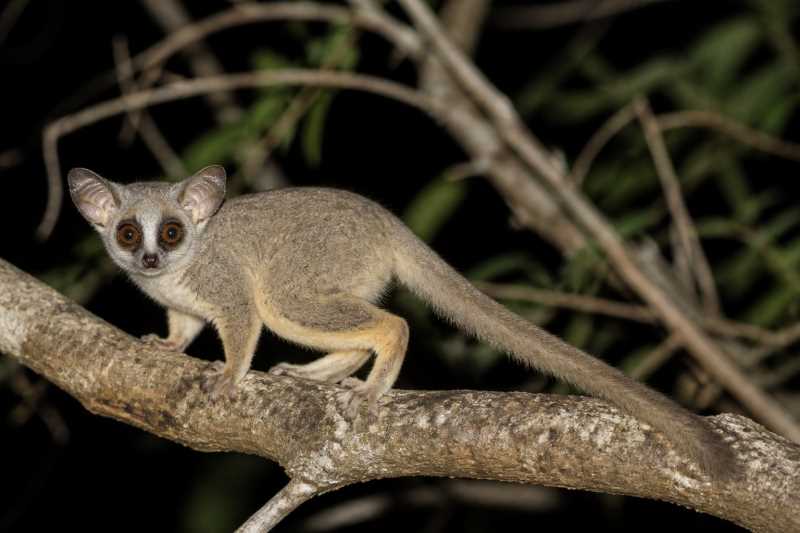
The Spectacled Lesser Galago is a small primate with a distinctive appearance that makes it easily recognizable. Adults typically weigh between 150 to 250 grams and have a body length ranging from 15 to 22 centimeters, with a tail length that can extend up to 28 centimeters. One of the most striking features of this species is its large, round eyes, which are an adaptation to its nocturnal lifestyle, allowing it to see in low-light conditions.
The fur of the Spectacled Lesser Galago is soft and dense, providing excellent insulation. Its coloration is generally a mix of gray and brown, with a lighter underbelly. The ‘spectacles’ for which it is named are prominent rings of lighter fur around its eyes, giving the appearance of wearing glasses. This unique facial feature not only aids in species identification but also adds to its charismatic appeal.
Their limbs are long and powerful, particularly the hind legs, which are adapted for leaping. The fingers and toes are equipped with pads and nails that enhance grip, enabling them to navigate through the trees with agility and precision.
Range and Habitat
The Spectacled Lesser Galago is primarily found in the forests of Central and East Africa, with populations recorded in countries such as Uganda, Rwanda, and the Democratic Republic of the Congo. They inhabit a range of forest types, including tropical rainforests, woodland areas, and savanna regions, demonstrating their adaptability to different environments.
These galagos prefer dense vegetation where they can easily find shelter and food. They are arboreal creatures, spending most of their lives in the trees. This arboreal lifestyle not only offers them protection from ground-dwelling predators but also provides ample opportunities to forage for food and find mates.
Behavior and Diet
Spectacled Lesser Galagos are primarily nocturnal, becoming active after dusk. They are known for their incredible leaping ability, capable of jumping several meters in a single bound. This agility is crucial for moving through the forest canopy and avoiding predators.
Their diet is omnivorous, consisting of a variety of foods. They primarily feed on insects, particularly during the wet season when insect populations are abundant. Additionally, they consume fruits, flowers, and tree gums, supplementing their diet when insects are scarce. The ability to exploit different food resources enables them to thrive in diverse habitats.
Socially, Spectacled Lesser Galagos are generally solitary, although they may be seen in pairs or small family groups. Communication among these primates is facilitated by a combination of vocalizations, scent markings, and physical gestures. Their calls, which range from whistles to clicks, play a critical role in maintaining social bonds and territorial boundaries.
Identification Tips (Field Recognition Cues)
Identifying the Spectacled Lesser Galago in the field can be achieved by focusing on several key characteristics:
- Eye Spectacles: Look for the distinctive lighter fur rings around their large eyes, a defining feature of the species.
- Nocturnal Behavior: Observe their activity at night; they are rarely seen during the day.
- Vocalizations: Listen for their unique calls, which are often high-pitched and varied.
- Leaping Ability: Notice their remarkable jumping prowess, often leaping between trees with ease.
Conservation Status (With Threats and Protections)
The International Union for Conservation of Nature (IUCN) currently lists the Spectacled Lesser Galago as a species of Least Concern. However, like many wildlife species, they are not without threats. Habitat destruction due to logging, agriculture, and human settlement expansion poses significant risks to their populations.
Efforts to protect their habitats are crucial for their continued survival. Conservation initiatives often focus on preserving forest habitats and establishing protected areas where these primates can thrive. Moreover, research and monitoring programs are essential to understanding their ecology and adapting conservation strategies as needed.
Frequently Asked Questions
What do Spectacled Lesser Galagos eat?
Spectacled Lesser Galagos have an omnivorous diet that includes insects, fruits, flowers, and tree gums. Their ability to consume a variety of foods helps them adapt to different seasonal changes in food availability.
Where can I find Spectacled Lesser Galagos in the wild?
These galagos are found in Central and East Africa, inhabiting countries like Uganda, Rwanda, and the Democratic Republic of the Congo. They reside in tropical rainforests, woodlands, and savanna regions.
How do Spectacled Lesser Galagos communicate?
Communication among Spectacled Lesser Galagos involves vocalizations, scent markings, and physical gestures. Their vocal repertoire includes a range of sounds from whistles to clicks, which are crucial for social interaction and territory defense.
Are Spectacled Lesser Galagos endangered?
Currently, the Spectacled Lesser Galago is listed as Least Concern by the IUCN. However, habitat destruction remains a significant threat, emphasizing the importance of ongoing conservation efforts.
What adaptations help Spectacled Lesser Galagos survive in their environment?
Key adaptations include their large eyes for night vision, strong hind limbs for leaping, and a diverse diet that allows them to exploit various food sources throughout the year.
Related posts