Introduction
The Black-tufted-ear Marmoset (Callithrix penicillata), a small New World primate, is a captivating species renowned for its distinctive physical features and adaptable nature. This marmoset, native to Brazil, is part of the Callitrichidae family, which includes other marmosets and tamarins. Due to its unique characteristics and ability to thrive in various environments, the Black-tufted-ear Marmoset is a subject of interest for researchers and wildlife enthusiasts alike.
Physical Description
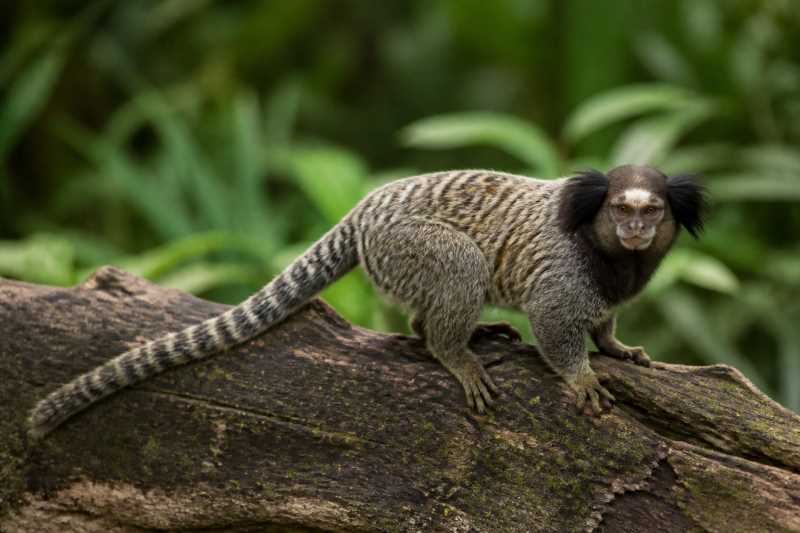
The Black-tufted-ear Marmoset, as its name suggests, is characterized by its prominent black ear tufts, which contrast sharply with its predominantly silvery-grey fur. This species typically measures about 20-23 cm in body length, with a tail that adds an additional 29-34 cm. Despite its small size, averaging around 350 grams, it exhibits a robust and agile physique, adapted for arboreal living. The face of the Black-tufted-ear Marmoset is notably expressive, featuring a dark, almost hairless face that highlights its curious eyes and small, rounded ears.
Range and Habitat
Native to Brazil, the Black-tufted-ear Marmoset is commonly found in the cerrado, a vast tropical savanna ecoregion of Brazil, extending to the Atlantic Forest regions. They are highly adaptable and can also inhabit secondary forests and urban areas, demonstrating remarkable flexibility in their habitat preferences. This adaptability has allowed them to survive in fragmented landscapes, although it also brings them into closer contact with human populations.
Behavior and Diet
Black-tufted-ear Marmosets are diurnal creatures, meaning they are active during the day. They live in social groups that typically consist of 4 to 15 individuals. These groups are characterized by complex social structures and exhibit cooperative behaviors, such as communal care of the young. Their diet is omnivorous, primarily consisting of tree sap and gum, but also including fruits, insects, and small vertebrates. They possess specialized incisors that enable them to gouge trees and access sap, a crucial food source in their diet.
Identification Tips
To identify the Black-tufted-ear Marmoset in the field, look for the following features:
- Distinctive black ear tufts contrasting with silvery-grey fur.
- Small size, with a body length of around 20-23 cm and a long tail.
- Agile movement through the trees.
- Vocalizations: Listen for high-pitched, repetitive calls used for communication within the group.
- Preference for staying in the mid to upper canopy of trees.
Conservation Status
The conservation status of the Black-tufted-ear Marmoset is currently classified as Least Concern by the IUCN Red List. However, they face several threats, including habitat loss due to agriculture and urban development. The pet trade also poses a significant threat, as they are often captured and sold illegally. Conservation efforts focus on habitat preservation and legal protection to mitigate these threats. Protected areas and environmental education programs are crucial in ensuring the survival of this species.
Frequently Asked Questions
1. What is the lifespan of a Black-tufted-ear Marmoset? The average lifespan of a Black-tufted-ear Marmoset in the wild is approximately 10-12 years, although they can live longer in captivity under ideal conditions.
2. How do Black-tufted-ear Marmosets communicate? These marmosets communicate through a variety of vocalizations, body postures, and facial expressions. They use high-pitched calls to maintain group cohesion and signal alarm.
3. Are Black-tufted-ear Marmosets endangered? Currently, the Black-tufted-ear Marmoset is not considered endangered, but they are classified as Least Concern. However, they face threats from habitat loss and the illegal pet trade.
4. Can Black-tufted-ear Marmosets be kept as pets? While they are sometimes kept as pets, it is generally discouraged due to their complex social needs and potential legal issues. They are best appreciated in their natural habitat.
5. What role do Black-tufted-ear Marmosets play in their ecosystem? As omnivores, they help control insect populations and disperse seeds, playing a vital role in maintaining the ecological balance of their habitat.
Related posts