Introduction
The Sunda Silvery Langur (Trachypithecus cristatus), also known as the silvery lutung or silvered leaf monkey, is a primate species belonging to the family Cercopithecidae. This arboreal mammal is widely recognized for its unique silvery-grey coat and distinctive facial features. Typically found in the forests of Southeast Asia, particularly Malaysia, Indonesia, and Thailand, the Sunda Silvery Langur plays a crucial role in its ecosystem. This article delves into various aspects of this fascinating species, including its physical characteristics, habitat, behavior, and conservation status.
Physical Description
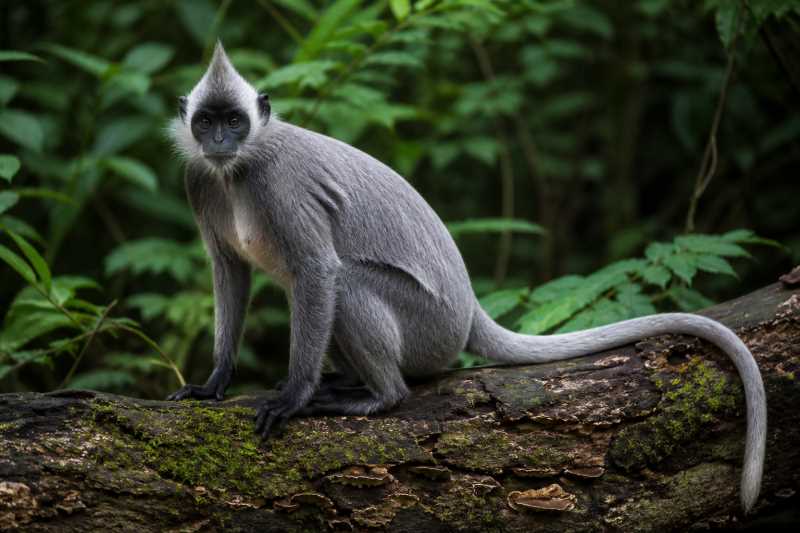
The Sunda Silvery Langur is renowned for its striking appearance. Adult langurs have a predominantly silvery-grey coat with a slight bluish tint that gives them their common name. Their fur is thick and coarse, helping them adapt to their arboreal lifestyle. Infant langurs, however, are born with a bright orange coat, which gradually changes to the adult coloration after several months.
These langurs possess a slender body, typically measuring between 42 to 58 centimeters in length, excluding their long, non-prehensile tail that can add an additional 50 to 75 centimeters. Males are generally larger than females, with adult males weighing around 6.6 to 7.3 kilograms, while females weigh approximately 5.5 to 6.2 kilograms.
Their faces are hairless and dark-skinned, with distinctive white patches around their eyes and mouth, giving them an expressive appearance. Their large, forward-facing eyes are adapted for binocular vision, aiding in navigation through dense forests.
Range and Habitat
The Sunda Silvery Langur’s range extends across several countries in Southeast Asia, including Malaysia, Indonesia, and parts of Thailand. They primarily inhabit coastal and lowland forests, swamp forests, and mangroves, preferring areas with dense canopy cover for protection against predators.
These langurs are highly arboreal, spending most of their lives in the trees. They are well-adapted to life in the canopy, where they find food, shelter, and safety. Their long limbs and tails aid in agile movement through the trees. The health of their habitat is crucial for their survival, as deforestation and habitat destruction pose significant threats to their populations.
Behavior and Diet
The Sunda Silvery Langur is a diurnal and social species, typically forming groups of 10 to 20 individuals, consisting of one dominant male, several females, and their offspring. Communication within these groups is complex, involving vocalizations, facial expressions, and body postures.
Their diet primarily consists of leaves, which provides them with the necessary nutrients for sustenance. However, they are also known to consume fruits, seeds, flowers, and occasionally insects. Their specialized stomachs, with multiple chambers, are adapted to ferment plant material, allowing them to extract maximum nutrients from their fibrous diet.
Identification Tips (Field Recognition Cues)
Identifying the Sunda Silvery Langur in the wild can be an exciting experience for wildlife enthusiasts. Here are some tips to help you recognize this species:
- Coloration: Look for their characteristic silvery-grey fur with a bluish tint, especially in adult langurs.
- Facial Features: Note the hairless, dark-skinned face with white patches around the eyes and mouth.
- Size and Build: Observe their slender bodies, long limbs, and lengthy tails, which aid in their arboreal lifestyle.
- Social Behavior: Spot them in groups of 10 to 20 individuals, often seen grooming each other or playing.
- Habitat Preference: Search in dense forest canopies and mangroves, where they are most likely to be found.
Conservation Status (With Threats and Protections)
The Sunda Silvery Langur is currently listed as "Near Threatened" on the IUCN Red List. The primary threats to their survival include habitat loss due to deforestation, illegal logging, and conversion of forest land into agriculture or plantations. Additionally, they are sometimes captured for the illegal pet trade, further endangering their populations.
Conservation efforts are underway to protect the Sunda Silvery Langur and its habitat. Several protected areas have been established to safeguard their natural environment, and awareness campaigns aim to reduce illegal trade and habitat destruction.
Research and monitoring programs are essential for understanding population dynamics and implementing effective conservation strategies. Collaboration between governments, NGOs, and local communities is crucial to ensure the long-term survival of this unique primate species.
Frequently Asked Questions
1. What is the typical lifespan of a Sunda Silvery Langur in the wild?
In the wild, Sunda Silvery Langurs can live up to 20 years. However, in captivity, under optimal care, they may live slightly longer, reaching up to 30 years.
2. Are Sunda Silvery Langurs endangered?
While they are not currently classified as endangered, Sunda Silvery Langurs are listed as "Near Threatened" due to habitat loss and illegal trade. Conservation efforts are crucial to prevent their status from declining further.
3. How do Sunda Silvery Langurs communicate within their social groups?
These langurs use a combination of vocalizations, facial expressions, and body language to communicate. Grooming is also an important social activity that strengthens bonds within the group.
4. What adaptations help the Sunda Silvery Langur survive in its arboreal habitat?
Their long limbs and tails allow them to move efficiently through the forest canopy. Additionally, their multi-chambered stomachs are adapted to digest a leaf-based diet effectively.
5. Where can I see Sunda Silvery Langurs in the wild?
To observe these langurs in their natural habitat, visit lowland forests, mangroves, and protected reserves in Malaysia, Indonesia, and southern Thailand.
Related posts