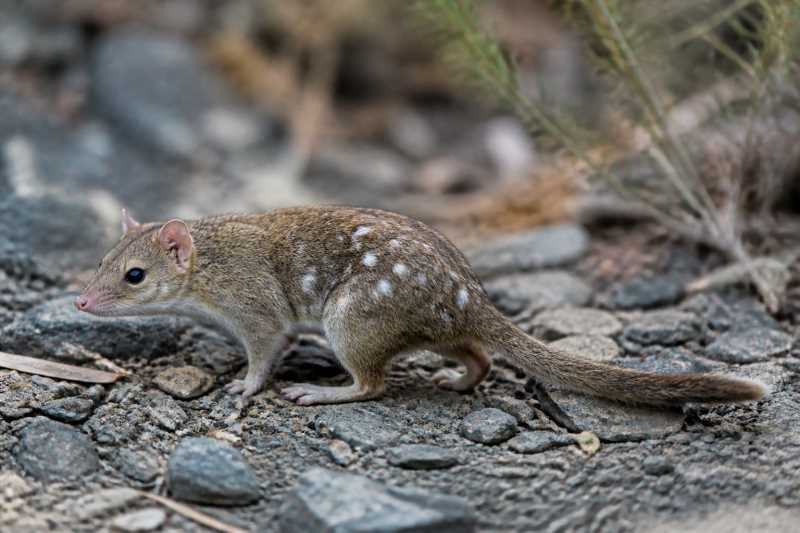
Eastern Short-furred Dasyure (Murexia murex)
Introduction
The Eastern Short-furred Dasyure, scientifically known as Murexia murex, is a fascinating and relatively lesser-known member of the family Dasyuridae. These small carnivorous marsupials are native to the island of New Guinea, where they thrive in the rich and biodiverse ecosystems. Often overshadowed by their more famous relatives like the Tasmanian devil and quolls, the Eastern Short-furred Dasyure plays a vital role in the ecological tapestry of its environment. This article delves into the details of this intriguing species, covering various aspects such as physical description, habitat, behavior, and conservation status.
Physical Description
The Eastern Short-furred Dasyure is a small to medium-sized marsupial, characterized by its sleek and streamlined body. It possesses a short, dense coat that is typically grayish-brown, providing excellent camouflage within its forested habitat. The fur is notably softer and shorter compared to other dasyures, hence the name "short-furred."
A distinctive feature of Murexia murex is its elongated snout and sharp, pointed teeth, adaptations that aid in its carnivorous diet. The eyes are large and keen, optimized for its nocturnal lifestyle. Its limbs are strong and agile, allowing it to navigate through the dense undergrowth with ease. The tail is relatively long and covered in fur, providing balance and support as it moves.
Males and females of the species are similar in appearance, with males being slightly larger. Adult Eastern Short-furred Dasyures typically weigh between 300 to 500 grams and measure around 25 to 35 centimeters in length, including the tail.
Range and Habitat
Murexia murex is endemic to the island of New Guinea, which is politically divided between Papua New Guinea to the east and Indonesia to the west. The species is primarily found in the montane and lowland rainforests of the island, favoring elevations ranging from 500 to 2,800 meters above sea level.
These marsupials have adapted to a variety of forest types, including primary and secondary growth forests. Their habitats are characterized by dense foliage, abundant underbrush, and a rich diversity of flora and fauna. The Eastern Short-furred Dasyure is an arboreal and terrestrial species, often seen foraging on the ground as well as in the lower canopy.
Behavior and Diet
The Eastern Short-furred Dasyure is predominantly nocturnal, utilizing the cover of darkness to hunt and forage. It is a solitary animal, with individuals maintaining distinct territories. These marsupials are known for their agility and speed, traits that are essential for their predatory lifestyle.
Their diet is carnivorous, consisting mainly of insects, small vertebrates, and occasionally fruits. The sharp teeth and keen senses of the Eastern Short-furred Dasyure make it an effective hunter. It employs a combination of stealth and speed to capture prey, which includes small mammals, birds, reptiles, and insects.
Reproduction in Murexia murex is similar to other dasyurids, with females giving birth to underdeveloped young that continue to grow in the mother’s pouch. Litters are typically small, with two to four young per breeding season.
Identification Tips
Field recognition of the Eastern Short-furred Dasyure can be challenging due to its elusive nature and the dense habitats it occupies. However, several key features can aid in identification:
- Fur Texture: Look for the short and soft fur that distinguishes it from other dasyures.
- Coloration: Note the grayish-brown coloration that provides camouflage in forested environments.
- Snout and Teeth: The elongated snout and sharp teeth are characteristic of this carnivorous marsupial.
- Size and Structure: Medium size with a streamlined body and relatively long tail.
- Behavior: Nocturnal activity patterns and solitary behavior are indicative of this species.
Conservation Status
The Eastern Short-furred Dasyure is currently classified as Least Concern by the International Union for Conservation of Nature (IUCN). However, like many species in New Guinea, it faces potential threats from habitat loss and degradation. Deforestation for agricultural expansion, logging, and mining are significant concerns that could impact its habitat.
Despite these threats, Murexia murex benefits from several protected areas within its range, which help safeguard its populations. Conservation efforts focus on habitat preservation and monitoring population trends to ensure the species remains stable.
Frequently Asked Questions
What do Eastern Short-furred Dasyures eat?
Eastern Short-furred Dasyures are carnivorous, feeding primarily on insects, small mammals, birds, and occasionally fruits. Their diet reflects their role as predators in the ecosystem.
Where can you find the Eastern Short-furred Dasyure?
These marsupials are found exclusively on the island of New Guinea, inhabiting montane and lowland rainforests at elevations between 500 and 2,800 meters.
How does the Eastern Short-furred Dasyure reproduce?
Females give birth to underdeveloped young that continue to develop in the mother’s pouch. Litters typically consist of two to four offspring.
Are Eastern Short-furred Dasyures endangered?
Currently, the Eastern Short-furred Dasyure is classified as Least Concern, but it faces threats from habitat loss due to deforestation and human activities.
How can you identify an Eastern Short-furred Dasyure in the wild?
Look for its short, soft fur, grayish-brown coloration, elongated snout, sharp teeth, and nocturnal behavior in New Guinea’s forested areas.
Related posts