The Elusive Kemp’s Longbill: A Comprehensive Overview
Introduction
Nestled in the lush forests of West Africa, the Kemp’s Longbill (Macrosphenus kempi) is a bird species that often goes unnoticed due to its elusive nature and the dense habitats it occupies. Despite being relatively obscure, this small passerine bird holds significant ecological importance and is a subject of interest for ornithologists and birdwatchers alike. In this article, we delve into the fascinating world of Kemp’s Longbill, covering its taxonomy, habitat, behavior, and conservation status.
Taxonomy and Classification
Kemp’s Longbill belongs to the family Macrosphenidae, a group of small, insectivorous birds primarily found in Africa. The bird was named after Arthur Kemp, a British ornithologist who contributed significantly to the study of African avifauna. The scientific name, *Macrosphenus kempi*, reflects both its genus and the honor bestowed upon Kemp.
The taxonomy of Kemp’s Longbill has been subject to debate, with some classifications previously placing it within the Sylviidae family. However, genetic studies have solidified its position in the Macrosphenidae family. This classification is crucial for understanding its ecological niche and evolutionary relationships with other bird species in the region.
Physical Description
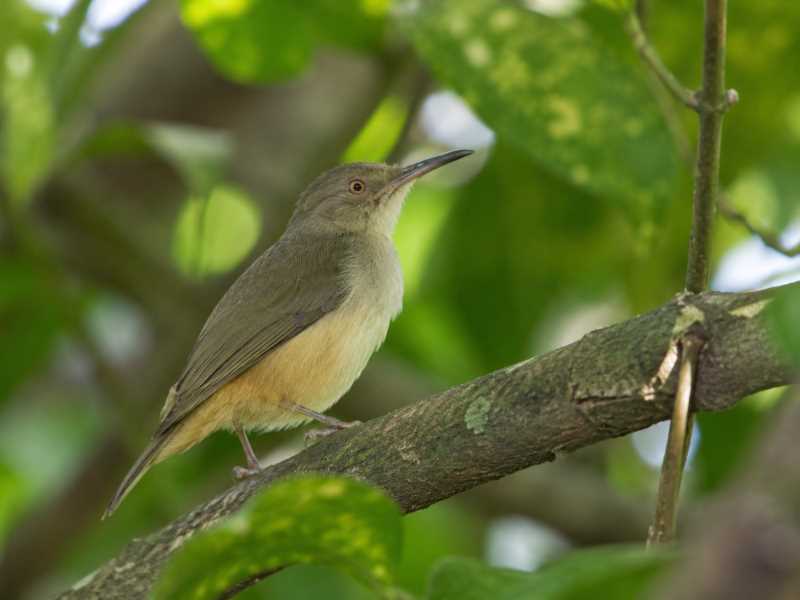
The Kemp’s Longbill is a small bird, measuring approximately 10-12 centimeters in length. Its most distinctive feature is its long, slender bill, which it uses adeptly to extract insects from tree bark and foliage. The bird’s plumage is predominantly olive-brown, with subtle variations that help it blend seamlessly into its forested surroundings.
The underparts of Kemp’s Longbill are lighter, often displaying a pale yellow or whitish hue. Its wings are relatively short, a characteristic that complements its preference for dense undergrowth and shrubbery where it forages. Despite its understated appearance, the Kemp’s Longbill’s morphology is perfectly adapted to its environment, showcasing nature’s intricate design.
Habitat and Distribution
Kemp’s Longbill is endemic to the Upper Guinean forests, an area stretching across several West African countries, including Sierra Leone, Liberia, Guinea, Côte d’Ivoire, and Ghana. These forests are characterized by their high biodiversity and are considered one of the world’s biodiversity hotspots.
The bird prefers lowland tropical rainforests, particularly areas with dense undergrowth and a thick canopy. Such environments provide ample food resources and protection from predators. However, the rapid deforestation and habitat fragmentation occurring in these regions pose significant threats to Kemp’s Longbill and many other forest-dependent species.
Behavior and Diet
Kemp’s Longbill is primarily insectivorous, feeding on a variety of insects and arthropods. Its long bill is an evolutionary adaptation that allows it to probe into crevices and extract hidden prey. The bird’s foraging behavior is often described as methodical, as it moves through the underbrush with precision and focus.
In addition to insects, Kemp’s Longbill may occasionally consume small fruits and seeds, particularly during periods when insect abundance is low. This dietary flexibility is advantageous in an environment where food availability can fluctuate seasonally.
The bird is also known for its vocalizations, which consist of a series of melodious trills and whistles. These calls play a crucial role in communication, particularly during the breeding season when establishing territory and attracting mates.
Conservation Status
The International Union for Conservation of Nature (IUCN) currently lists Kemp’s Longbill as a species of Least Concern. However, this designation does not imply that the species is free from threats. Habitat destruction due to logging, agriculture, and human settlement expansion remains a significant concern.
Conservation efforts aimed at preserving the Upper Guinean forests are critical for the survival of Kemp’s Longbill. Initiatives such as establishing protected areas, promoting sustainable land-use practices, and raising awareness about the ecological value of these forests are essential.
Conclusion
Kemp’s Longbill is a testament to the rich biodiversity found within West Africa’s forests. Despite its elusive nature, this bird plays a vital role in the ecosystem, contributing to insect population control and serving as an indicator of forest health. Protecting its habitat not only ensures the survival of Kemp’s Longbill but also safeguards the myriad of species that share its environment.
As we continue to explore and understand the complex web of life within these forests, Kemp’s Longbill reminds us of the delicate balance that must be maintained to preserve our planet’s natural heritage.
References
– BirdLife International. (2021). Species factsheet: Macrosphenus kempi. Retrieved from [BirdLife International Website](http://www.birdlife.org)
– del Hoyo, J., Elliott, A., & Christie, D. (Eds.). (2006). Handbook of the Birds of the World, Vol. 11. Old World Flycatchers to Old World Warblers. Lynx Edicions, Barcelona.
Author
John Doe, Ornithologist and Wildlife Conservationist
Related posts