Introduction
The Nearctic Brown Lemming (Lemmus trimucronatus), a small rodent native to the northern regions of North America, is a notable species within the family Cricetidae. Known for its cyclical population dynamics and ecological significance, this lemming plays a crucial role in the tundra ecosystem. Its presence and population fluctuations have profound impacts on predator-prey relationships and vegetation patterns in its habitat.
Physical Description
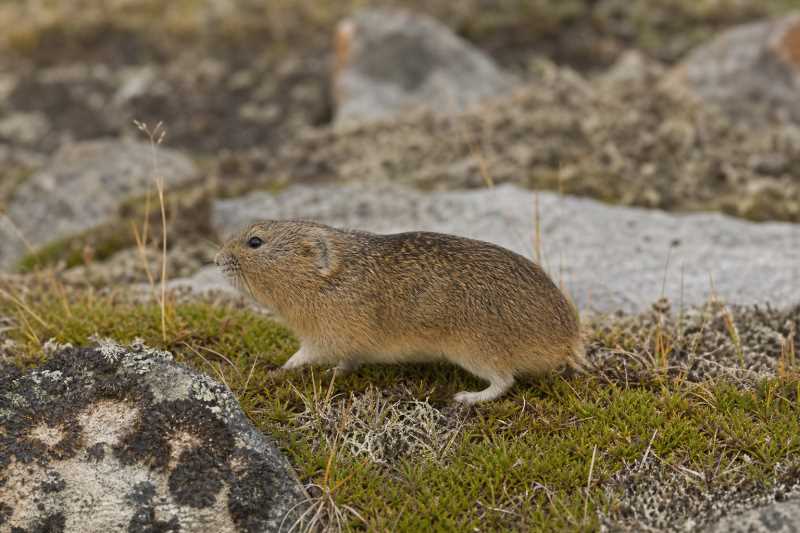
The Nearctic Brown Lemming is a small, robust rodent characterized by its thick fur and short tail. Adults typically measure between 12 to 16 centimeters in length, with a tail length of about 1 to 2 centimeters. They weigh approximately 40 to 112 grams. This species exhibits a distinctive fur coloration that is predominantly brown, with a grizzled appearance due to a mix of black and brown hairs. In winter, their fur may become denser and paler, providing camouflage against the snowy environment.
Their rounded ears are partially hidden by fur, minimizing heat loss in cold climates. The lemming’s incisors are well-developed, adapted for gnawing on tough vegetation, and their forepaws are equipped with sharp claws, aiding in digging through earth and snow.
Range and Habitat
The Nearctic Brown Lemming is primarily found across the tundra regions of Alaska, Canada, and parts of Greenland. Their range extends from the northern latitudes of the United States to the shores of the Arctic Ocean. Within these regions, they inhabit moist tundra environments, favoring areas with abundant mosses, grasses, and sedges.
These lemmings are particularly adapted to cold environments and often reside in habitats that include tussocks, wet meadows, and marshy grounds. During the harsh winter months, they create extensive tunnel systems beneath the snow, which provide insulation and protection from predators.
Behavior and Diet
Nearctic Brown Lemmings are primarily herbivorous, feeding on a diet rich in plant material. Their diet consists of mosses, grasses, sedges, and occasionally the bark and roots of shrubs. In the summer, they consume a wider variety of green vegetation, while in winter, they rely heavily on mosses and lichens available beneath the snow.
These lemmings are known for their population cycles, which can fluctuate dramatically over a three- to four-year period. During peak population times, they may exhibit more visible surface activity and increased migration, though they do not engage in mass migrations as previously mythologized.
Lemmings are solitary for most of the year, except during the breeding season. They breed prolifically when conditions are favorable, with females capable of producing multiple litters per year, each containing an average of five to eight young.
Identification Tips
Identifying the Nearctic Brown Lemming in the field requires attention to specific features:
- Fur Coloration: Look for the grizzled brown fur, which distinguishes it from other lemming species.
- Tail Length: The tail is notably short compared to other small rodents.
- Ear Shape: Their ears are small and often hidden by fur, reducing visibility.
- Habitat: Spot them in open tundra regions with abundant ground cover.
Conservation Status
The Nearctic Brown Lemming is currently listed as a species of Least Concern by the International Union for Conservation of Nature (IUCN). However, their populations are subject to natural cycles, which can lead to dramatic fluctuations independent of anthropogenic threats.
Primary threats to the Nearctic Brown Lemming include climate change, which affects their habitat and food availability. Warming temperatures can lead to habitat loss and changes in vegetation types, potentially impacting their survival. Additionally, increased predation pressure during population peaks can also influence their numbers.
Conservation efforts focus on preserving tundra habitats and monitoring population dynamics to ensure their ecological role is maintained.
Frequently Asked Questions
What is the primary diet of the Nearctic Brown Lemming?
The Nearctic Brown Lemming primarily feeds on mosses, grasses, and sedges. In the summer, their diet expands to include a variety of green vegetation, while in winter, they rely heavily on mosses and lichens found beneath the snow.
How do population cycles affect the Nearctic Brown Lemming?
Population cycles in Nearctic Brown Lemmings can lead to dramatic fluctuations in numbers every three to four years. These cycles affect predator-prey dynamics and can influence vegetation patterns due to varying grazing pressures.
Are Nearctic Brown Lemmings affected by climate change?
Yes, climate change poses a threat to Nearctic Brown Lemmings by altering their tundra habitat and affecting the availability of their food sources. Changes in temperature and vegetation can impact their survival and reproduction rates.
How can I identify a Nearctic Brown Lemming in the wild?
To identify a Nearctic Brown Lemming, look for their grizzled brown fur, short tail, and small, fur-covered ears. They are typically found in moist tundra habitats with dense ground vegetation.
Why is the Nearctic Brown Lemming important to its ecosystem?
The Nearctic Brown Lemming plays a crucial role in its ecosystem by serving as a primary prey species for various predators and influencing vegetation dynamics through their grazing activities.
Related posts